
- Payments platform Payy Link has launched Payy Network, which it claims to be Ethereum’s first and only privacy-enabled, EVM Layer-2.
- **With a Privacy Layer, stealth transactions and native zero-knowledge proofs, the new network targets users to whom privacy is critical. **
Ethereum has been on a campaign to go back to its original mission, with decentralization and privacy featuring prominently on its priorities list, as we have reported. The network is now getting a big boost on the privacy front, with Payy Link launching “Ethereum’s first and only privacy-enabled, EVM Layer-2.”
In its documents, the company further described Payy Network as “the first EVM compatible stablecoin chain with privacy at every layer.”
Ethereum is for privacy. https://t.co/xnj0sWTC5K
— Ethereum (@ethereum) February 4, 2026
Payy believes that privacy can’t be an afterthought: it must be custom-built into the architecture of a network in a holistic and complete approach. On the new network, transfers of any ERC-20 tokens will be private by default and no smart contract changes are required.
Additionally, it supports all wallets on the Ethereum Virtual Machine (EVM) natively. This is an important feature as it guarantees that developers can build on Payy Network using their existing tooling, with privacy layered in without any changes to the EVM protocol.
It states:
In the past, privacy always had tradeoffs: bad UX, fragmented liquidity, limited compatibility. With Payy, privacy is invisible.
With the Payy Network, all transfers will happen directly inside the pool, with smart contract interactions then withdrawing from the pool to fresh addresses. The private transaction data then goes to off-chain Privacy Vaults, which developers can configure using RPC URL query parameters. It also comes with native zero-knowledge verification.
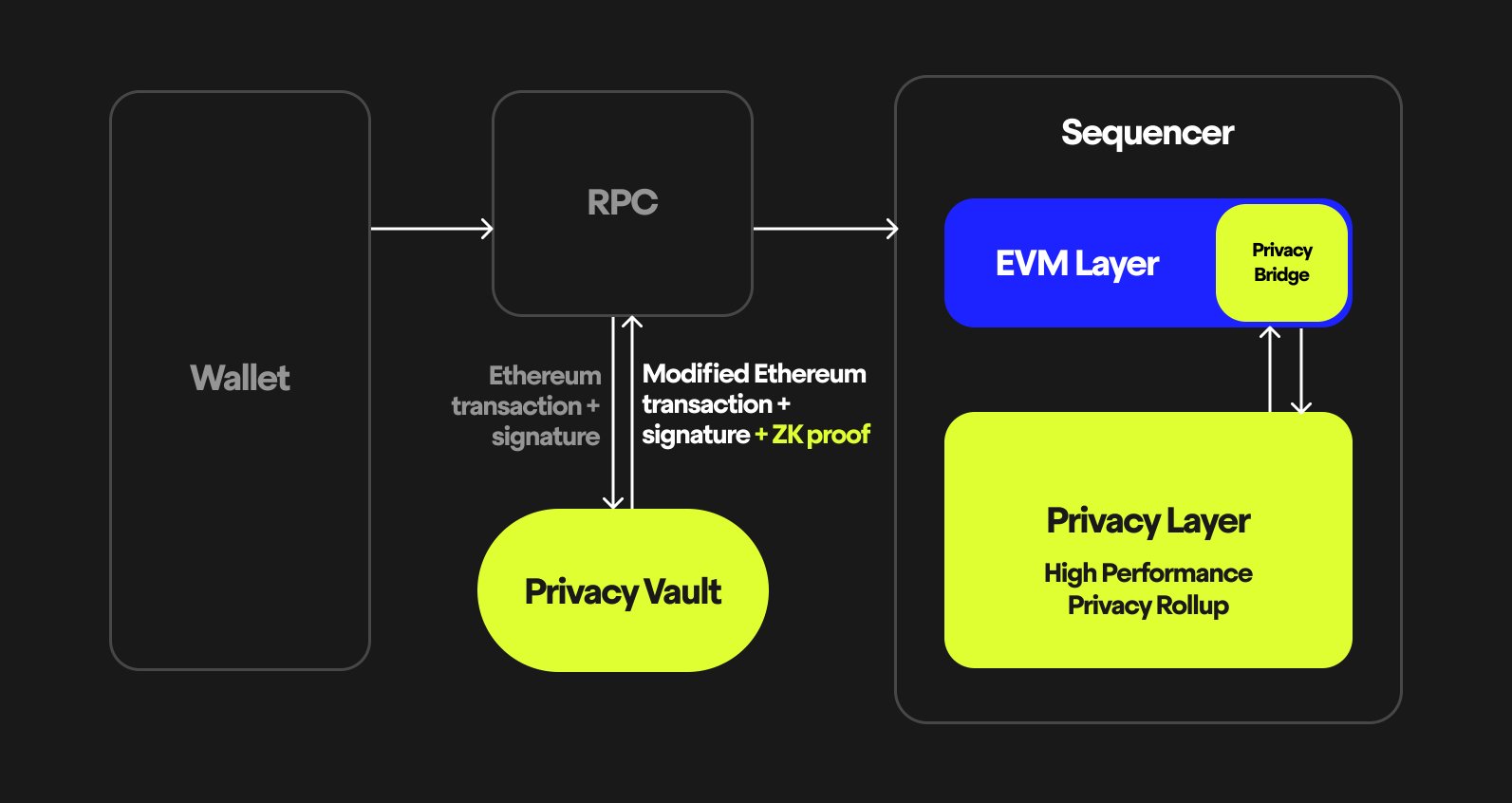
Image courtesy of Payy Link.
Native Ethereum Privacy on Payy Network
Payy Network offers three levels of privacy. The first is offered through the Privacy Layer, where payments are natively private even before they hit the EVM. Stealth Transactions then mint a new address for each new transaction, with the transaction conducted on the EVM layer, before the original tokens are then returned to the Privacy Layer. Moving funds in and out of this layer requires no gas fees, but minting the new address requires gas fees.
Then, there is native zero-knowledge technology, which users can tap depending on the privacy applications. Being native allows Payy Network’s ZK technology to cut down the cost that would otherwise be required; ZK tech on other networks consumes up to 10% of the available blockspace.
Essentially, Payy Network’s ZK proofs conduct their verification off-chain, allowing developers to build applications such as off-chain orderbooks like Hyperliquid, which has been predicted to hit $200 billion in market cap, as we reported.
They can also build dark liquidity pools and private real-world asset contracts.
The network will be powered by PUSD, a stablecoin backed by US dollars and available both as a native token and an ERC-20 token. Being a stablecoin, it guarantees that the fee for each transaction remains consistent.
Payy Link says the Payy Network is for crypto natives and funds to trade privately, and fintechs and tradfi that require extreme privacy for their transactions.
Disclaimer: The information on this page may come from third parties and does not represent the views or opinions of Gate. The content displayed on this page is for reference only and does not constitute any financial, investment, or legal advice. Gate does not guarantee the accuracy or completeness of the information and shall not be liable for any losses arising from the use of this information. Virtual asset investments carry high risks and are subject to significant price volatility. You may lose all of your invested principal. Please fully understand the relevant risks and make prudent decisions based on your own financial situation and risk tolerance. For details, please refer to
Disclaimer.
Related Articles
Base58 Labs’ BASIS 2026 Blueprint Forges a New Standard for BTC, ETH, SOL & PAXG
[PRESS RELEASE – London, UK, March 17th, 2026]
New roadmap positions BASIS as an institutional-grade digital asset management platform built for macro volatility, tokenized safe-haven demand, and frictionless Web3 onboarding.
Base58 Labs today unveiled the BASIS 2026 Technical Blueprint &
CryptoPotato3m ago
ETH Dips Under $2K as Traders Signal Further Downside
Ether edged below the $2,000 mark on Friday, signaling another potential leg lower for the leading smart contract token. Trading around $1,975, ETH slipped roughly 5% over the past 24 hours, according to TradingView data. The move came as traders weighed weak near-term demand against a backdrop of o
CryptoBreaking2h ago
Ethereum Price Prediction: Where Is ETH Headed If $2K Support Is Lost for Good?
Ethereum’s recovery attempt is losing momentum again. The price is slipping back after failing to sustain strength near the key $2.4k resistance zone. The broader context remains a market trying to stabilize after a sharp downtrend, but repeated rejections on rallies and growing concerns over the
CryptoPotato3h ago
Price predictions 3/27: BTC, ETH, BNB, XRP, SOL, DOGE, HYPE, ADA, BCH, LINK
Key points:
Bitcoin’s fall below the $66,000 support heightens the risk of a drop to the $62,500 level.
Select major altcoins have broken below their immediate support levels, opening the gates for further downside.
Bitcoin (BTC) is under pressure from the bears, who are
Cointelegraph3h ago


