In recent days, the Aave (AAVE) protocol has made significant progress, with steady growth across the entire cryptocurrency market. Continuous capital inflows reflect renewed investor interest in this decentralized lending platform.
At the time of writing, data shows that the AAVE token – the native asset of the protocol – has increased by 12% in just 24 hours. However, despite the short-term market sentiment being quite positive, questions remain about the sustainability of this rally as conflicting signals from the market begin to emerge.
Ecosystem Upgrade Strengthens a Solid Foundation
AAVE’s recent upward momentum follows the announcement of the “Aave Will Win Framework” – a comprehensive improvement proposal aimed at strengthening the decentralized autonomous organization (DAO) and optimizing long-term value creation.
According to this proposal, Aave will transfer all revenue from products under the Aave brand and the direct protocol layer into the DAO treasury. This revenue includes income from the mobile app, the Aave Card, and the upcoming fourth version of the protocol – V4.
Estimated annual revenue for Aave currently ranges from $118 million to $426 million, a notable figure demonstrating the protocol’s potential to generate substantial income.
Stani Kulechov, founder and CEO of Aave, stated that this is an innovative strategy designed to promote widespread adoption and expand Aave’s ecosystem. He said:
“Today, we propose a new framework where Aave Labs will focus entirely on the token, and 100% of revenue from the product layer will go into the Aave DAO… This is a significant step toward formalizing the connection between Aave Labs and the DAO, serving the interests of token holders.”
This proposal has received broad community support. Active discussions on governance channels indicate growing confidence in the protocol’s strategic direction and the new revenue model.
Investor Confidence Evidenced by Accumulation and Liquidity Surge
Investor activity has clearly reflected improved market sentiment. On-chain data shows a continuous accumulation trend, supported by technical indicators.
The Accumulation/Distribution (A/D) indicator has returned to an upward trend in the positive zone, indicating sustained buying pressure. At the time of this report, the total trading volume reached 3.58 million AAVE tokens.
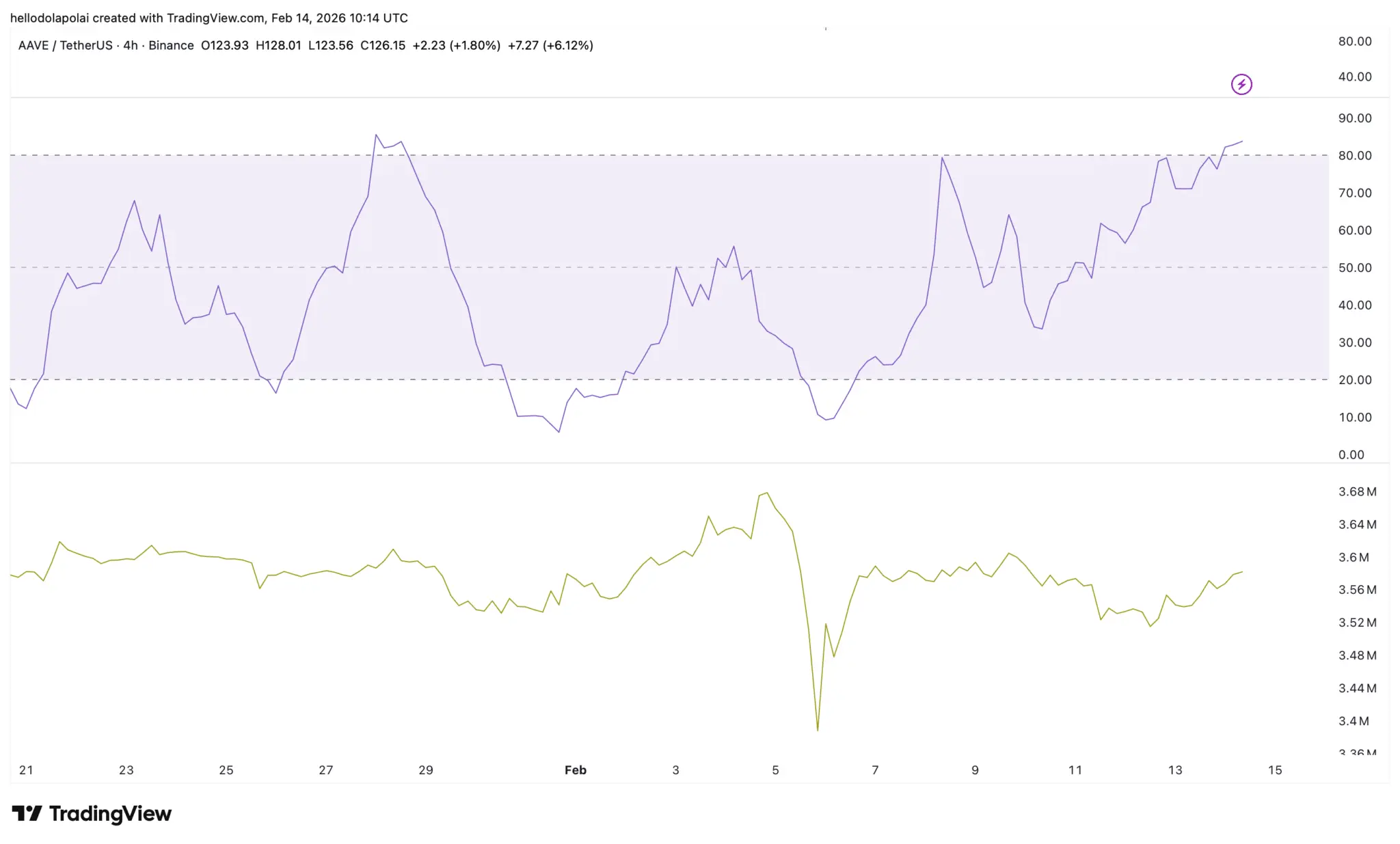 Source: TradingView Additionally, the Money Flow Index (MFI) – a tool measuring capital inflows and outflows – has also seen a significant increase.
Typically, an MFI between 50 and 80 indicates strong capital inflows, while values from 20 to 50 suggest capital outflows. Currently, AAVE’s MFI stands at 83, indicating considerable liquidity flowing into this asset.
The ongoing buying trend could further deplete supply, reinforcing the upward price movement if demand remains stable.
TVL Surge Demonstrates Investor Commitment
Following the governance proposal announcement, capital inflows into the Aave protocol surged, with many assets being directly deposited into the platform.
Total Value Locked (TVL) – a key metric measuring investor commitment – has experienced strong growth. The increase in TVL reflects growing confidence in the protocol’s long-term prospects and investors’ intent to profit through lending activities.
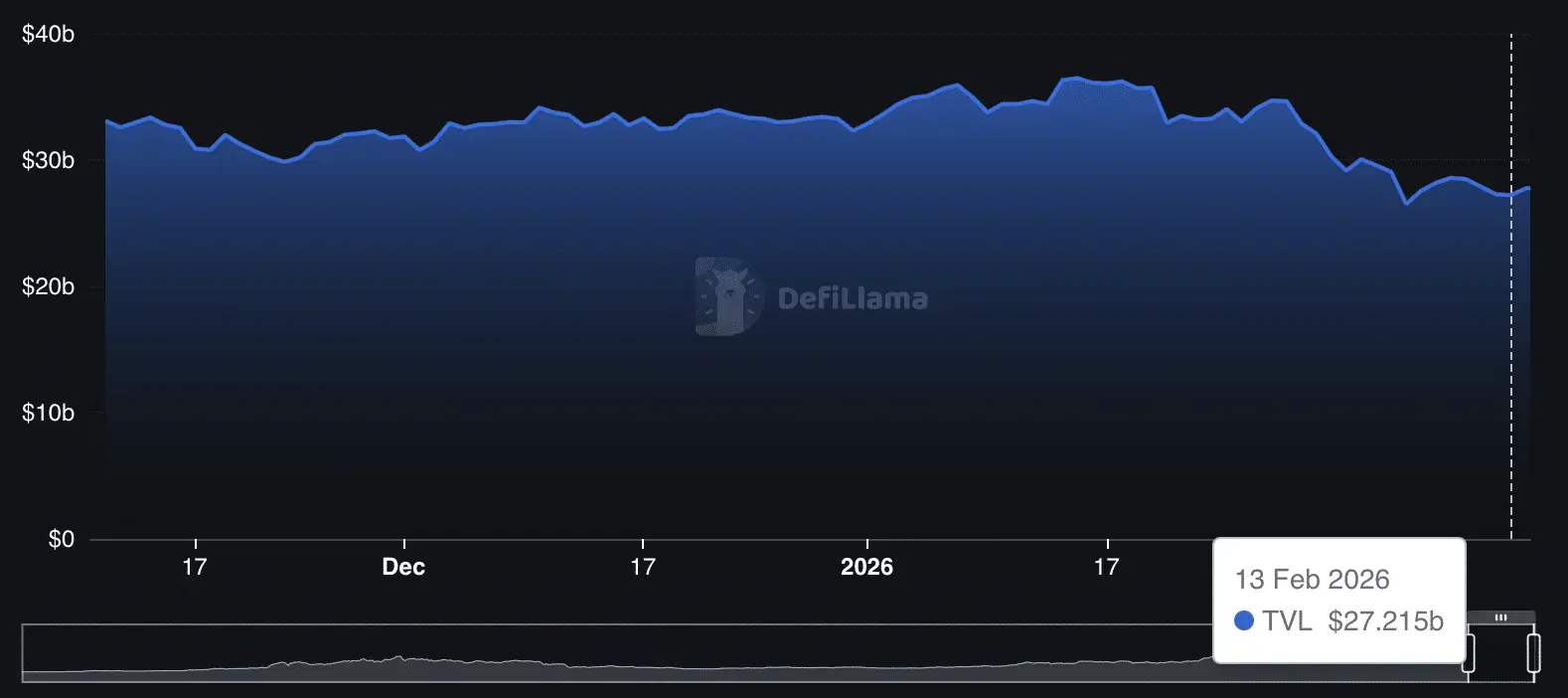 Source: TradingView In the past 24 hours, Aave’s TVL has increased by $589 million, bringing the total locked value to $27.797 billion. This impressive figure demonstrates robust participation and deep capital commitment from investors within the ecosystem.
Transaction Volume Divergence – A Signal to Watch
Despite the sharp rise in AAVE’s price and liquidity, trading volume has declined. According to CoinMarketCap data, daily trading volume has dropped by 23%, down to approximately $368 million.
Historical analysis suggests that price increases accompanied by decreasing volume often indicate waning momentum. This divergence could signal that the current rally lacks strong support from broader market participants.
If this trend continues, AAVE may face downward pressure, although accumulation indicators and TVL remain on an upward trajectory.
Conclusion
While the fundamental aspects of the Aave ecosystem are being strengthened, the next market move will depend on whether demand can expand to sustain the current growth. The conflicting signals from trading volume and market divergence warrant close monitoring, especially as investors continue to pour capital into the protocol.
Disclaimer: The information on this page may come from third parties and does not represent the views or opinions of Gate. The content displayed on this page is for reference only and does not constitute any financial, investment, or legal advice. Gate does not guarantee the accuracy or completeness of the information and shall not be liable for any losses arising from the use of this information. Virtual asset investments carry high risks and are subject to significant price volatility. You may lose all of your invested principal. Please fully understand the relevant risks and make prudent decisions based on your own financial situation and risk tolerance. For details, please refer to
Disclaimer.


