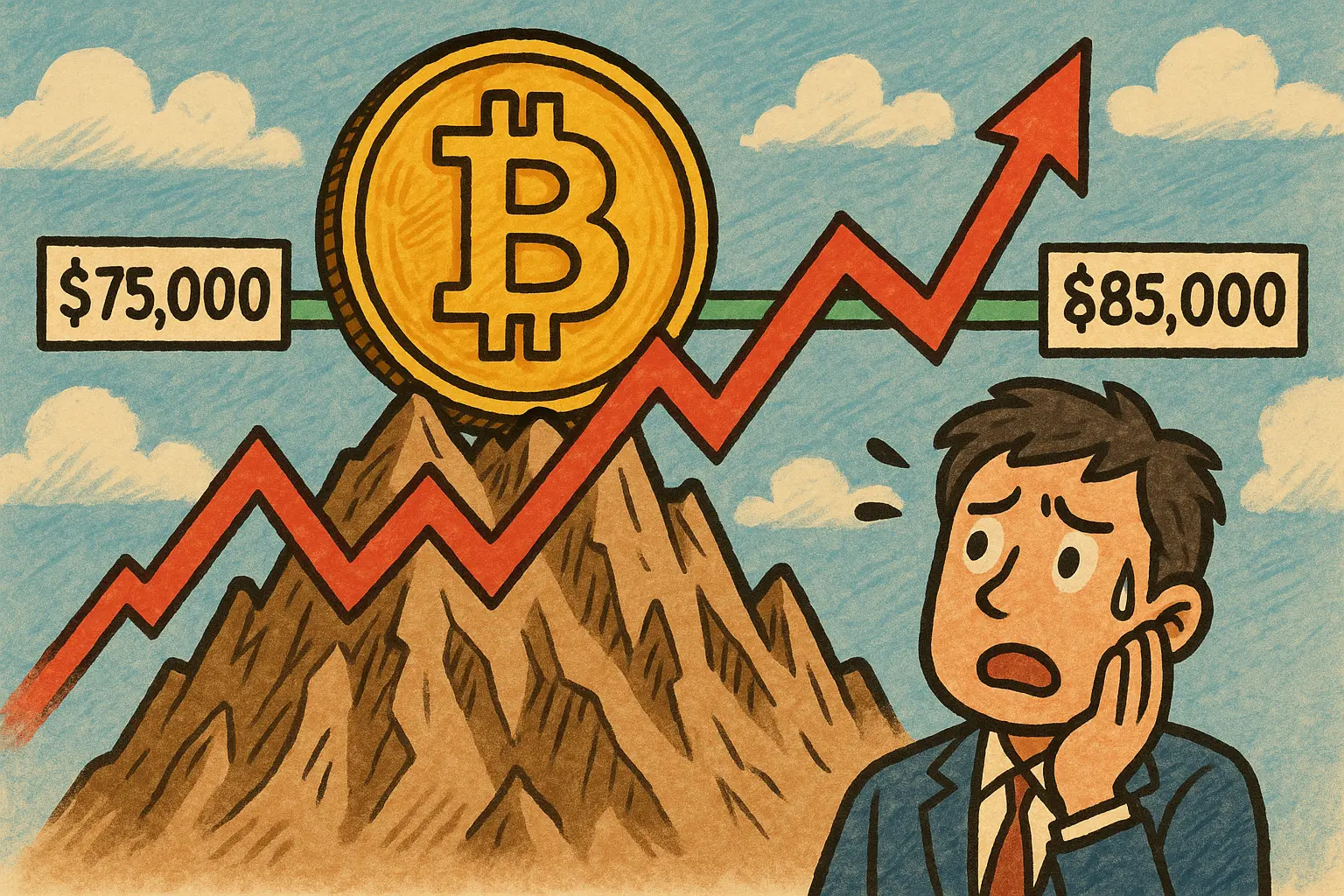
On-chain analysis platform CryptoQuant’s research director Julio Moreno released a report on Tuesday indicating bullish signals in the Bitcoin futures market — funding rates have shifted from extreme negative to positive, new long positions are being established after short positions are forcibly liquidated, and the buy-sell ratio remains above 1. However, the report states that if Bitcoin continues to rise, it is expected to encounter the first resistance around $75,000, with a stronger resistance at $85,000 if broken.
The Three Major Bullish Signals in the Futures Market
CryptoQuant’s report reveals three corroborating bullish indicators in the futures market:
Short Liquidations and Long Position Building: Moreno states that as Bitcoin breaks above $70,000, short traders’ positions are forcibly liquidated; further breaking through $73,000 leads to the establishment of new long positions, indicating that “long traders currently dominate the market.”
Funding Rate Turns Positive: The funding rate for Bitcoin perpetual contracts remained “extremely negative” until March 13, reflecting a generally bearish market. Since March 15, the rate has mostly turned positive, meaning traders are willing to pay extra to open and maintain long positions. Ethereum’s funding rate has also been mostly positive since March 9, with a brief dip into negative territory on March 16.
Buy-Sell Ratio Above 1: In the perpetual futures market, both Bitcoin and Ethereum’s buy-sell ratios stay above 1, indicating buy orders outnumber sell orders. Moreno points out that since mid-March, this ratio has surged significantly, further suggesting traders are betting on short-term price increases.
Two Resistance Levels and Exchange Inflows Warnings
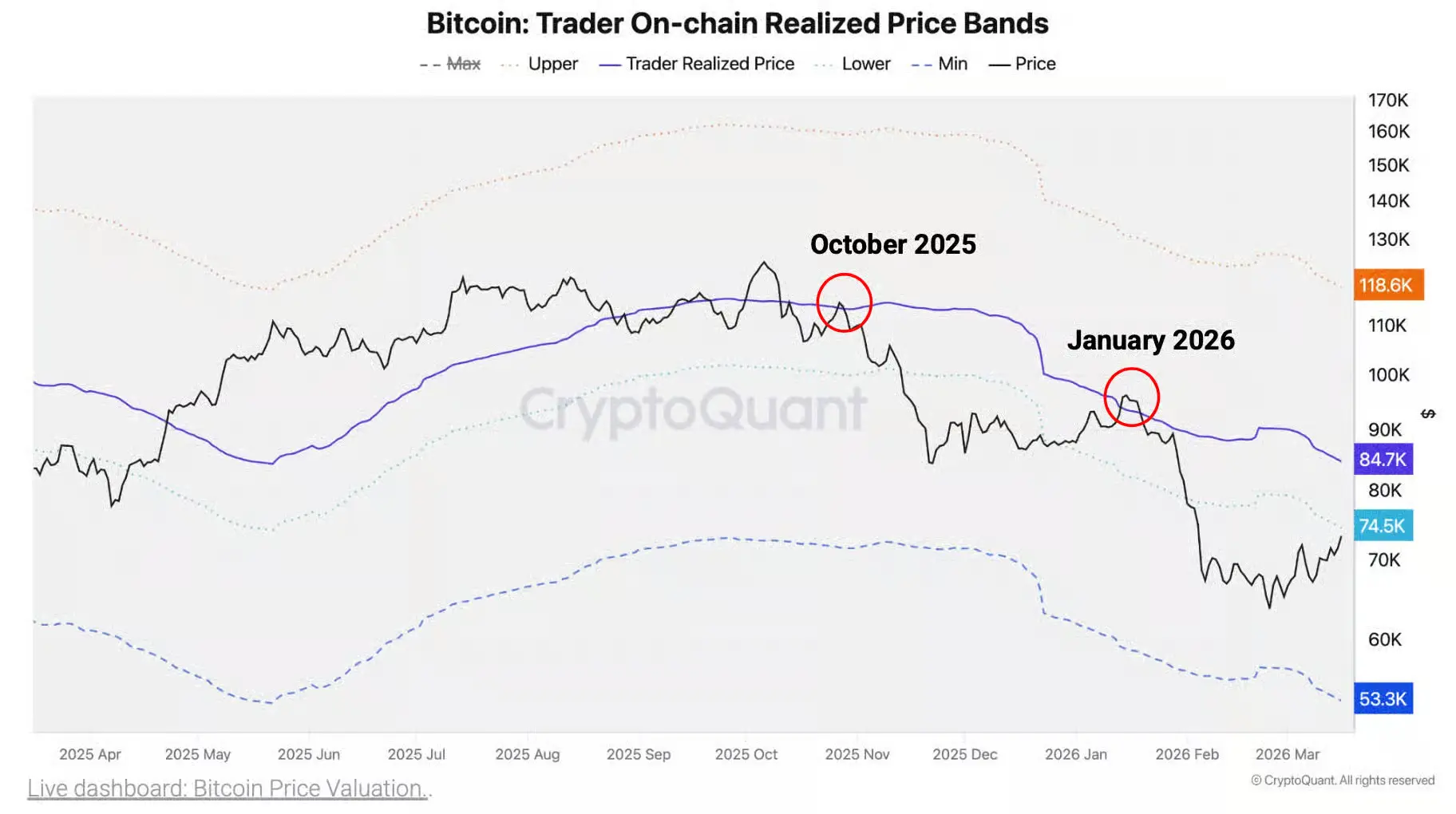
(Source: CryptoQuant)
Resistance Level 1: $75,000
Moreno explains in the report that around $75,000 represents the “on-chain actual price” lower bound — a key technical indicator measuring the average cost basis of large Bitcoin holdings. Historically, this price range has often acted as a resistance in bear markets, with sell orders concentrated here.
Resistance Level 2: $85,000
The report notes that around $85,000 is a stronger resistance level. This level formed clear resistance in mid-January 2026 and October 2025 — during Bitcoin’s rise from $80,000 to $98,000, significant selling pressure appeared near $85,000.
Exchange inflow warning signals: Moreno’s report also records a potential bearish sign — the speed of Bitcoin inflows into centralized exchanges has sharply increased. On March 16, hourly inflows reached 6,100 BTC, the highest since February 20. More notably, large deposits (large transfers) accounted for 63% of total inflows, the highest since October 15, 2025. Moreno points out that a surge in large transfers often indicates potential for larger sell pressure.
Frequently Asked Questions
Why is a positive shift in Bitcoin futures funding rate considered a bullish signal?
In perpetual futures markets, the funding rate reflects the supply and demand balance between longs and shorts. When the rate is positive, longs pay shorts periodically, usually indicating a bullish market sentiment; when negative, shorts pay longs, indicating bearish sentiment. A shift from extreme negative to positive suggests a systemic change in market sentiment from bearish to bullish.
Why is increasing Bitcoin inflow to exchanges a warning sign?
Large transfers of Bitcoin from personal wallets or long-term holdings to centralized exchanges are often interpreted as holders preparing to sell, since only on exchanges can they execute immediate sell orders. CryptoQuant’s data shows inflows reaching recent highs, with large transfers making up 63%, indicating institutional or large holders may be seeking selling opportunities, creating tension with the bullish signals from futures markets.
How do Federal Reserve interest rate decisions influence Bitcoin’s performance at resistance levels?
If the Fed announces dovish policies (such as hints of rate cuts or maintaining rates without hikes), risk assets tend to receive positive support, helping Bitcoin to gain more buying interest at resistance levels. Conversely, hawkish signals (such as raising inflation expectations or indicating prolonged high rates) could increase selling pressure at resistance levels, making breakthroughs more difficult. This context is especially relevant as CryptoQuant’s report is released ahead of the Fed’s decision.
Disclaimer: The information on this page may come from third parties and does not represent the views or opinions of Gate. The content displayed on this page is for reference only and does not constitute any financial, investment, or legal advice. Gate does not guarantee the accuracy or completeness of the information and shall not be liable for any losses arising from the use of this information. Virtual asset investments carry high risks and are subject to significant price volatility. You may lose all of your invested principal. Please fully understand the relevant risks and make prudent decisions based on your own financial situation and risk tolerance. For details, please refer to
Disclaimer.


