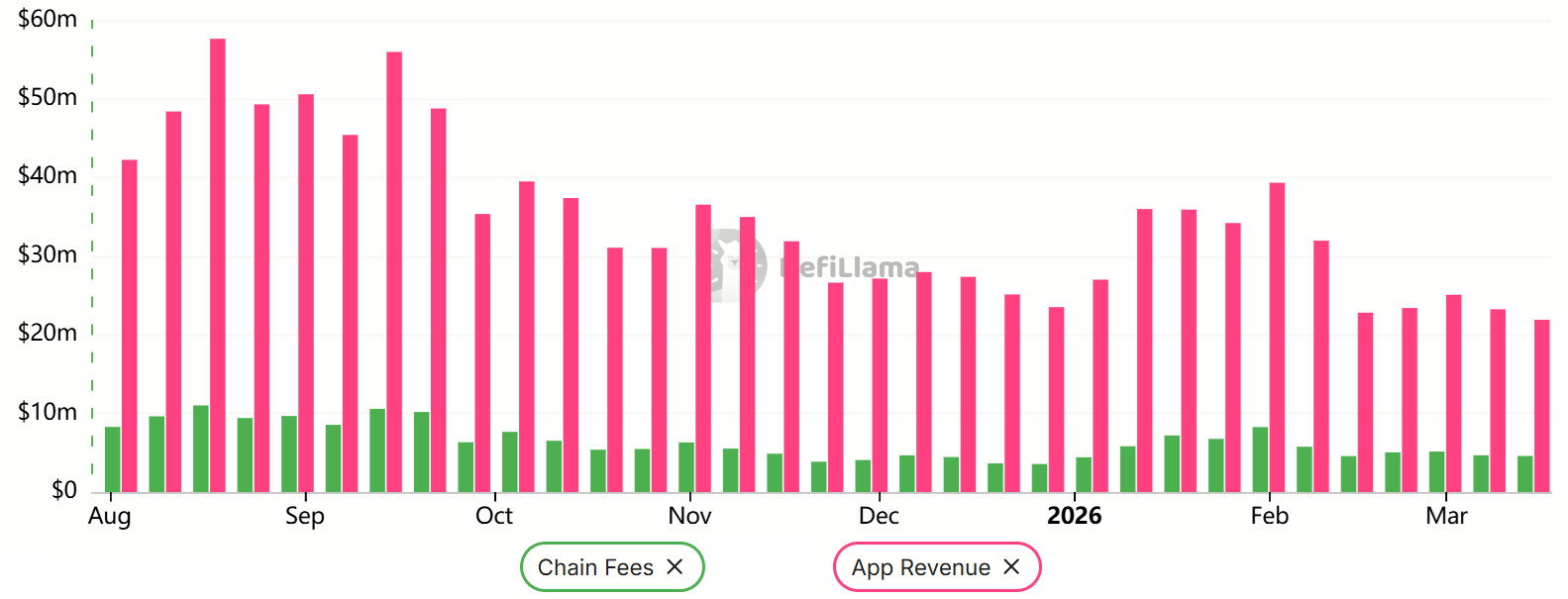
Solana ecosystem decentralized applications (DApps) weekly revenue has fallen to $22 million, the lowest in 18 months. At the same time, the derivatives market is signaling bearish sentiment, with Thursday’s SOL perpetual contract annualized financing rate approaching 0%, and the 30-day put options delta skew soaring to 12%, indicating that large traders are pricing in further declines.
Triple Derivatives Bearish Signals: Financing Rate, Options Skew, and Institutional Losses
The derivatives market is simultaneously issuing three independent bearish alarms, collectively illustrating a lack of confidence in SOL at the institutional level.
Three Major Bearish Indicators Light Up Simultaneously
(Source: Laevitas.ch)
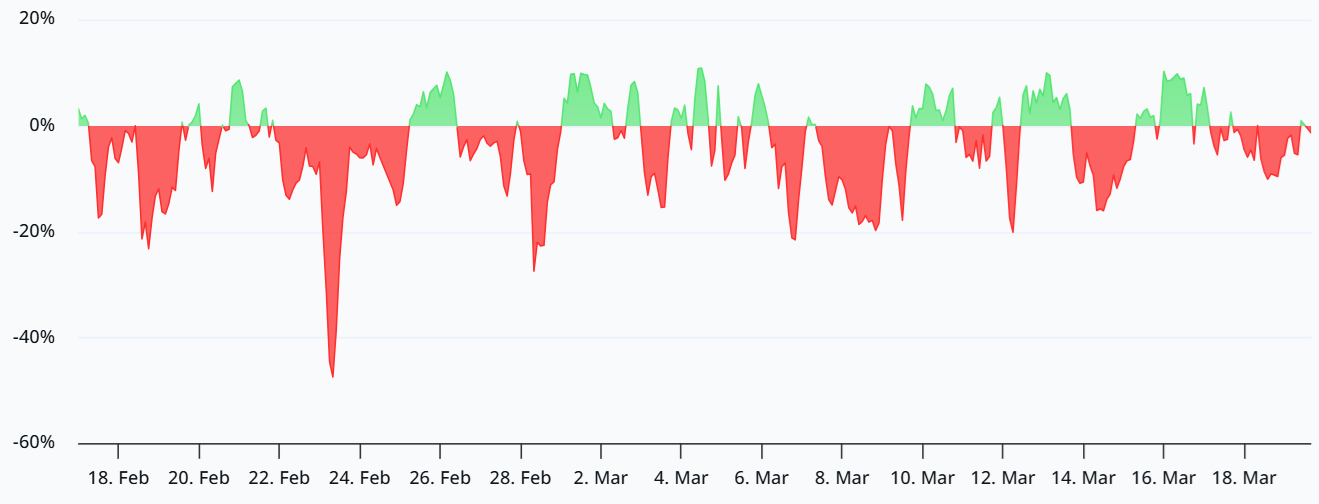
Financing Rate Near 0%: On Thursday, the annualized financing rate for SOL perpetual contracts approached 0%, indicating a severe lack of bullish demand. In normal market conditions, even with neutral sentiment, funding costs and exchange rate risks typically push the rate to around 9%. The current level suggests that over the past month, bears have dominated leverage demand, an extremely rare phenomenon in the crypto market.
(Source: Deribit)
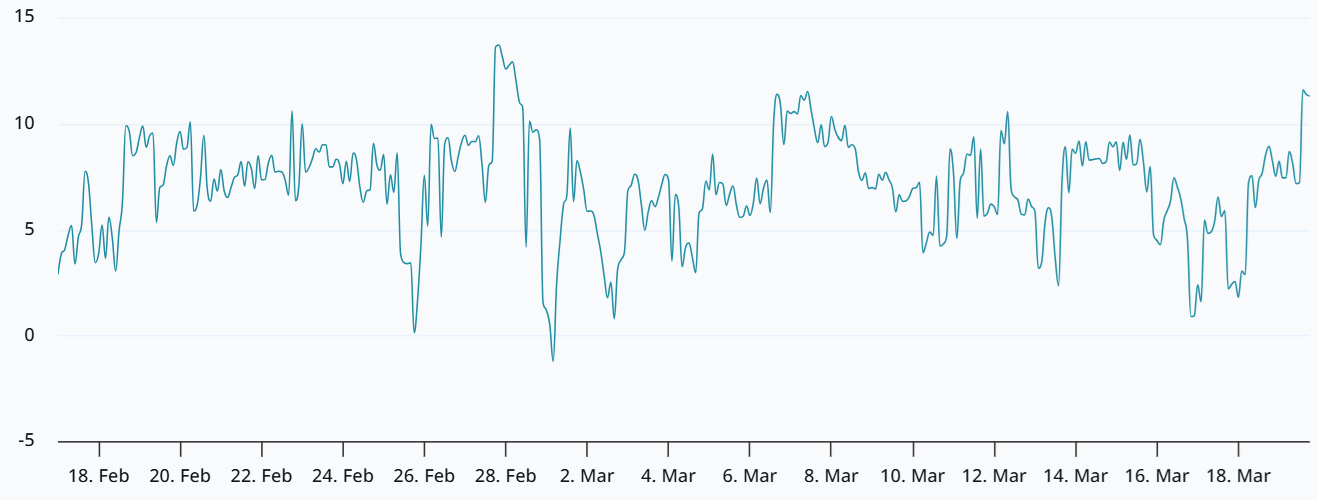
Options Skew Spiked to 12%: On Deribit, the delta skew for 30-day put-call options on SOL surged to 12%, meaning puts are trading at a premium relative to calls. Large traders and market makers are unwilling to hold downside risk exposure, even though SOL has fallen more than 70% from its all-time high.
Institutional Holdings in Loss: Forward Industries (FWDI US) and DeFi Development Corp. (DFDV US), which use SOL as a core asset in their strategies, are both holding SOL at a loss, intensifying market pessimism.
Structural Causes of DApps Revenue Decline
(Source: DeFiLlama)
Solana DApps revenue this week dropped to $22 million, reflecting a macro trend of shrinking DeFi demand (simultaneously, BNB Chain DApps revenue also declined by 52%). However, the more concerning structural issue is the changing competitive landscape in the perpetual contracts trading sector.
According to DeFiLlama data, in the 7-day trading volume rankings for perpetual contracts, chains focused on perpetuals—including Hyperliquid, Edgex, Zklighter, and Aster—account for over 80% of total trading volume. While Solana still maintains a leading position in DEX spot trading, supported mainly by ecosystems like Pump, Raydium, and Orca, its share in the more profitable derivatives sector is being steadily eroded.
Hyperliquid’s Rise Intensifies Ecosystem Pressure
Hyperliquid recently launched an officially authorized S&P 500 index perpetual futures contract developed by Trade[XYZ], targeting qualified users outside the US. This has become a significant driver pushing the total assets in tokenized stock markets toward nearly $1.1 billion and may also be one reason some trading demand has shifted away from the Solana ecosystem.
Hyperliquid’s rise reveals a deeper competitive logic: as on-chain derivatives markets demand faster execution, deeper liquidity, and higher capital efficiency, dedicated derivatives chains are replacing general-purpose blockchains as the main trading venues. If Solana cannot regain ground in the derivatives sector, the structural revenue growth of its DApps ecosystem will face a prolonged wait.
Frequently Asked Questions
What are the main reasons SOL is testing $80 again?
The main reasons include: weekly DApps revenue dropping to an 18-month low ($22 million), the perpetual contract financing rate approaching 0% indicating weak bullish demand, the 30-day put options skew reaching 12% reflecting institutional defensive posture, and competitors like Hyperliquid continuously capturing market share in perpetual trading. These multiple pressures are suppressing SOL’s short-term rebound momentum.
How does Solana’s position in the DeFi ecosystem look?
Solana remains dominant in DEX spot trading volume, supported by ecosystems like Pump, Raydium, and Orca. However, in the perpetual derivatives market, chains like Hyperliquid now account for over 80% of the market share, showing Solana’s derivatives competitiveness has significantly lagged.
What does a financing rate near 0% indicate about the market?
In crypto markets, even with neutral sentiment, funding costs typically keep annualized rates around 9%. A rate approaching 0% suggests that short demand has offset normal long premiums. Over the past month, bears have dominated leverage markets—an extremely rare phenomenon in crypto—usually signaling short-term price pressure.
Disclaimer: The information on this page may come from third parties and does not represent the views or opinions of Gate. The content displayed on this page is for reference only and does not constitute any financial, investment, or legal advice. Gate does not guarantee the accuracy or completeness of the information and shall not be liable for any losses arising from the use of this information. Virtual asset investments carry high risks and are subject to significant price volatility. You may lose all of your invested principal. Please fully understand the relevant risks and make prudent decisions based on your own financial situation and risk tolerance. For details, please refer to
Disclaimer.


