
In the first half of March, Bitcoin significantly outperformed gold and stocks during the escalation of the US-Iran conflict, sparking market expectations of large-scale capital rotation; however, in the final week of March, as Trump issued a 48-hour ultimatum to Iran and triggered widespread panic, Bitcoin’s correlation with stocks rapidly reverted to positive, and both markets entered a synchronized decline mode. Cryptocurrency fear and greed index returned to the “extreme fear” zone.
Dramatic Reversal in March: From Outperformance to Synchronized Panic
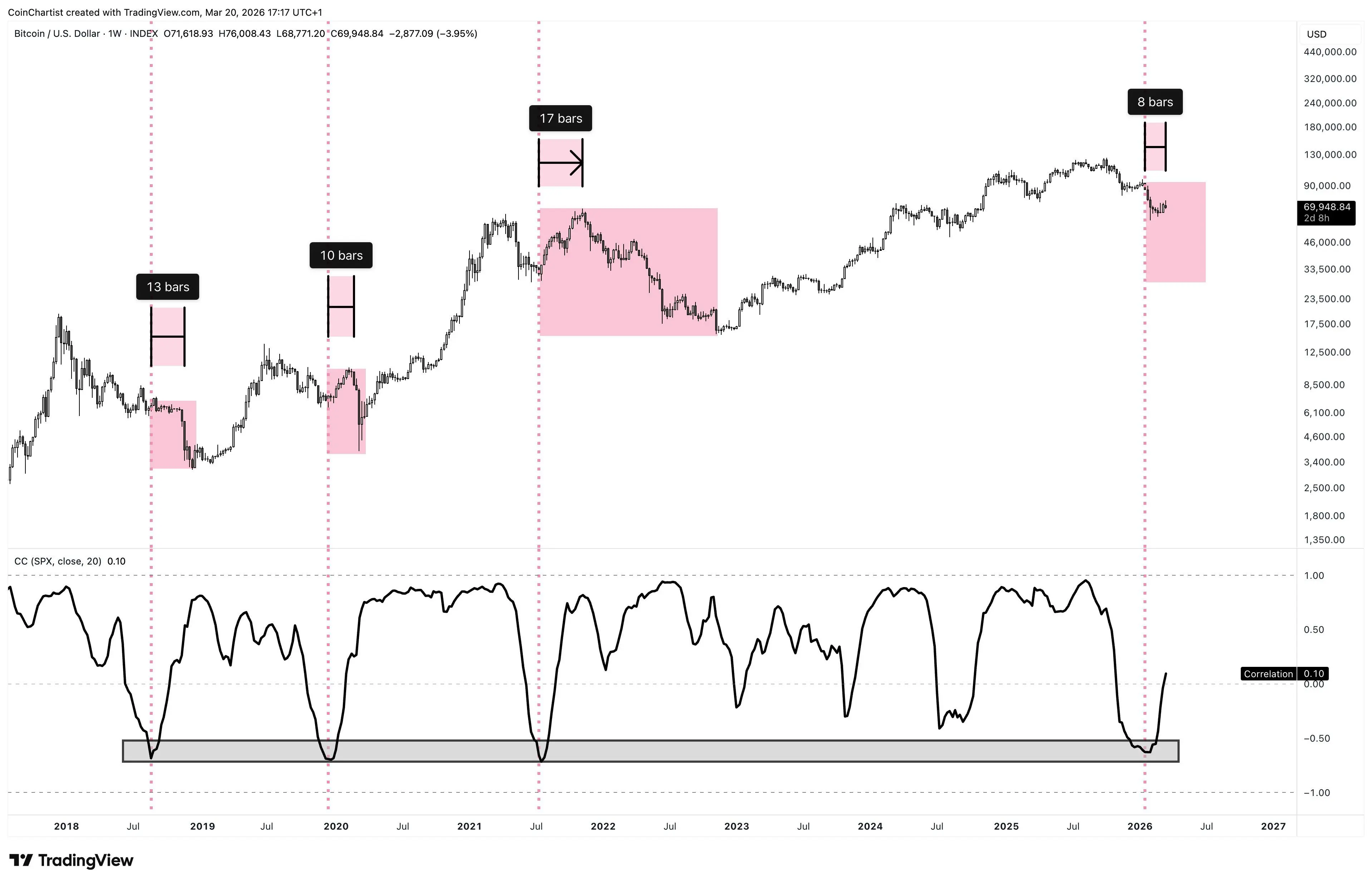
(Source: Trading View)
In early March, Bitcoin strengthened against the backdrop of pressure in traditional markets, sparking narratives of it being a “safe haven alternative asset” during wartime. Analysts began discussing a structural shift of capital flowing from stocks and gold into cryptocurrencies. During this period, Bitcoin’s correlation with stocks briefly dropped to negative, indicating a short-term decoupling.
However, this pattern quickly collapsed at the end of the month. The renewed escalation of geopolitical risks fueled a widespread risk-off sentiment. Bitcoin failed to maintain an independent trend and instead moved in tandem with global risk assets. On-chain data platform Alphractal pointed out that this correlation convergence is a rare signal, often indicating broader market stress ahead, and advised investors to remain highly cautious.
Three Drivers Behind the Rebound in Correlation
Escalating Geopolitical Panic: Trump’s 48-hour ultimatum pushed the Hormuz Strait crisis into the highest risk stage. Global markets entered a “sell first, watch later” passive risk-off mode, with traditional and crypto assets both under pressure.
Expectations of Rate Cuts Fully Diminished: Persistent high inflation combined with soaring oil prices narrowed the window for major central banks to cut rates. The market now perceives a very low probability of Fed rate cuts, and interest rate-sensitive assets have lost a key upward catalyst.
Retail Investor Sentiment at Multi-Year Lows: The latest survey by the American Association of Individual Investors (AAII) shows that 52.0% of retail investors are pessimistic about the market outlook over the next six months, the highest since May 2025. The crypto fear and greed index has remained in the “extreme fear” zone for over 34 consecutive days.
Technical Analysis: Historical Crisis Signals from Correlation Reversal
Tony Severino warns based on historical data: when Bitcoin’s correlation with the S&P 500 sharply rebounds from -0.5 to positive, it often signals an impending stock market crash, with Bitcoin prices typically falling sharply afterward. Currently, the correlation has turned positive, suggesting that the two asset classes may continue to move in sync in the coming weeks.
Severino specifically notes that in the current extremely negative sentiment environment, any short-term rebound could be just a “dead cat bounce”: “Usually, there is an initial rebound that intensifies the pain.” This view prompts analysts and investors to reassess the premise of Bitcoin serving as a “safe haven asset” during wartime. BeInCrypto’s latest short-term technical analysis indicates that if Bitcoin falls below $68,000, it could further decline toward $65,000.
Frequently Asked Questions
Why did the correlation between Bitcoin and stocks reverse in March?
In early March, escalating geopolitical conflicts caused Bitcoin to temporarily exhibit a relatively independent trend, with correlation dropping to negative. By the end of the month, Trump’s ultimatum to Iran triggered widespread panic, expectations of rate cuts diminished, and retail investors’ bearish sentiment reached multi-year highs. These factors combined to push Bitcoin and stocks back into a synchronized decline, turning the correlation positive.
What does Severino’s historical correlation warning specifically imply?
Severino’s analysis shows that when Bitcoin’s correlation with the S&P 500 sharply rebounds from a low of -0.5 to positive, this pattern has historically preceded significant stock market declines, with Bitcoin often falling along afterward. It’s a probabilistic historical observation, not a certain prediction.
Does Bitcoin still have safe haven characteristics in the current environment?
The current market performance challenges Bitcoin’s “wartime safe haven” narrative. At the end of March, Bitcoin and stocks declined sharply together, indicating that in a market dominated by widespread panic, cryptocurrencies still cannot detach from broader risk assets. Analysts believe Bitcoin’s safe haven qualities are more evident in macro long-term contexts; in the short-term liquidity crises, its hedging function is significantly limited.
Disclaimer: The information on this page may come from third parties and does not represent the views or opinions of Gate. The content displayed on this page is for reference only and does not constitute any financial, investment, or legal advice. Gate does not guarantee the accuracy or completeness of the information and shall not be liable for any losses arising from the use of this information. Virtual asset investments carry high risks and are subject to significant price volatility. You may lose all of your invested principal. Please fully understand the relevant risks and make prudent decisions based on your own financial situation and risk tolerance. For details, please refer to
Disclaimer.


