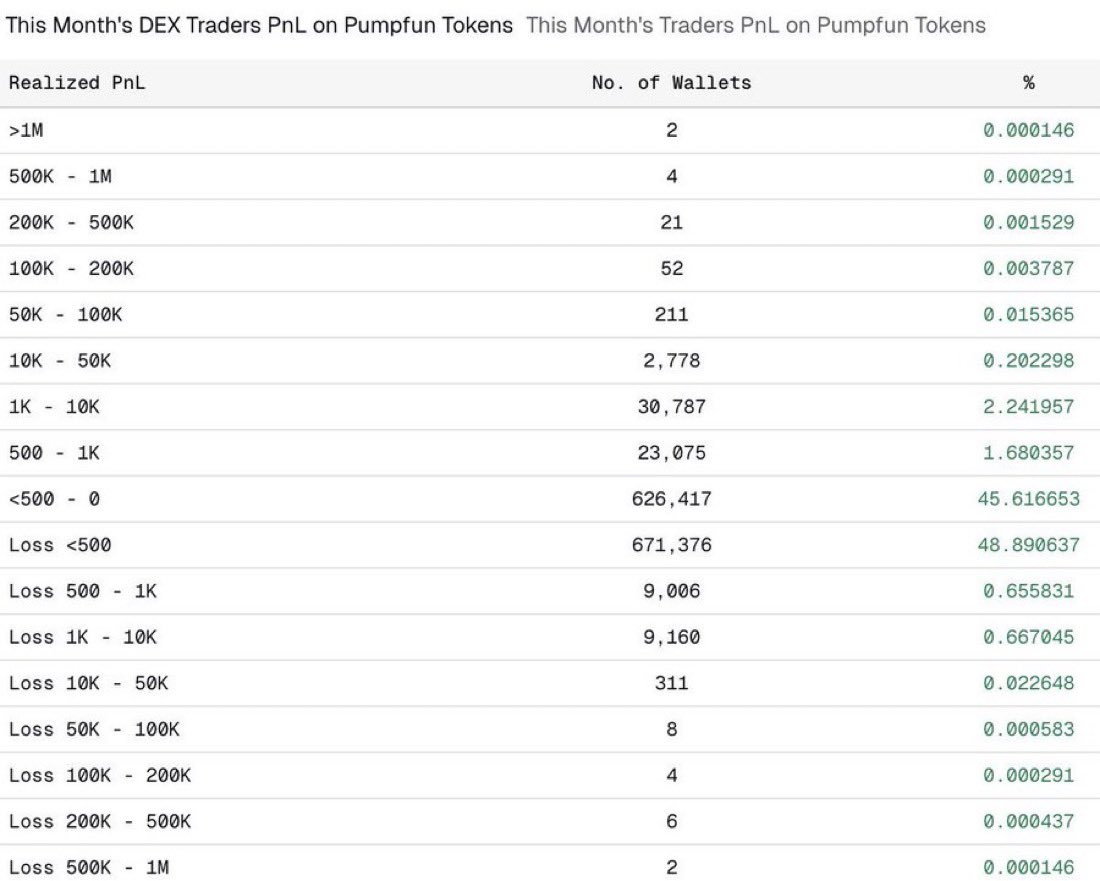
Pump.Fun co-founder Alon announced an agreement update on March 25th to restrict token creators’ ability to manipulate fee distribution, aiming to improve platform trading transparency and trust. However, on-chain data shows over 95% of Pump.Fun users incurred losses in meme coin trading, with reports indicating at least 50.6% of trading wallets experienced losses, and only two wallets had sales exceeding $1 million.
Update: Fee Distribution Now “Only Changeable Once”
( )
)
(Source: PumpFun)
This update mainly addresses two types of problematic behaviors identified by Alon. “Vamping” refers to creators selling off tokens to cash out as demand rises, extracting value from the community; “Griefing” involves damaging holder confidence through sudden changes to fee structures, triggering market sell-offs.
Prior to this update, token creators could adjust the use of transaction fee proceeds at any time after the token gained market recognition. This design led to multiple cases where fees were suddenly changed mid-cycle, causing user backlash and sell-offs. The new rule clearly limits: token creators only have one opportunity to change the fee distribution mechanism, which then becomes permanent unless a more complex governance process is used. This restriction applies to existing platform tokens as well.
From a design perspective, this change effectively eliminates a long-standing manipulation pathway, increasing the predictability of fee structures and providing some protection for token holders.
Core Issues Remain: Three Structural Flaws Not Addressed by This Update
Despite improved fee transparency, analysts point out that the fundamental factors driving most user losses are beyond the scope of this update:
-
Severe Token Oversupply: Large daily issuance of new tokens disperses funds and attention, causing most tokens to quickly lose liquidity after creation.
-
Early Insider Structural Advantage: Early participants with informational or technical advantages can enter at minimal cost and exit first, while ordinary retail investors often enter last.
-
Rapid Liquidity Drain: Liquidity can be extracted by creators or early holders in a very short time, making it difficult for later entrants to exit their funds.
Introducing a fee lock mechanism might slightly boost platform trust, but the market structure still favors a few participants with informational advantages rather than the majority of ordinary traders. Analysts also note that this “few winners, many losers” structure is one of the key reasons many believe the last altcoin bull market ended prematurely.
Frequently Asked Questions
What exactly does the latest Pump.Fun update change?
It restricts token creators’ ability to change fee distribution, from “can change anytime” to “only once, then permanently.” This change prevents creators from manipulating fee structures after circulation, enhancing transparency.
Why have over 95% of Pump.Fun users incurred losses?
Main reasons include oversupply causing rapid liquidity loss; early insiders entering first and exiting first; and frequent rapid liquidity drain behaviors. These structural issues are beyond what this fee lock update can fix.
Does this update fundamentally solve Pump.Fun’s market problems?
No. The update only addresses specific fee manipulation behaviors, representing a partial improvement. Core structural issues like oversupply, early insider advantages, and quick liquidity drain remain, and the overall market pattern has not fundamentally changed.
Disclaimer: The information on this page may come from third parties and does not represent the views or opinions of Gate. The content displayed on this page is for reference only and does not constitute any financial, investment, or legal advice. Gate does not guarantee the accuracy or completeness of the information and shall not be liable for any losses arising from the use of this information. Virtual asset investments carry high risks and are subject to significant price volatility. You may lose all of your invested principal. Please fully understand the relevant risks and make prudent decisions based on your own financial situation and risk tolerance. For details, please refer to
Disclaimer.


