Author: Gilmo
Translation: Yuliya, PANews
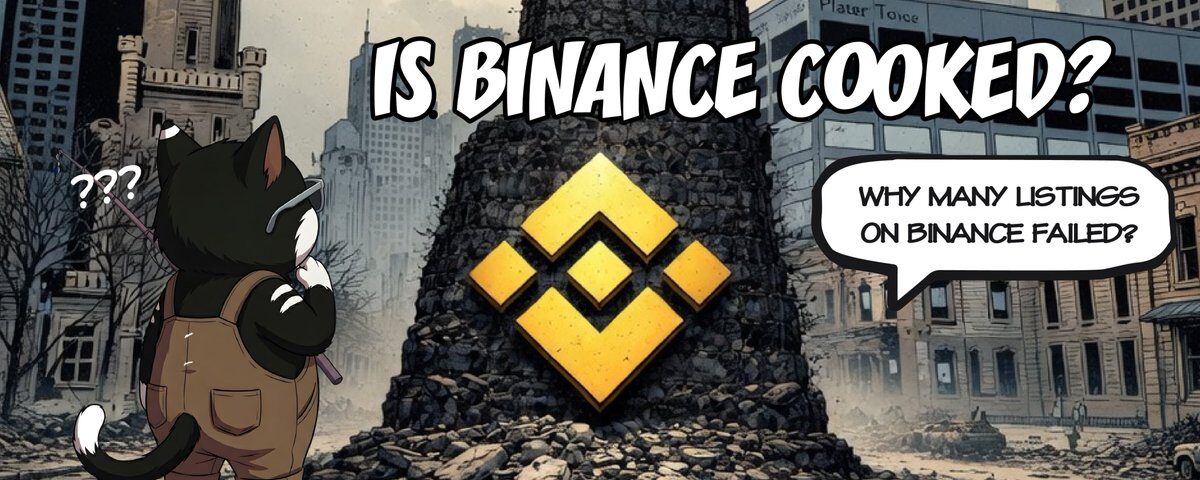
Why have many tokens listed on Binance failed?
Recently, while browsing X or cryptocurrency communities, you may be familiar with the phenomenon of “listing on an exchange leads to liquidation.” The days when listing on Binance meant “soaring to the sky” seem to be a thing of the past. Instead, a “listing curse” has spread within the community, with many investors watching their account balances evaporate daily, leaving them heartbroken.
So, what exactly is happening behind the scenes?
- Overview
2025 revealed a harsh reality. Most tokens listed on Binance’s spot market struggle to maintain their value.
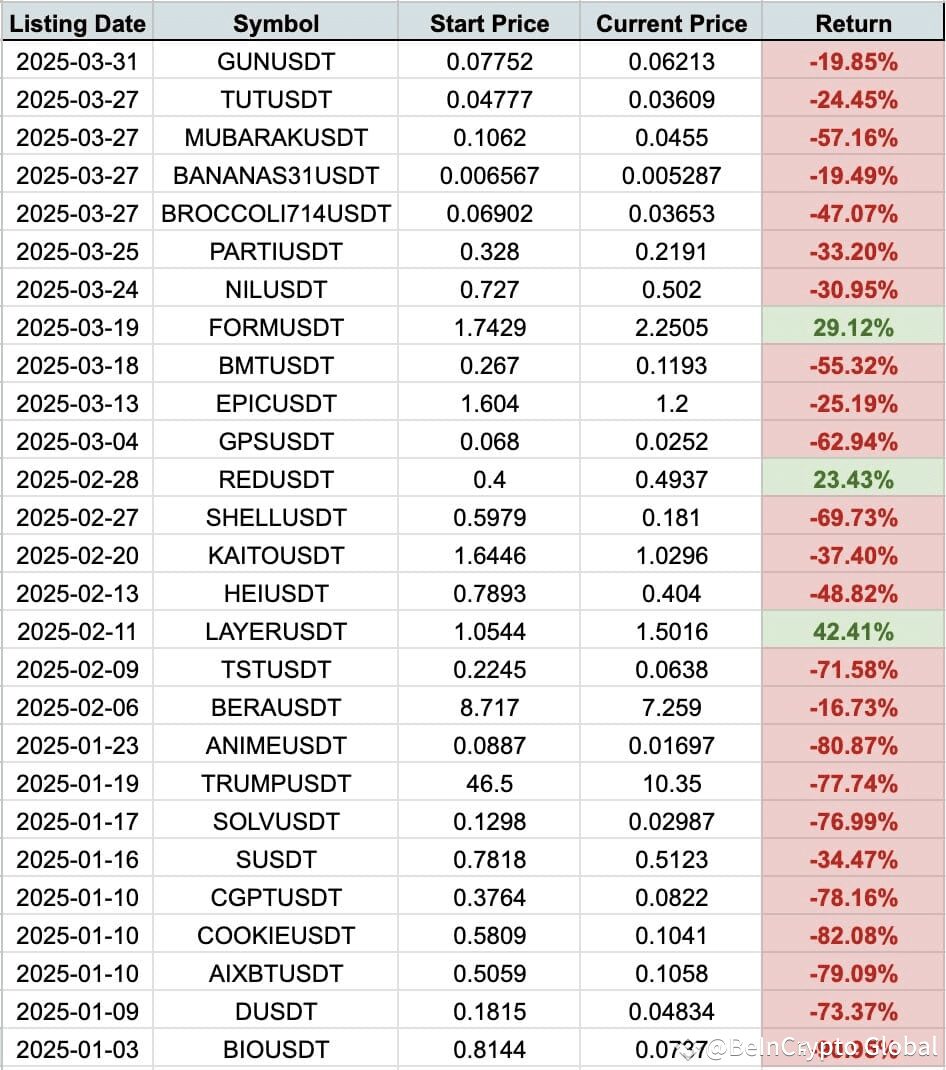
In 2025, 89% of the tokens listed on Binance had negative returns.
+ Price Performance
Approximately 89% to 94% of listed tokens are in a state of severe loss. The average drawdown after listing ranges from 71% to 80%. Many tokens do not experience a dramatic crash but instead exhibit a slow downward trend, with prices gradually declining over time and quietly depleting funds.
+ Reputation
Listing on Binance was once a significant milestone. Now, it is often seen as a liquidity event for early investors to cash out. Due to the immense selling pressure after listing, many traders even refer to it as the “retail exit zone.”
+ Attention Cycle
Most projects gain extremely high attention during the initial few days. However, after that, interest declines rapidly. If there isn’t a real product or user demand, this momentum quickly fades.
+ Operations
Some projects slow down their development pace once they reach the listing milestone. Consequently, the subsequent drop in activity and low liquidity leads to their delisting from exchanges.
For example: A2Z, FORTH, HOOK, IDEX, LRC, NTRN, RDNT, SXP
In early 2026: ACA, CHESS, DATA were also delisted
It is clear that Binance no longer supports projects with weak performance.
2. Listing Categories
In 2025, Binance listed 87 projects covering 16 sectors.
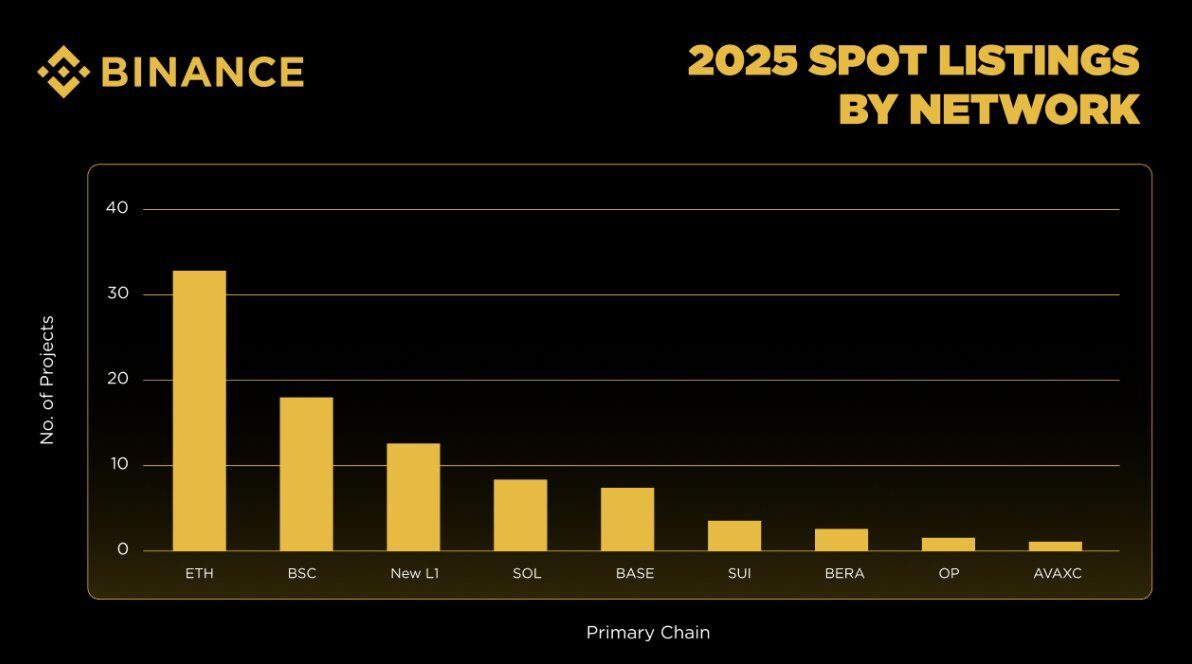
+ Networks
Ethereum dominates with about 36%, followed closely by BNB Chain and Solana.
Notably, Binance has begun to support emerging ecosystems like Nillion and 0G Labs, but due to a lack of real users, this is also a high-risk group.
+ Sectors
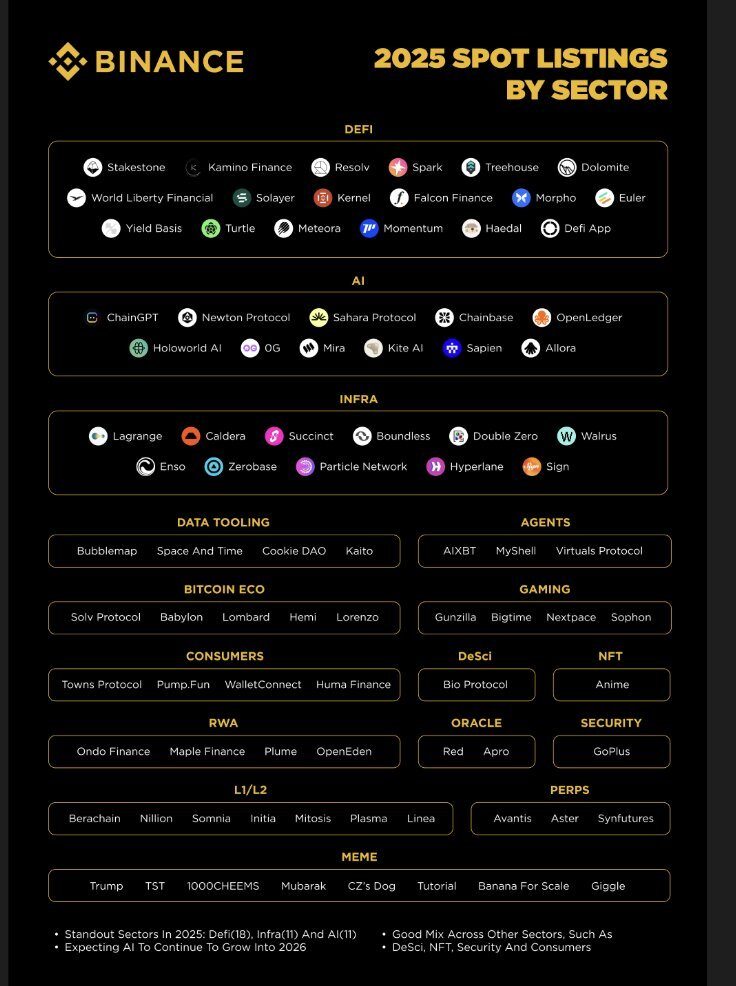
DeFi leads with 18 projects, followed by AI and infrastructure.
Sectors driven by trends, such as Memes and RWA, can quickly gain listing opportunities, but their failure rates are also higher due to a lack of core products.
3. So, why do these tokens fail?
Several key factors can explain this pattern.
1. Insider Liquidation Events
Listings create deep liquidity. This allows teams and early investors to realize profits. Airdrop hunters also increase selling pressure immediately after listing.
2. Overvaluation
Some projects launch with valuations in the billions but have a small user base. The gap between valuation and actual usage puts heavy pressure on prices.
3. Weak Market Capital Flow
During 2025, funds were primarily concentrated around BTC and ETH. New altcoins received limited and fleeting inflows of capital.
4. Heavy on Narrative, Light on Product
Many teams invest heavily in storytelling and marketing. However, real product development progresses slowly. Once the initial hype fades, user interest drops sharply.
5. Market Saturation
Over 11 million tokens were launched in 2025. Supply rapidly increased, while user attention remained limited. Just listing on exchanges is no longer enough to drive sustainable growth.
4. Conclusion
During 2025 to 2026, tokens listed on Binance will resemble the final round of insiders liquidating their holdings rather than an opportunity for retail investors to get rich.
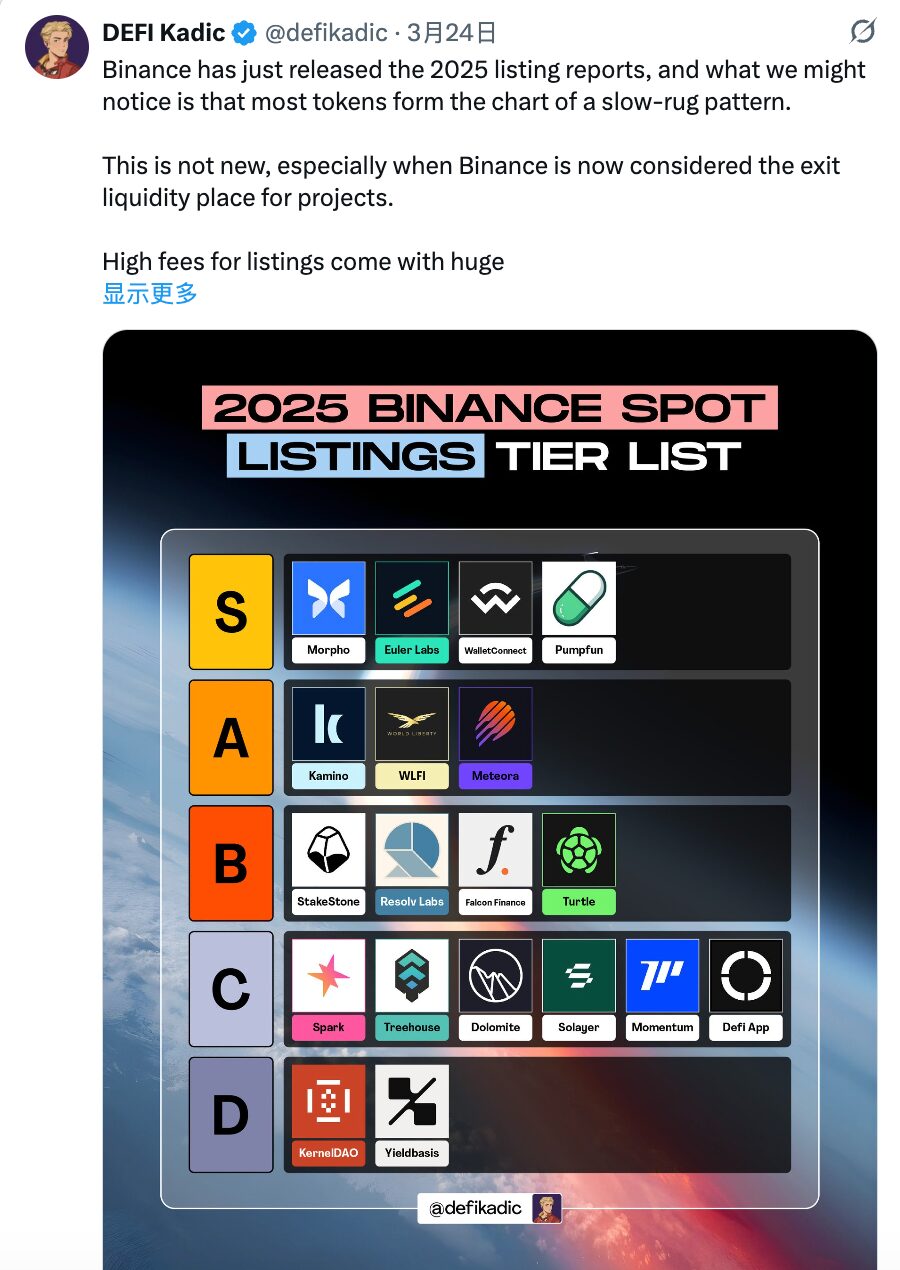
Only projects with real products and strong communities have a chance to survive.
You can refer to the list from @defikadic to understand which are the truly high-quality projects:
Disclaimer: The information on this page may come from third parties and does not represent the views or opinions of Gate. The content displayed on this page is for reference only and does not constitute any financial, investment, or legal advice. Gate does not guarantee the accuracy or completeness of the information and shall not be liable for any losses arising from the use of this information. Virtual asset investments carry high risks and are subject to significant price volatility. You may lose all of your invested principal. Please fully understand the relevant risks and make prudent decisions based on your own financial situation and risk tolerance. For details, please refer to
Disclaimer.


