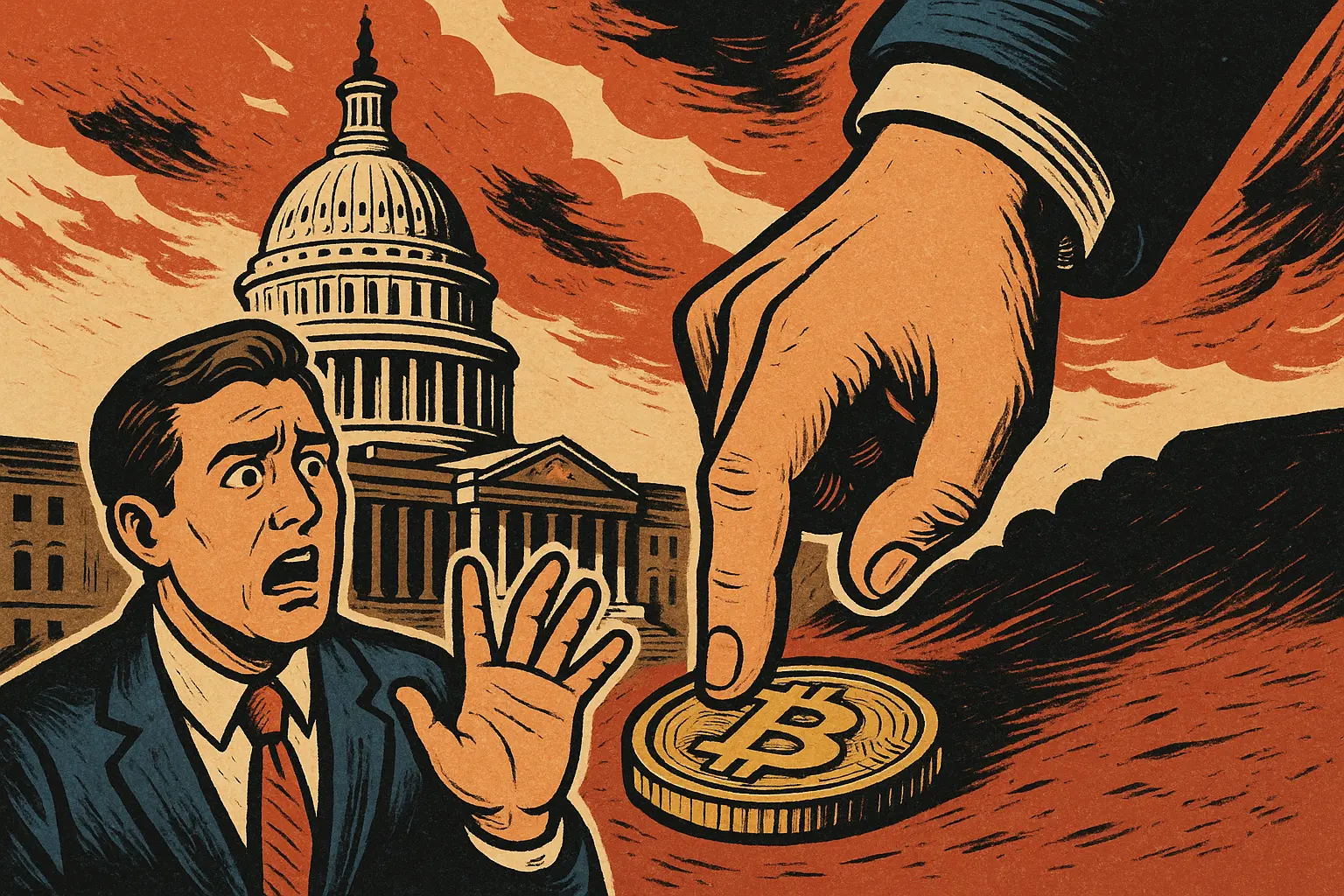
On March 29, Peter Van Valkenburgh, Executive Director of the cryptocurrency advocacy organization Coin Center, warned in a post on X that if legislation like the CLARITY Act regarding the structure of the cryptocurrency market fails to pass, a future U.S. government that is unfriendly to cryptocurrency will be able to take enforcement actions against the industry in the absence of clear rules.
Coin Center’s Core Position: Legislative Protection Does Not Equal Political Goodwill
Van Valkenburgh’s warning centers on the temporal dimension of policy: the current U.S. government is relatively friendly to cryptocurrency, but this goodwill is not legally binding. He stated clearly: “The purpose of passing the CLARITY Act is not to trust this administration, but to bind the next administration.”
Since Gary Gensler resigned as SEC Chairman on January 20, 2025, the cryptocurrency industry has indeed witnessed a significant shift in regulatory direction, including the withdrawal of several long-term enforcement actions and the issuance of more favorable regulatory guidelines. However, Van Valkenburgh warned that if the industry misses the legislative opportunity due to short-term friendly policies, the consequences will be difficult to reverse: “A world without the CLARITY Act providing legal protections for developers will be one governed by prosecutorial discretion, political winds, and fear.”
He also criticized some industry players for prioritizing “short-term commercial interests” and “the ongoing goodwill of those in power,” arguing that this is a shortsighted decision that trades long-term safety for short-term gains. He bluntly stated: “We have tied the noose ourselves and handed it over to future officials, who will certainly be happy to tighten it.”
Four Potential Risks of the Absence of the CLARITY Act
Future DOJ Expansion of Prosecution Scope: Van Valkenburgh predicts that in the absence of legislative protections, the U.S. Department of Justice may intensify criminal prosecutions against privacy tool developers as “unlicensed money transmitters.”
Existing Friendly Guidelines Can Be Revoked at Any Time: The cryptocurrency regulatory interpretations issued by the current administration lack legislative force and can be directly revoked by the next administration.
Enforcement Instead of Legislation Model May Recur: Similar to the Gensler era, enforcement agencies can shape industry rules through selective litigation, bypassing formal legislative procedures.
Legal Status of Blockchain Developers Remains Unclear: In the absence of protective legislation such as the Blockchain Regulatory Certainty Act, developers continue to bear unquantifiable legal risks.
Why the CLARITY Act is Stalled in the Senate
The CLARITY Act is currently stalled in the Senate due to fundamental disagreements among banks, cryptocurrency companies, and lawmakers over key provisions.
The core dispute centers on the issue of stablecoin yield: the banking industry advocates for banning stablecoins from paying yields to holders, arguing that paying yields through exchanges as intermediaries is a regulatory loophole; cryptocurrency operators, on the other hand, wish to retain this function to enhance the market competitiveness of stablecoins.
In addition to stablecoin yield, the CLARITY Act also covers the regulatory registration framework for cryptocurrency intermediaries, the regulatory attribution of digital assets (SEC or CFTC), and token classification standards, among other issues, each touching on deep conflicts of interest between the banking sector and the cryptocurrency industry. U.S. Treasury Secretary Scott Bessent has publicly stated that if the CLARITY Act can pass, it will help boost investor confidence in cryptocurrency, but there remains a considerable distance to reach consensus among all parties.
Frequently Asked Questions
What are the core contents of the CLARITY Act?
The CLARITY Act is a legislative proposal for the structure of the U.S. cryptocurrency market, primarily covering the regulatory registration framework for cryptocurrency intermediaries, the regulatory attribution of digital assets between the SEC and CFTC, and token classification standards. The bill also includes legal protection clauses for blockchain developers, aiming to clarify the legal responsibility boundaries of software developers in cryptocurrency protocols.
Why does Coin Center believe the current government’s friendly attitude is insufficient to protect the cryptocurrency industry?
The fundamental difference between legal protection and administrative policy lies in stability. Regulatory guidelines from administrative agencies can be revoked at any time after a government change, while legislative protections have legal binding force across administrations. One of the legislative goals of the CLARITY Act is to prevent future U.S. governments hostile to cryptocurrency from implementing repression through prosecutorial discretion.
What specific legal risks do developers face in the absence of cryptocurrency legislative protection?
The most direct risk is being classified as “unlicensed money transmitters.” Developers of privacy tools or cryptocurrency protocols, in the absence of clear legislative protections, may face criminal charges brought by the Department of Justice under regulations related to the money services business, even if they do not directly hold or handle user funds.
Disclaimer: The information on this page may come from third parties and does not represent the views or opinions of Gate. The content displayed on this page is for reference only and does not constitute any financial, investment, or legal advice. Gate does not guarantee the accuracy or completeness of the information and shall not be liable for any losses arising from the use of this information. Virtual asset investments carry high risks and are subject to significant price volatility. You may lose all of your invested principal. Please fully understand the relevant risks and make prudent decisions based on your own financial situation and risk tolerance. For details, please refer to
Disclaimer.


