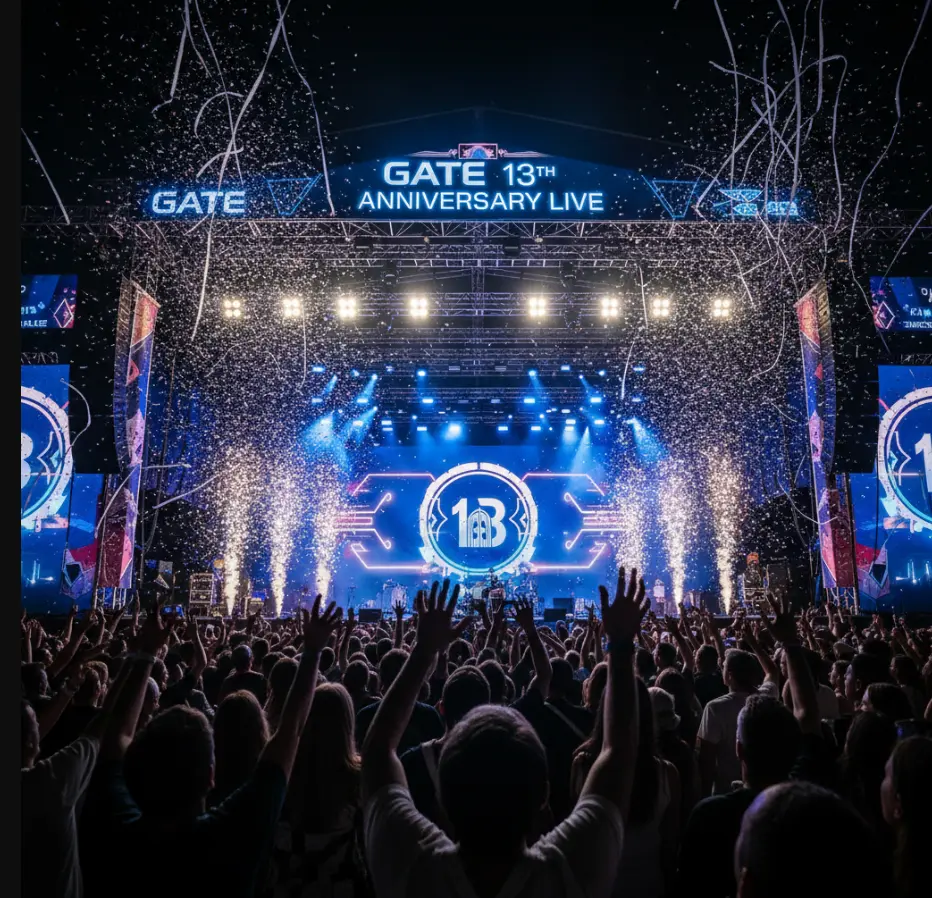
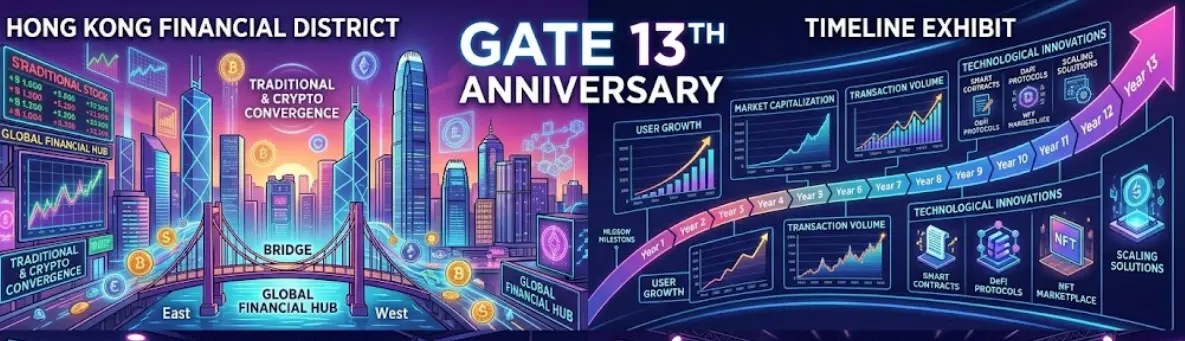
#Gate13thAnniversaryLive Gate has officially launched its 13th Anniversary Global Celebration Campaign, marking over a decade of continuous operation in the cryptocurrency industry with the theme "Your Gateway to iWeb3." This milestone represents one of the longest tenures among active cryptocurrency exchanges, demonstrating sustained resilience through multiple market cycles since the platform's founding in 2013.
The anniversary celebration commenced on April 9, 2026, with the Early Bird Boarding Plan, and will continue through May 27, 2026. This extended campaign period encompasses multiple phases of user engagement, including daily quiz challenges, lucky draw opportunities, and a million-dollar prize pool. Participants can earn exclusive boarding tickets and cabin upgrade eligibility through task completion involving trading, earning, inviting friends, and VIP upgrades. The campaign also features the release of 13 Time Capsule items for collection, with users who complete the full set becoming eligible for the 13th Anniversary Mystery Gift Pack drawing.
The platform's growth metrics underscore the significance of this anniversary. Gate now serves over 50 million registered users globally and supports trading for more than 4,500 digital assets. February 2026 spot trading volume exceeded $74 billion, representing an 11 percent month-over-month increase. The exchange maintains a position among the top three platforms in the AA to A rating category and holds approximately 11 percent market share in derivatives trading. Proof of reserves data shows a 125 percent coverage ratio with total reserve value of $9.478 billion, ranking fourth globally among exchanges.
The 13th anniversary celebration extends beyond digital campaigns to include significant offline events in Hong Kong. The GATE GALA 13 anniversary dinner took place on April 20, 2026, at Rosewood Hong Kong, featuring the Gate 13 Blue Carpet Ceremony and the unveiling of an Oracle Red Bull Racing F1 show car. From April 18 through April 24, the "Racing the Future" outdoor exhibition was presented along the K11 MUSEA Promenade Waterfront, creating a physical manifestation of the platform's brand partnerships and technological vision.
These events connect to Gate's strategic partnerships with Oracle Red Bull Racing in Formula 1 and FC Internazionale Milano, demonstrating the exchange's approach to brand building through association with high-performance sports and global entertainment. The F1 partnership in particular aligns with the platform's emphasis on speed, precision, and cutting-edge technology.
The anniversary campaign includes the "13 Moments with Gate" user engagement initiative, running from April 14 through April 27, 2026. This program invites users to share their experiences with the platform across three distinct topics. The MyGateStory category encourages users to recount their trading journeys and memorable platform interactions, with three selected winners receiving exclusive Gate 13th Anniversary gift boxes. The WhatIWantToSayToGate topic invites messages and wishes for the platform's future, with the top ten posts by engagement receiving 500 USDT position vouchers and Gate Ukey hardware devices. The Next13YearsPrediction category asks users to forecast the cryptocurrency landscape in 2039, with ten winners receiving 500 USDT position vouchers and commemorative bottle openers. Additional engagement rewards recognize users who generate significant community interaction through their posts.
Gate has released a 13th anniversary brand film across major social media platforms, with the first installment revisiting 2013 when Bitcoin first exceeded $1,000. The film connects key milestones in the platform's development to broader cryptocurrency market history, emphasizing the long-term approach of continuous building through multiple bull and bear cycles. This narrative positioning reinforces the platform's message that sustained operation and user trust accumulation create competitive advantages that transcend short-term market fluctuations.
The anniversary celebration coincides with significant platform expansion into multi-asset trading and artificial intelligence integration. Gate has introduced a dedicated TradFi trading section offering tokenized traditional assets including stocks, metals, indices, foreign exchange, and commodities. This expansion bridges digital asset markets with conventional financial instruments, creating a unified trading environment for users seeking exposure across asset classes.
The Gate DEX has undergone substantial upgrades, now offering comprehensive on-chain financial products including spot trading, futures, swap functionality, and asset listings. Gate Perp DEX processes over one million monthly transactions, while Gate Layer on-chain addresses exceed 100 million, indicating significant adoption of the platform's decentralized infrastructure.
Artificial intelligence capabilities have been integrated across the platform through multiple initiatives. GateAI provides market interpretation, strategy insights, and trading assistance. Gate for AI integrates centralized exchange, decentralized exchange, wallet, payment, news, and information services with AI agent capabilities. GateRouter serves as an AI aggregation portal enabling one-click access to major AI models. GateClaw functions as a native AI agent for intelligent trading execution. These tools represent the platform's positioning for the emerging intelligent Web3 era referenced in the anniversary theme.
Compliance infrastructure has been established across key markets, with multiple Gate entities obtaining registrations or licenses in Malta, Cyprus, the Bahamas, Japan, the United States, Australia, and Dubai. This regulatory footprint provides operational clarity and user protection across major jurisdictions, supporting the platform's global expansion strategy.
The anniversary celebration includes founder CEO Dr. Han conducting in-depth dialogues with global users, participation in Paris Blockchain Week and the Hong Kong Web3 Carnival, and a global trading competition designed to increase platform activity and encourage strategy innovation among participants.
The timing of this 13th anniversary holds particular significance within the cryptocurrency industry context. Few exchanges founded in 2013 remain operational today, and those that survived have generally established dominant market positions. Gate's sustained operation through the Mt. Gox collapse, the 2018 bear market, the 2022 Terra and FTX implosions, and multiple regulatory challenges demonstrates operational resilience that newer platforms have not yet proven.
The platform's evolution from a simple Bitcoin exchange to a comprehensive financial ecosystem spanning centralized trading, decentralized protocols, payment systems, and AI integration reflects the broader maturation of the cryptocurrency industry. The 13th anniversary celebration serves as both a retrospective on this transformation and a positioning statement for the next phase of development.
As the campaign continues through May 2026, the platform aims to reinforce user relationships, attract new participants, and establish the foundation for the next thirteen years of operation. The combination of digital engagement mechanics, offline events, product launches, and brand storytelling creates a comprehensive anniversary program that leverages the milestone for strategic positioning in an increasingly competitive market.