
Futures
Access hundreds of perpetual contracts
TradFi
Gold
One platform for global traditional assets
Options
Hot
Trade European-style vanilla options
Unified Account
Maximize your capital efficiency
Demo Trading
Introduction to Futures Trading
Learn the basics of futures trading
Futures Events
Join events to earn rewards
Demo Trading
Use virtual funds to practice risk-free trading
Launch
CandyDrop
Collect candies to earn airdrops
Launchpool
Quick staking, earn potential new tokens
HODLer Airdrop
Hold GT and get massive airdrops for free
Launchpad
Be early to the next big token project
Alpha Points
Trade on-chain assets and earn airdrops
Futures Points
Earn futures points and claim airdrop rewards


More


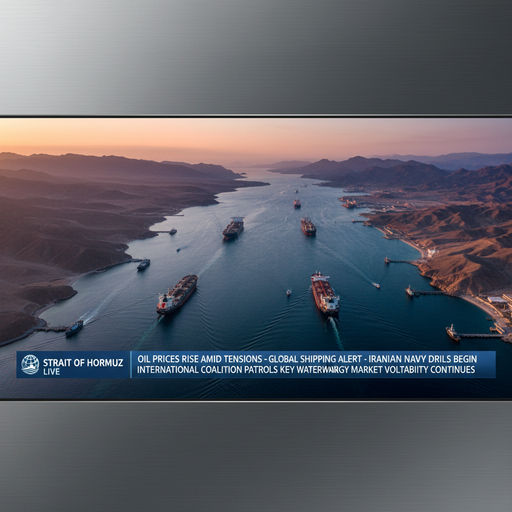
The most thrilling “survey”? An “influencer AI research institution”: public data underreported 50% of the real Strait of Hormuz traffic volume
Today, the most “explosive” piece of material in the financial world comes from a first-hand field report about the Strait of Hormuz.
Previously, the research institution Citrini Research, which stirred up a storm in the market—even “crashing” the stock prices of a number of related companies—with its AI “thought experiment” report 《Global Smart Crisis 2028》, has now released another major geopolitical dossier. It has caused quite a stir among traders, shipping insurance professionals, and energy research circles, for a simple reason: when the market debates whether the strait “is open or not” and whether it could “suddenly close,” this report pulls the discussion straight back to the ground.
The main character of the report is Citrini Research’s mysterious “Analyst No. 3.” Unlike the typical kind of secondhand compilation, he chose to go to the area near the strait himself—to “count ships,” observe shipping lanes, chat with local people and crew members, and record the inspection, detention, and risk details he encountered along the way. Many readers’ first reaction after finishing it is: this feels more like a field reconnaissance log than a macro commentary produced in an office—and that is precisely the kind of impact Citrini has consistently delivered, using details to drag the market back to reality.
“Analyst No. 3” observed on-site that the actual number of vessels transiting the Strait of Hormuz is clearly higher than what publicly available AIS data shows, meaning the market systematically underestimates real traffic. The key figure in the report is particularly jarring—“under the current conditions, the AIS system fails to report about 50% of actual passing vessels per day.”
More importantly, he describes the strait’s situation as a form of “dynamic enforcement.” The strait is not well summarized by a simple “open/closed” binary label, because the rules on the ground are changing, and so are the enforcers. The report writes that the Islamic Revolutionary Guard Corps (IRGC) is taking the lead on new regulations on-site regarding “who can pass.” Patrol boats and Shahed drones operate frequently, and the risk of amplified volatility to the global oil and gas supply chain could be magnified at any time.
How to fill the information gap: “counting ships” on-site is the most direct method
The Strait of Hormuz is like a “master valve” for global energy. The U.S. Energy Information Administration (EIA) has long estimated that the Strait of Hormuz carries a substantial share of the world’s seaborne crude oil and refined products flow (often cited at around the two-tenths level). Any news that “misjudges opening or closing” will quickly show up in oil prices, freight rates, and insurance premium rates.
The problem is that the market’s common tools—public AIS, certain satellite imagery, and scattered anonymous intelligence—each have blind spots. In the report, Citrini offers a very straightforward judgment: “When there is a huge information gap in the market about whether the strait is ‘open or closed,’ the most direct and effective way is to count ships on-site.” This also explains why the report has drawn attention: it provides scarce first-hand observations, at the cost of extremely high personal risk.
From Dubai to Musandam: “high-risk evidence gathering”
Citrini’s inspection route is written in great detail: Dubai → Fujairah oil port → Musandam Governorate in Oman (Khasab) → attempting to board a speedboat to enter the strait’s core waters. The value of this route is that it lets him observe the entire chain—“port supply—border enforcement—sea passage”—rather than focusing only on that segment of water along the strait’s midline.
His equipment is also not like ordinary business travel: a Leica zoom camera, recording glasses, an EPIRB distress beacon, about $15k in cash, and he even mentions bringing spare phones (including a Xiaomi phone) as well as supplies such as Zyn. The report clearly carries a field tone—for example, he describes the trip as “like writing the research report into a waterproof bag,” ready at any moment to deal with detentions and sudden situations.
Key Finding One: “Half is missing” from AIS; dark AIS and “hidden corridors” move in to fill the gap
One of Citrini’s most heavyweight conclusions is a direct blow to AIS reliability. He wrote: “Under the current environment, the AIS system fails to report about 50% of actual passing vessels each day, and the publicly available data the market relies on is no longer reliable.” If you compare AIS to navigation on a highway, it can indeed show most vehicles—but when some cars “turn off their location” or take side roads that are not marked on public maps, the screen looks like it has big empty gaps.
He observed more vessel traffic on-site, especially some ships choosing permitted channels near Iran’s coastline, which he calls “hidden corridors.” Some vessels use dark AIS (signals turned off) or do not fully rely on public tracking systems. For trading and risk control, this means a real-world problem: using public AIS to estimate whether “traffic has sharply declined” may seriously underestimate actual passage volume, thereby amplifying fear or risk-premium mismatches.
To support this, shipping-industry organizations like BIMCO—and some insurance and maritime bulletin channels (for example, the navigation safety bulletin system of UKMTO)—have long warned that in high-risk waters, whether AIS is turned on often follows safety and evasion strategies, so publicly available data naturally contains bias. Citrini’s contribution is that he quantified this “bias” into a more impactful approximate proportion.
Key Finding Two: IRGC-led “dynamic enforcement” makes the strait more like “temporary traffic control”
On the security and political levels, the report emphasizes that the control logic of the strait is changing. It states that the IRGC sets and enforces new passage rules on-site, patrol boats and Shahed drones are frequently active, and the strait is in a “dynamic enforcement” state. In a more intuitive analogy, it is a bit like a key thoroughfare: the road is not fully closed, but traffic police can set temporary lanes at any time, conduct spot checks, and operate with lists of cleared vessels—so the passage experience and risk can fluctuate on an hour-by-hour basis.
On sensitive issues, the report also leaves room for market interpretation. Some security-minded people in certain regions may view increased controls as serving boundary security and deterrence needs; shipping companies and traders care more about the unpredictability created by the rules being temporary, because what the supply chain fears most is not “being expensive,” but “not knowing when it will get stuck.”
Inspections, detentions, and “signing commitments”: why this material comes with a high cost
The most vivid on-the-ground segment in the report occurs at an Oman border checkpoint. Citrini describes being required to sign a commitment of “no photography, no journalism, no collecting intelligence.” After that, he rides a GPS-free speedboat driven by a stranger; the report says the speedboat is “only 18 miles from the Iranian coastline,” and even includes details such as “swimming in the strait, smoking cigars,” to show just how close he was to the real shipping route and enforcement forces.
More dramatic is that he was intercepted and detained by the Oman Coast Guard, his phone was confiscated, and his notes and photos may have fallen into official hands. For readers, the significance of such episodes is not sensationalism, but rather explaining a fact: as data sources become increasingly difficult and public information becomes more fragmented, the cost of first-hand observation is rising sharply—directly affecting the quality of market information and pricing efficiency.
How should the market judge “strait risk” going forward?
A common question is: since public AIS is unreliable, what can the market still trust?
The more realistic answer is: change from a “single data source” to a “multi-source mosaic.” Traders and risk-control teams can cross-validate public AIS, commercial satellite data (especially SAR, which works better at night and through cloud cover), port loading/unloading and queue data, changes in insurance quotes, and official maritime bulletins. Think of it as using multiple cameras to watch the same intersection—when one camera is blocked, the overall traffic trend can still be reconstructed.
Another question is: how will this affect oil prices and shipping?
Institutions such as the EIA and the International Energy Agency (IEA) have repeatedly emphasized the importance of the Strait of Hormuz. Risk premia often come from the product of “probability of interruption × impact of interruption.” Citrini’s report improves the market’s understanding of the “impact” part: the strait does not show a simple shutdown. The way passage works is changing; the rules are more temporary; and risk looks more like “spiky pulses.” The transmission of such risk to options implied volatility, freight rates, and insurance surcharges is often more sensitive than it is for spot transactions.
Volatility comes from “unpredictable temporary rules”
Citrini is cautious in his outlook: IRGC-led on-site rules will make it easier for the strait to experience sudden friction, and volatility in the global oil supply chain may more frequently exhibit characteristics like “brief, intense, and hard to verify.” For the market, such an environment will reward participants who can respond quickly and have more three-dimensional information sources.
His recommendation is also explicit: don’t treat the strait like a switch, and don’t treat AIS as the truth. The reason the line “count ships on-site” is so震撼 is that it reminds the market: when information gaps are large enough, risk control and research need to be closer to on-the-ground reality—no matter the cost, no matter the risk.
In short, the core takeaway of the report is that the actual number of transits through the Strait of Hormuz may be significantly higher than what publicly available AIS shows; order in the strait shows characteristics of dynamic enforcement; and any information that misjudges opening/closing could amplify volatility across global energy and shipping chains.
On the one hand, the market may need to recalibrate the mapping between “traffic and risk premia.” On the other hand, the data methodology will be forced to upgrade—from relying on a single public indicator to moving toward more expensive but more robust multi-source verification. For trading, shipping, and the industrial end, these changes will push “information advantage” to an even more central position.
Risk Warning and Disclaimer