The evolution of bitcoin mining machines in 2025 came down to an unyielding chase for leaner energy use paired with massive gains in computational muscle, all centered on the application-specific integrated circuit (ASIC) market. What follows is a rundown of the top five bitcoin mining machines as the year wraps up and the industry rolls straight into 2026.
Why 2025 Became the Year Bitcoin Mining Hardware Leveled Up
2025 delivered a clear hardware leap, with next-generation rigs rolling out hashrates comfortably north of 1,000 terahash per second (TH/s), neatly translating to 1 petahash per second (PH/s). These heavyweight machines powered the steep climb in overall hashpower, and thanks to steadily improving joules per terahash (J/TH) efficiency, they made life noticeably easier for miners throughout the year.
Beyond brute force, cooling breakthroughs took center stage, as advanced liquid and immersion systems gained broader traction, particularly across large-scale, professional operations. With that in mind, it’s time to dig into the top five 2025 bitcoin mining machines ranked by hashrate output and efficiency.
MicroBT Whatsminer M79S (1.35 PH/s)
The MicroBT-crafted Whatsminer M79S is a hydro-cooled SHA-256 ASIC miner delivering an immense 1350 TH/s or 1.35 PH/s of hashpower. It was just announced in December and the M79S represents MicroBT’s petahash-scale miner for industrial farms.
 The MicroBT Whatsminer M79S.
The next-generation Whatsminer supports a consistent output of 14.8 J/TH. Bitmain’s Antminer S23 Hydro 3U (1.16 PH/s) goes toe-to-toe with the new M79S, delivering 1,160 TH/s of straight-up hashpower.
The MicroBT Whatsminer M79S.
The next-generation Whatsminer supports a consistent output of 14.8 J/TH. Bitmain’s Antminer S23 Hydro 3U (1.16 PH/s) goes toe-to-toe with the new M79S, delivering 1,160 TH/s of straight-up hashpower.
Bitmain Antminer S21e XP Hydro 3U (860 TH/s)
The Antminer S21e XP Hydro 3U sits comfortably as Bitmain’s high-performance, water-cooled standout in the S21 lineup. It cranks out 860 TH/s while pulling about 11,180 W, settling in near 13 J/TH when operating in hydro mode.
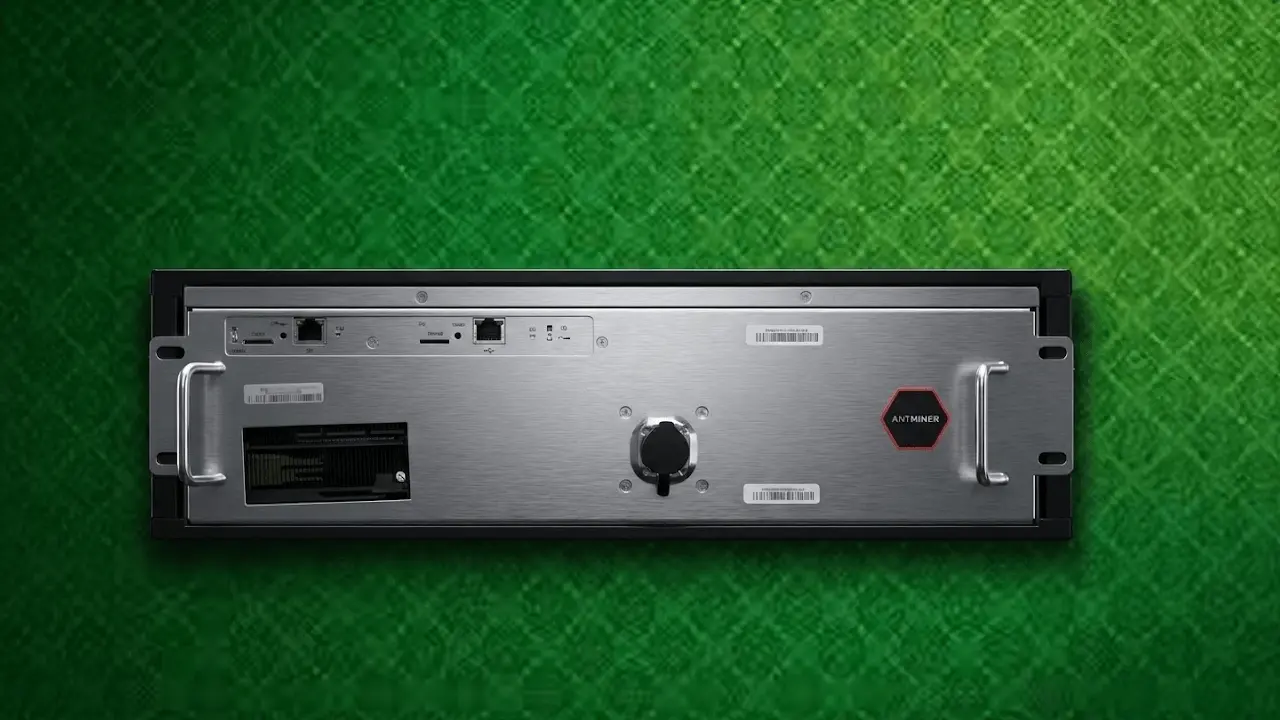 The Bitmain Antminer S21e XP Hydro 3U.
The machine leans on direct liquid-to-chip (DLC) cooling and slides cleanly into a compact 3U rack form factor. This isn’t a brand-new face either—the S21e XP Hydro 3U has been in circulation for a while, first unveiled in September 2024.
The Bitmain Antminer S21e XP Hydro 3U.
The machine leans on direct liquid-to-chip (DLC) cooling and slides cleanly into a compact 3U rack form factor. This isn’t a brand-new face either—the S21e XP Hydro 3U has been in circulation for a while, first unveiled in September 2024.
Block Proto Rig (819 TH/s)
The Proto Rig is a novel, air-cooled bitcoin miner cooked up by the hardware arm of Block Inc. It delivers 819 TH/s while consuming about 12,000 W, translating to roughly 14.1 J/TH in standard air-cooled operation.
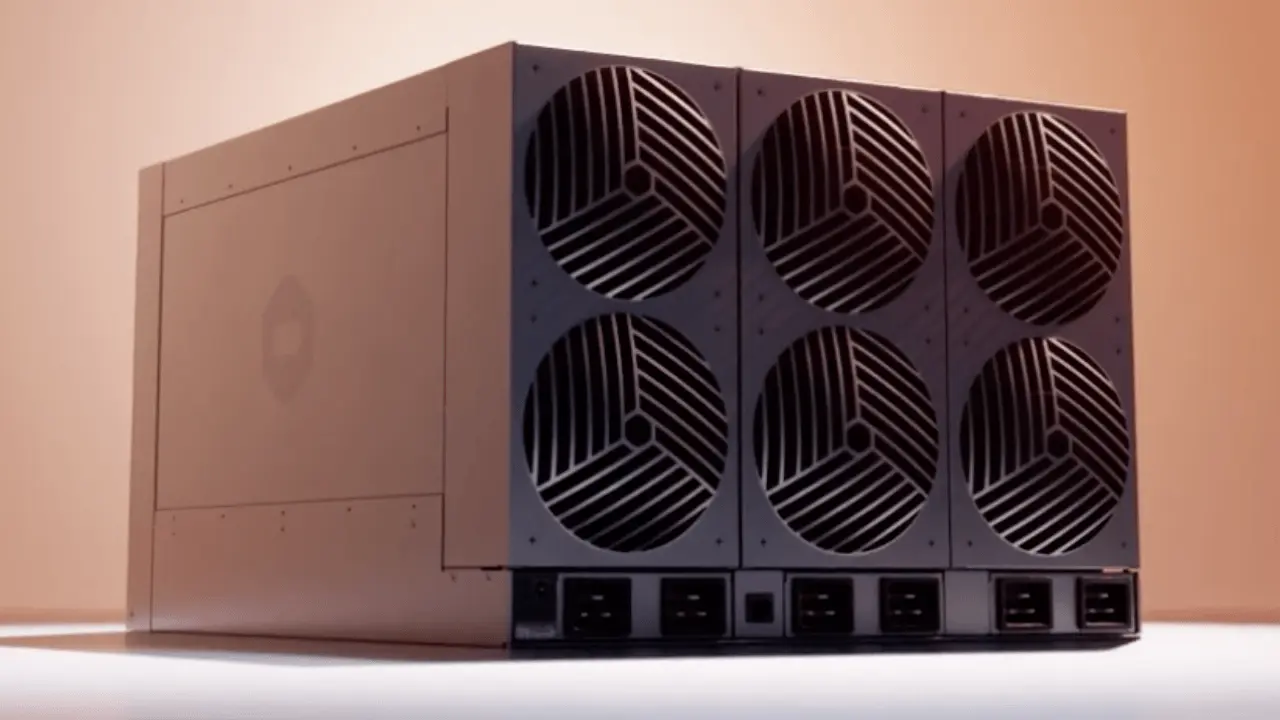 Block’s Proto Rig.
The setup is unapologetically modular, packing nine hot-swappable hashboards—each clocking in at around 91 TH—into a single unit. Rolled out in mid-2025, the machine is powered by Block’s U.S.-engineered 3-nanometer ASICs, with a focus on efficiency and long-term durability.
Block’s Proto Rig.
The setup is unapologetically modular, packing nine hot-swappable hashboards—each clocking in at around 91 TH—into a single unit. Rolled out in mid-2025, the machine is powered by Block’s U.S.-engineered 3-nanometer ASICs, with a focus on efficiency and long-term durability.
Bitdeer Sealminer A3 Pro Hydro (660 TH/s)
The Sealminer A3 Pro Hydro is Bitdeer’s flagship hydro-cooled ASIC, unveiled in September 2025 as part of the A3 series. It pushes out 660 TH/s while drawing roughly 8,250 W, translating to an impressive efficiency of about 12.5 J/TH.
 The Bitdeer Sealminer A3 Pro Hydro.
Cooling is handled through a closed-loop water system that aims to keep things running smooth under pressure. At its core, the A3 Pro Hydro is powered by Bitdeer’s latest A3 chips.
The Bitdeer Sealminer A3 Pro Hydro.
Cooling is handled through a closed-loop water system that aims to keep things running smooth under pressure. At its core, the A3 Pro Hydro is powered by Bitdeer’s latest A3 chips.
Bitmain Antminer S23 Hydro (580 TH/s)
The Antminer S23 Hydro is Bitmain’s next-generation flagship, unveiled at WDMS 2025 as a water-cooled system chasing next-level efficiency. It delivers roughly 580 TH/s while drawing about 5,510 W, clocking in at an eye-catching 9.5 J/TH—placing it among the most efficient bitcoin miners available.
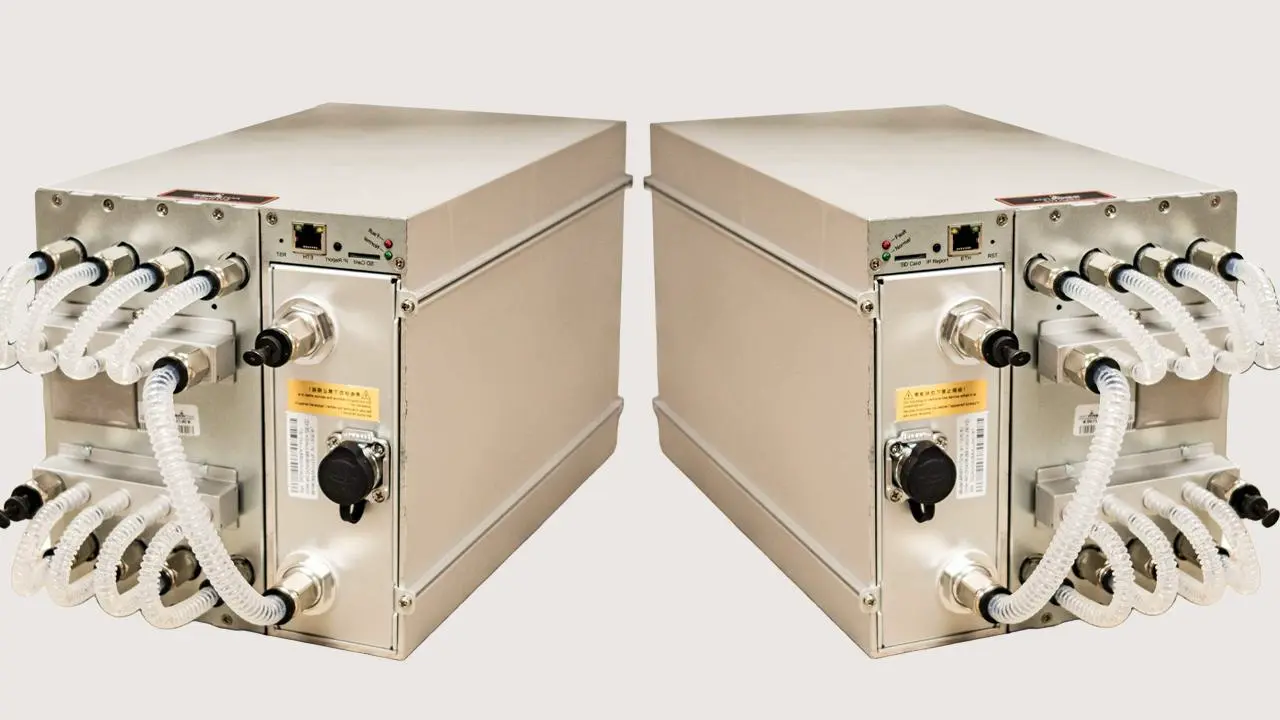 Bitmain’s Antminer S23 Hydro.
The S23 Hydro sticks with a proven hydro-cooling approach, with coolant coursing through plates mounted directly to the chips to whisk heat away fast. Built squarely for industrial environments, the miner calls for 380–415 V input and serious cooling infrastructure to match its ambitions.
Bitmain’s Antminer S23 Hydro.
The S23 Hydro sticks with a proven hydro-cooling approach, with coolant coursing through plates mounted directly to the chips to whisk heat away fast. Built squarely for industrial environments, the miner calls for 380–415 V input and serious cooling infrastructure to match its ambitions.
Mining Machines Below the 0.5 PH/s Line
Below the 500 TH/s-class bruisers, a busy pack of lower-tier bitcoin miners rounded out the 2025 hardware roster, delivering respectable hashpower without stepping over the 0.5 PH/s threshold. Machines such as Bitmain’s Antminer S21 XP+ Hydro and S21 XP Hydro hovered in the 470–500 TH/s band with power draws around 5.5 kW, carving out a niche as efficiency-minded workhorses for seasoned operations.
MicroBT’s Whatsminer M73S and M73S+ nudged the ceiling higher, brushing up against 540 TH/s, though they did so while demanding north of 7 kW. Bitdeer’s Sealminer A2 Pro Hydro and A3 Hydro settled comfortably in the middle, blending 500 TH/s-class output with heavier wattage that fit best in sites already dialed in for hydro cooling.
Meanwhile, Auradine’s Teraflux AH3880 grabbed attention this year with a hefty 600 TH/s punch, paired with a noticeably larger appetite for power, a tidy reminder that in this secondary tier, more muscle still comes with a bigger electricity bill.
Bitcoin Mining Arms Race Shows No Signs of Slowing
Taken together, these bitcoin mining rigs tell a clear story: mining in 2025 became less about squeezing out marginal gains and more about engineering dominance. Hashrate milestones once considered absurd are now shipping in rack-ready form, while efficiency metrics have quietly become the real battleground separating hobby-grade hardware from serious industrial muscle.
As the industry heads into 2026, the arms race shows no signs of cooling off—even if the miners themselves are running colder than ever. With hydro systems, modular designs, and ever-tighter joules-per-terahash ratios, the latest generation of rigs makes one thing obvious: modern bitcoin mining is no longer just about power—it’s about precision.
FAQ ❓
- What changed in bitcoin mining hardware in 2025?
Bitcoin mining hardware crossed the 1 PH/s threshold in 2025 while sharply improving energy efficiency through lower joules per terahash.
- Which bitcoin miner delivered the highest hashrate in 2025?
The MicroBT Whatsminer M79S led 2025 miners with 1.35 PH/s of SHA-256 hashpower.
- Why did hydro-cooled bitcoin miners dominate in 2025?
Hydro cooling allowed miners to run higher hashrates at lower temperatures and improved efficiency in large-scale operations.
- What defines the next generation of bitcoin mining rigs going into 2026?
The next wave of bitcoin miners emphasizes petahash-scale output, tighter J/TH ratios, and industrial-grade cooling systems.
Disclaimer: The information on this page may come from third parties and does not represent the views or opinions of Gate. The content displayed on this page is for reference only and does not constitute any financial, investment, or legal advice. Gate does not guarantee the accuracy or completeness of the information and shall not be liable for any losses arising from the use of this information. Virtual asset investments carry high risks and are subject to significant price volatility. You may lose all of your invested principal. Please fully understand the relevant risks and make prudent decisions based on your own financial situation and risk tolerance. For details, please refer to
Disclaimer.
Related Articles
Rich Bitcoin traders lost $337M daily in first quarter of 2026
Bitcoin (BTC) traders holding 100–10,000 BTC realized losses at an average of $337 million per day in Q1 2026, the worst quarter since 2022, according to data from Glassnode.
Key takeaways:
Bitcoin dropped more than 20% after whales last realized losses at a comparable pace in 2022.
Cointelegraph31m ago
Bitcoin whales and sharks posted daily losses exceeding $300 million in Q1, with cumulative losses of $30.9 billion within the year
According to Glassnode data, in the first quarter of 2023, the average daily losses for “sharks” holding between 100 and 1,000 BTC and “giant whales” holding between 1,000 and 10,000 BTC were 188.5 million and $147.5 million, respectively, totaling approximately $337 million. Meanwhile, the year-to-date cumulative losses have already reached $30.9 billion, approaching the level of the 2022 bear market. Long-term holders’ average daily losses are still around $200 million, with the market affected by macro risks and weakening confidence.
GateNews36m ago
Bitcoin Treasury Company Hyperscale Data Receives a $26.60 Million Lawsuit Settlement, Increasing Its Holdings to 633.86 BTC
Hyperscale Data announced that its subsidiary received approximately $26.6 million in lawsuit settlement payments, improving liquidity. The company’s Bitcoin holdings increased to 633.8609 BTC; Sentinum holds 586.6674 BTC, mainly obtained through market purchases and mining.
GateNews46m ago
Price predictions 4/3: BTC, ETH, BNB, XRP, SOL, DOGE, HYPE, ADA, BCH, LINK
Key points:
Buyers are attempting to maintain BTC above the $66,500 level, but several analysts believe that the $60,000 level may crack.
Some major altcoins risk breaking below their immediate support levels, signaling that bears remain in control.
Buyers are attempting to push an
Cointelegraph1h ago
VanEck Research Director: BTC derivative protective demand hits the 99th percentile historically, signaling a potential contrarian long setup
VanEck Research head Matthew Sigel said that demand for hedging in the Bitcoin derivatives market has reached the 99th percentile in history, suggesting that it may be suitable to establish long positions. At the same time, he warned that high capital expenditures in the artificial intelligence sector could put pressure on the market, especially in the S&P 500.
GateNews1h ago


