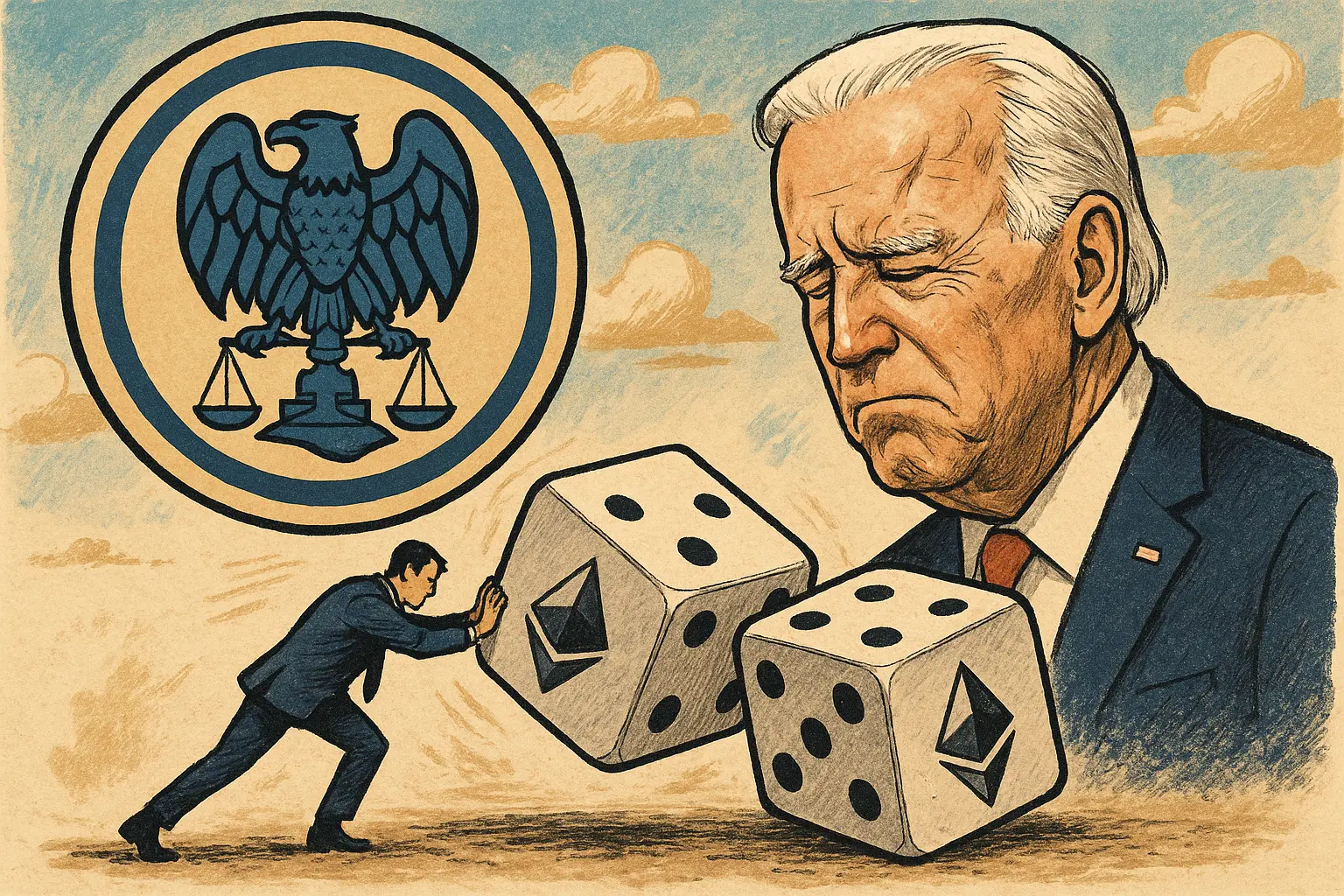
CFTC Chair Selig withdraws proposal to ban sports and political event contracts during Biden administration, criticizing it as a “reckless regulatory approach favoring certain outcomes before the election.” Not issuing a final rule, the agency will push for new regulations based on the Commodity Exchange Act to foster innovation. Simultaneously, the withdrawal of the September staff letter requesting litigation preparedness impacts Polymarket and Kalshi, though platforms still face multi-state legal challenges.
CFTC’s New Chair Criticizes Biden’s Favoritism in Regulation
The U.S. Commodity Futures Trading Commission has withdrawn a proposal from the Biden administration that would have banned sports and political prediction markets, which are among the most popular event contracts today. Recently confirmed CFTC Chair Mike Selig announced on Wednesday that the agency has rescinded a 2024 proposed rulemaking notice aimed at banning activity contracts related to sports, politics, and war, categorizing them as “contrary to the public interest.”
Selig stated that the proposal “reflects the previous administration’s reckless attitude toward selective regulation ahead of the 2024 presidential election, outright banning political contracts,” adding that the CFTC does not intend to issue a final rule on this proposal. “The Commission will withdraw the proposal and advance a new rulemaking that will be based on a reasonable and consistent interpretation of the Commodity Exchange Act to promote responsible innovation in our derivatives markets, consistent with Congress’s intent.”
Selig’s criticism of the Biden administration’s proposal is very strong. The term “regulatory favoritism” suggests that the Biden administration’s motives are political rather than based on public interest. The timing of the 2024 proposal is particularly sensitive, coming just months before the election, at a time when platforms like Polymarket are challenging traditional polling authority with their election outcome predictions. Some observers believe that the Biden administration’s attempt to ban political prediction markets aims to reduce tools that could be unfavorable to the Democratic Party.
From the Trump administration’s perspective, withdrawing this proposal aligns with its broader policy of deregulation and supporting innovation. Since Trump took office, multiple federal agencies have systematically rescinded Biden-era regulatory proposals, including SEC enforcement actions against crypto industry, EPA environmental regulations, and Labor Department labor protections. The deregulation of prediction markets is part of this larger political agenda.
Legal Challenges to Polymarket and Kalshi Temporarily Halted
This is the latest move by the CFTC affecting prediction markets like Polymarket and Kalshi, which gained popularity by allowing betting on various events, especially sports. These platforms face legal challenges from multiple states, which consider them unlicensed gambling. The platforms dispute this, claiming they are fully regulated by the CFTC.
The withdrawal of the ban provides these platforms with some breathing room, at least at the federal level, where they are no longer under the threat of outright prohibition. However, legal challenges at the state level continue. U.S. gambling regulation operates on a dual federal and state system; even if the CFTC permits these markets federally, states can impose restrictions or bans based on their own laws. This complex regulatory landscape creates significant legal uncertainty for prediction markets across different jurisdictions.
Selig also announced the withdrawal of a September staff letter that reminded CFTC-regulated entities of their obligations when facilitating sports event contracts and the need to prepare for litigation. The letter, issued before the government shutdown, advised regulated entities to “be prepared to address all foreseeable circumstances that may arise from facilitating trading and clearing of sports-related event contracts.”
The statement also noted that CFTC staff are aware of various regulatory actions and lawsuits taken by states against sports event contracts. The letter warned companies to prepare through “appropriate contingency plans, disclosures, and risk management policies and procedures.” This tone indicates that even during the Biden era, there are divisions and uncertainties within the CFTC regarding how to regulate prediction markets.
Selig said the recommendation “aims to emphasize litigation considerations,” but “inadvertently created confusion and uncertainty among market participants.” “I look forward to working with staff to develop event contract rules,” he added. This stance shows that the Trump-era CFTC is not aiming for complete deregulation but seeks to establish clearer, more friendly regulatory frameworks that balance consumer protection with fostering innovation.
The Future of Prediction Market Regulation
The CFTC’s withdrawal of the ban does not mean prediction markets are now free from regulation. Selig explicitly stated that the agency will push forward with “new rulemaking,” implying that future regulatory frameworks will be introduced, shifting from “total prohibition” to “orderly regulation.” The new rules may include licensing requirements for platforms, restrictions on certain sensitive events (like war casualties), user eligibility reviews, and measures to prevent market manipulation.
For Polymarket and Kalshi, this increased regulatory certainty is beneficial. They no longer need to worry about federal-level bans and can focus on product development and market expansion. However, state-level legal challenges remain a significant risk. States like Nevada and New York have already or are considering restrictions on prediction markets, and these actions are unaffected by the CFTC’s decision.
More broadly, the direction of prediction market regulation will influence the entire crypto and fintech industry. If the CFTC succeeds in establishing a balanced framework that fosters innovation while managing risks, it could serve as a model for regulating other innovative financial products. Conversely, if conflicts between federal and state regulations persist, prediction markets may remain in a legal gray area for a long time, limiting their growth potential.
Disclaimer: The information on this page may come from third parties and does not represent the views or opinions of Gate. The content displayed on this page is for reference only and does not constitute any financial, investment, or legal advice. Gate does not guarantee the accuracy or completeness of the information and shall not be liable for any losses arising from the use of this information. Virtual asset investments carry high risks and are subject to significant price volatility. You may lose all of your invested principal. Please fully understand the relevant risks and make prudent decisions based on your own financial situation and risk tolerance. For details, please refer to
Disclaimer.
Related Articles
Multiple energy facilities in the Persian Gulf have been attacked, European natural gas futures surged approximately 35%, and Brent crude oil rose to $118 per barrel
Recent attacks on multiple energy facilities in the Persian Gulf region have caused sharp increases in oil and natural gas prices. European natural gas futures have soared to twice pre-war levels, while Brent crude futures reached $118 per barrel. Attack incidents include Iranian missiles striking a Qatari liquefied natural gas facility and drone strikes on Abu Dhabi and Kuwait facilities, raising market concerns about energy price increases.
GateNews59m ago
Bank of England and European Central Bank to announce interest rate decisions tonight, Middle East conflict may impact monetary policy path
Gate News reported that on March 19, the Bank of England will announce its interest rate decision (the central bank's policy decision on whether to adjust the benchmark interest rate) and meeting minutes at 20:00 Beijing time tonight, and the European Central Bank will announce its interest rate decision at 21:15. Affected by the Middle East conflict, the monetary policies of the two major central banks face uncertainty. The market expects this meeting to maintain a wait-and-see stance, but bets on future rate hikes continue to increase.
GateNews1h ago
Anduril Founder Luckey: U.S.-China AI Gap Is Extremely Small, China's Deployment Speed Far Exceeds U.S.
Anduril Industries founder Palmer Luckey warned on the Axios Show that America's lead in the AI race is extremely slim, pointing out that China is moving faster than the United States in AI applications. Luckey emphasized China's structural advantages and mentioned application gaps across different sectors in the United States. Additionally, he supports the Department of Defense's tough stance on supply chain risks and discussed changes in future warfare domains.
GateNews1h ago
HSBC: Bank of Japan's Rate Hike Path Narrows, More Inclined to Wait for Clarity Before Acting
HSBC analysts指出,由于能源成本上升和日元贬值导致物价上涨,日本央行面临收紧货币政策的压力。同时,经济增长受限,预计将保持政策灵活性,可能会在夏季晚些时候再次收紧。
GateNews2h ago
Dutch Cooperative Bank Cuts 2026 Fed Rate Cut Expectations from Three to Two
Dutch Cooperative Bank analyst Philip Marey stated that despite rising inflation, the FOMC expects only two rate cuts in 2026, reflecting a muted response to energy price increases. Meanwhile, the Iran conflict could impact rate cut expectations.
GateNews2h ago
The Federal Reserve keeps interest rates unchanged in March, with analysts stating that the escalation of the Middle East conflict will continue to support oil prices.
The Federal Reserve's meeting decided to keep interest rates steady, paying close attention to inflation and the effects of the Middle East war. Iran launched attacks on energy infrastructure, leading to a rise in oil prices. Analysts believe that disruptions in oil supply will continue, with no hope of reopening the Strait of Hormuz, and oil prices will remain supported.
GateNews2h ago


