This report is authored by Tiger Research, as the cryptocurrency market continues its long-term downturn. In this environment, the projects that can survive are those demonstrating pragmatic and realistic visions.
Key Takeaways
- Projects that address real, concrete problems remain resilient even during market downturns.
- Hyperliquid, Canton, and Kite target different problem areas, but they share a common trait: providing practical and realistic solutions rather than abstract narratives.
- To assess this realism, analysis should focus on three factors: the core problem the project aims to solve, the structure of its solution, and the team’s ability to execute in practice.
1. Survival Conditions in a Bear Market: Does It Work in Practice?
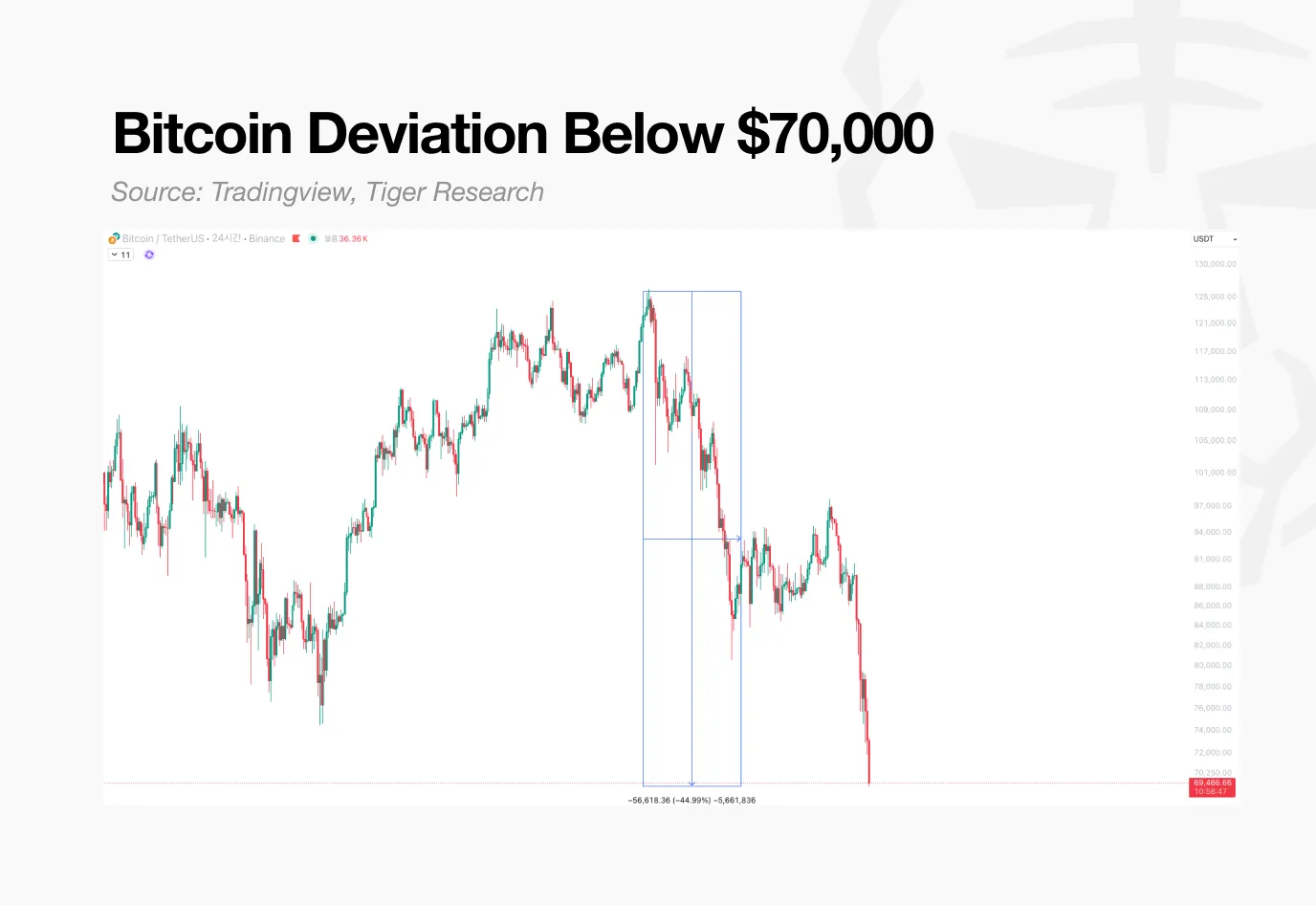
Bitcoin has fallen below $70,000. Among the top 100 cryptocurrencies by market cap, only seven remain above the 200-day moving average. In contrast, 53 components of the Nasdaq 100 index are still trading above that threshold.
Market conditions are unresistable. Nevertheless, some crypto assets continue to survive in the harshest environments.
Their resilience cannot be simply attributed to market making or chance rebounds. A closer look at their development trajectories reveals different explanations.
These projects no longer rely solely on vague visions or technical complexity. Instead, they share a common feature: solving core market issues with solutions rooted in real-world practicality. Their approaches typically align with three directions:
- Do they address the current problems faced by the market?
- Are they prepared for near-term practical applications?
- Are they building infrastructure that will support long-term industry reliance?
Ultimately, the ability to solve real problems in practice remains the strongest fundamental indicator.
2. Three Directions of Market Selection
Projects that can answer the above questions have successfully survived. Their approach is: 1) clearly identify market problems; 2) propose practical solutions aligned with specific timing.
2.1. Hyperliquid: Solving Instant Trading Frictions
Centralized exchanges have traditionally been viewed as responsible intermediaries. However, in practice, when issues arise, they often fail to align with investor interests. Decentralized exchanges (DEXs) emerged as alternatives, but poor user experience and performance have driven many investors away.
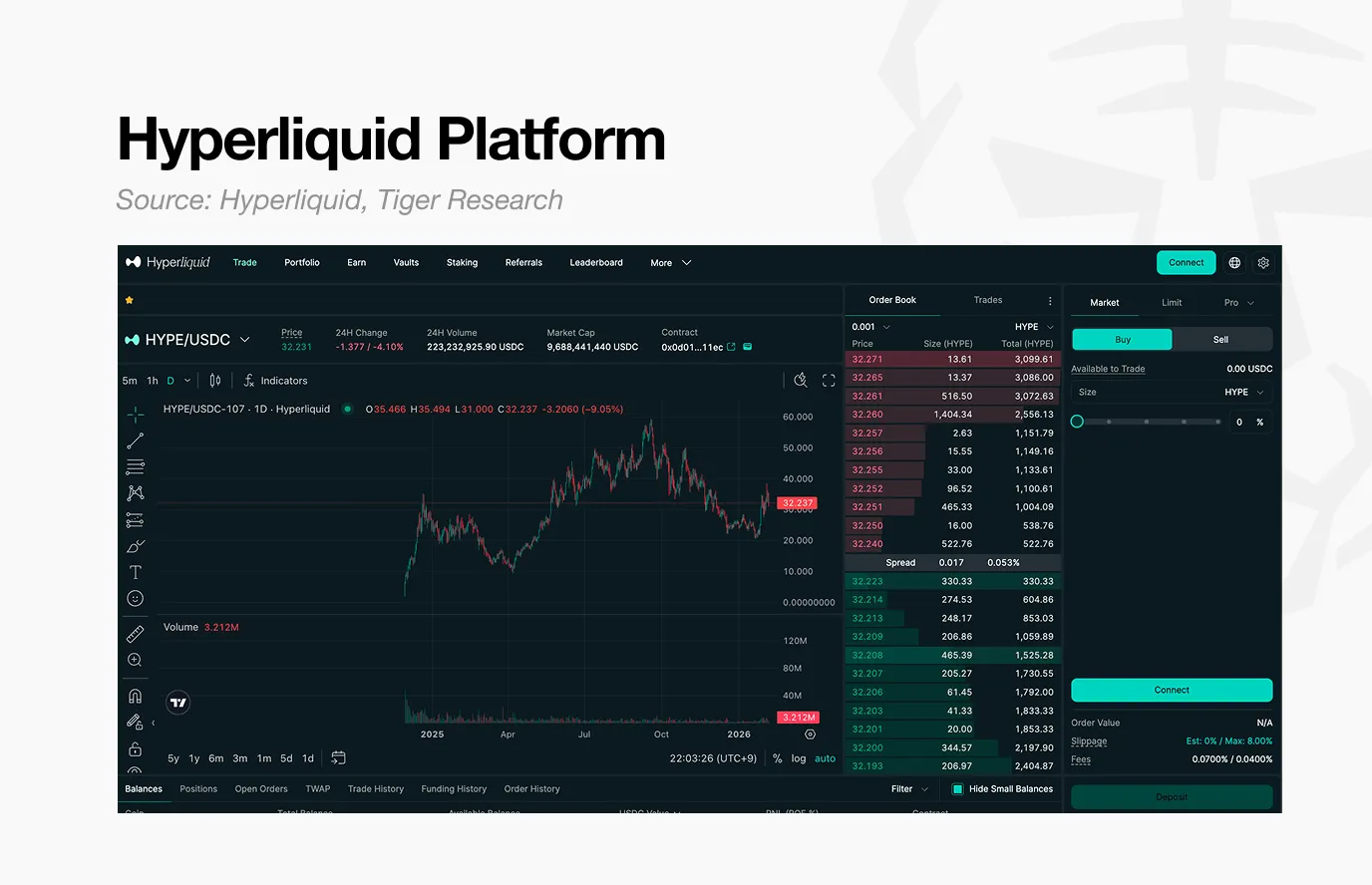
Against this backdrop, Hyperliquid introduces the concept of perpetual contract decentralized exchanges (perp DEX). Through the HLP mechanism, it brings on-chain functionalities valued in centralized exchanges—such as high leverage, fast execution, and stable liquidity.
Early usage was partly driven by demand for airdrops of the $HYPE token. However, sustained engagement after the airdrop reflects user satisfaction with the platform’s performance.
Ultimately, Hyperliquid’s resilience stems from addressing a persistent real-world issue: dissatisfaction with centralized exchanges.
2.2. Canton Network: Preparing for the Institutional Finance Era
Canton offers a solution aimed at the near future. As interest in real-world assets (RWA) continues to grow, institutions are increasingly viewing blockchain as a financial infrastructure rather than just a public network. In this context, what institutions need is not full data transparency but a selective privacy model that supports regulatory compliance and confidentiality.
Canton Network was created in response. Using DAML, Canton can provide configurable data disclosures for each participant.
This enables institutions to share information only within necessary boundaries while maintaining transaction confidentiality. Canton is not a provider-imposed design but an infrastructure built to meet institutional needs.
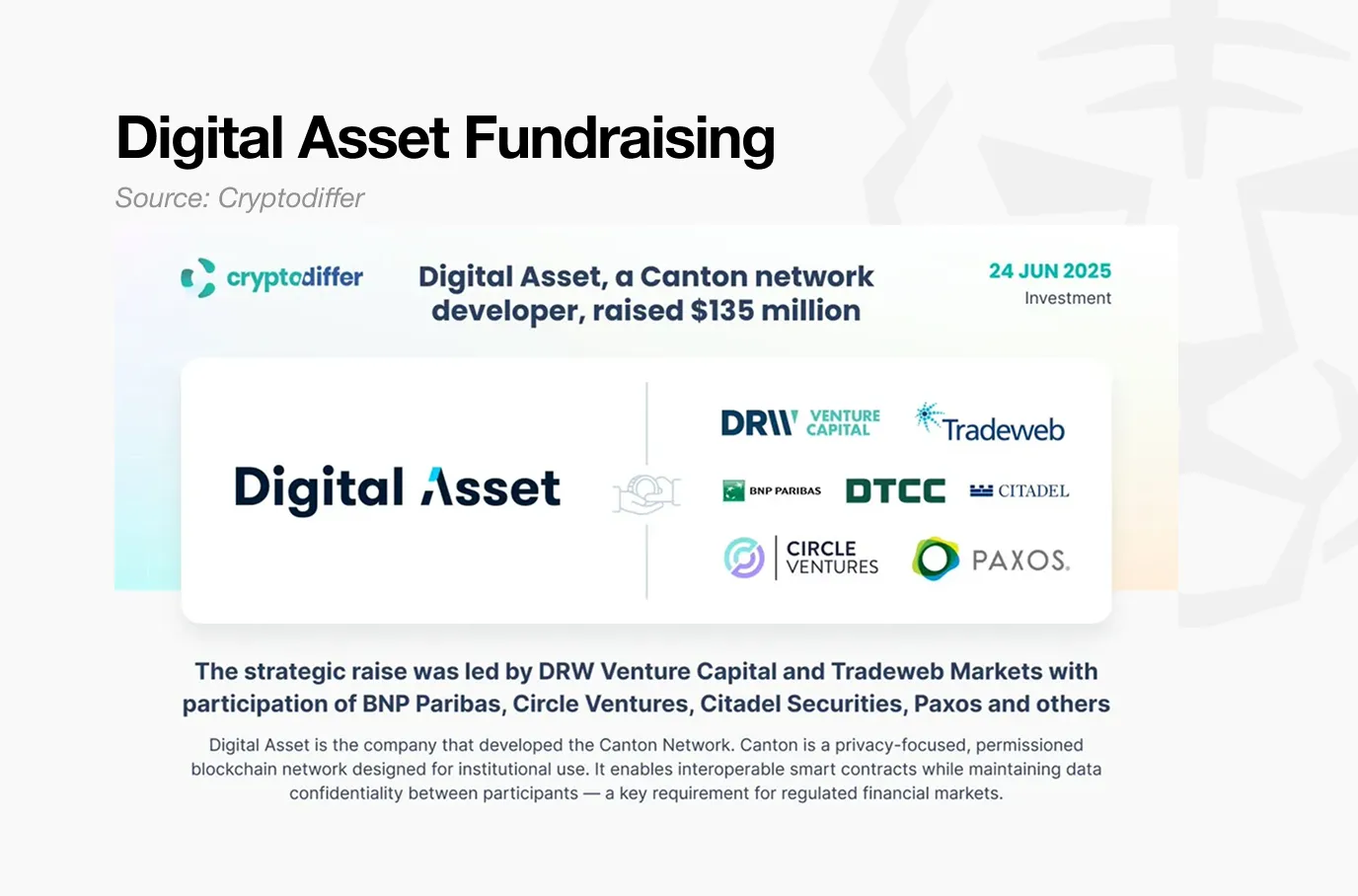
Another key factor is that Canton has been designed from the outset with real deployment in mind, expanding its ecosystem and gaining early support through collaborations with financial institutions.
Most notably, its partnership with DTCC creates a pathway for traditional financial assets managed by DTCC—processing approximately $37 trillion annually—to extend into Canton-based environments. This demonstrates the practical feasibility of Canton Network’s approach.
In essence, Canton offers a structural solution that aims to meet three core institutional requirements simultaneously: privacy, regulatory compliance, and integration with existing financial systems.
2.3. Kite AI: Building the AI Economy of Tomorrow
Unlike the previous two examples, Kite AI currently has limited practical applications. However, from the perspective of AI agents operating as economic entities, its structural logic remains compelling.
In Web2 and Web3, there is broad consensus on a future driven by autonomous agents. Few question scenarios where AI agents handle tasks like booking hotels or purchasing everyday goods on behalf of users.
However, this future requires infrastructure that allows AI agents to initiate and execute payments independently. Current transaction systems are designed around human-to-human transfers and the efficiency of human participants.
Therefore, enabling AI agents to operate as autonomous economic entities necessitates new mechanisms, including identity verification and automated payment frameworks.
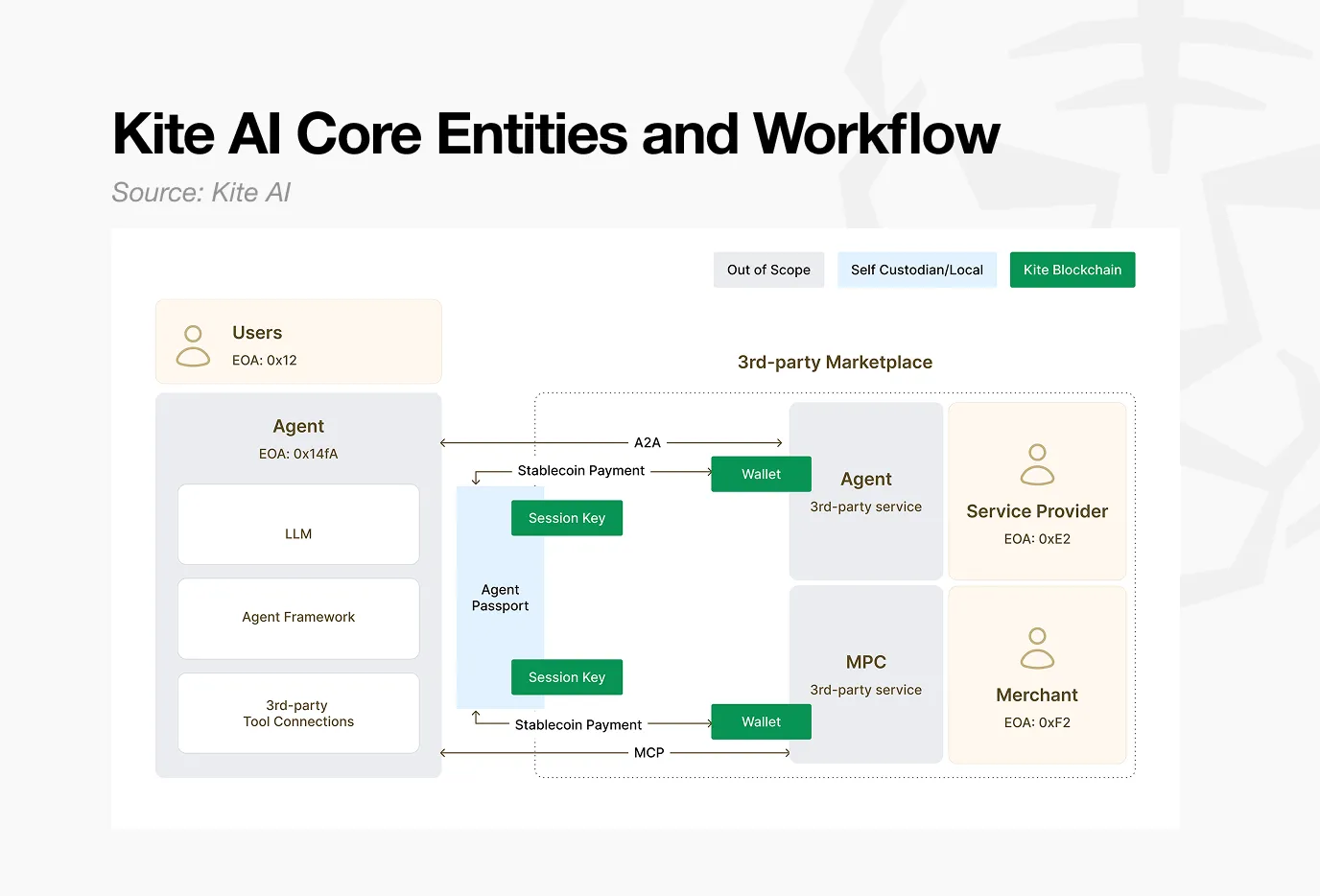
Kite AI is building payment infrastructure for this environment. Its core components include “agent passports” for identity verification and the x402 protocol functions for automated payments.
The vision Kite AI presents is currently not deployable at scale, simply because the future it envisions has not yet arrived.
Nonetheless, the project’s realism is rooted in a broader premise: when this anticipated future arrives, the underlying technologies they are developing will be essential. This alignment with a widely accepted developmental trajectory lends the project structural credibility despite its current limited use.
3. Three Critical Questions for Assessing Practical Feasibility
Although these three projects have different timelines, they share a common trait: real-world viability.
Evaluating the same project often leads to differing opinions—some see it as solving genuine problems, others see it as overhyped. To narrow this interpretive gap, at least three core questions must be addressed:
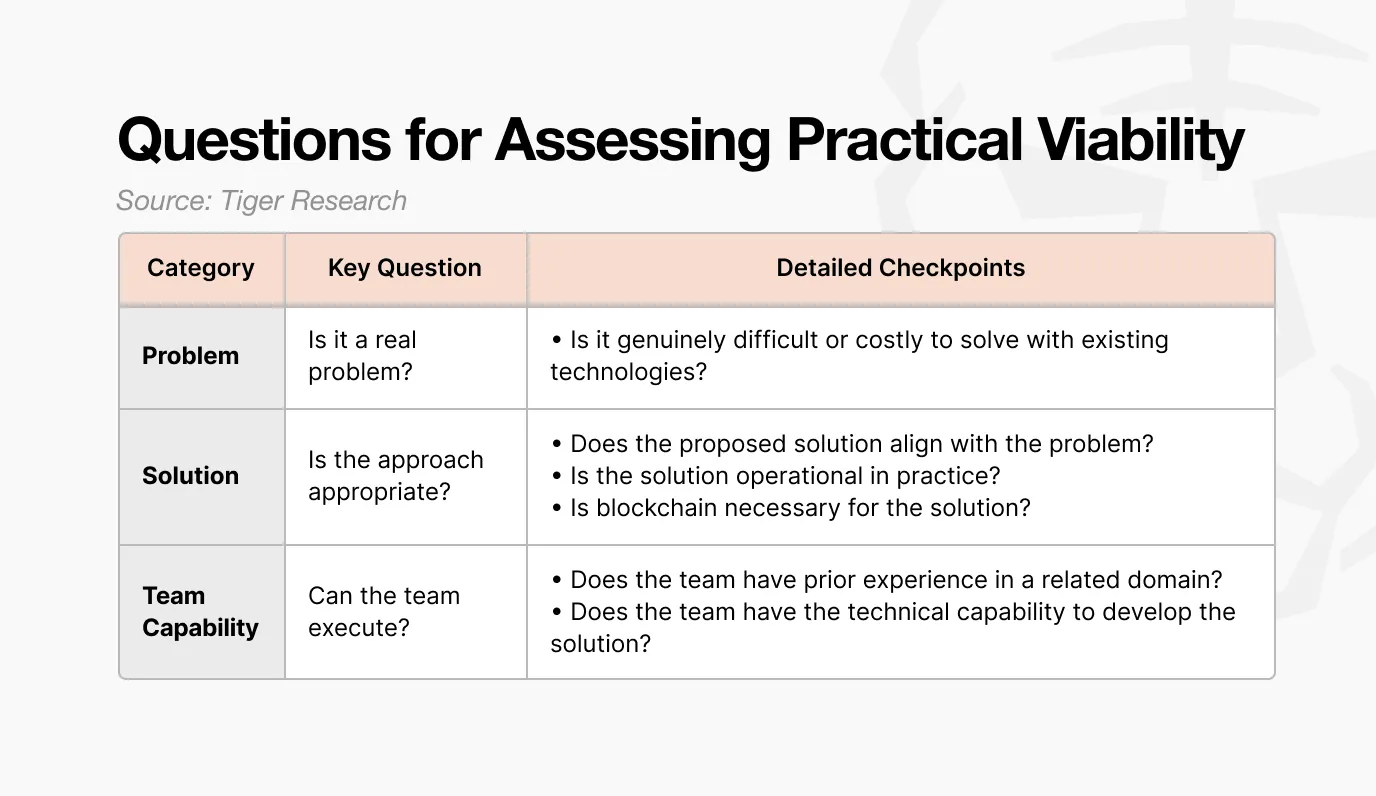
- What problem does it solve? Is the problem real and does it have market demand?
- How does it solve? Is the proposed solution structurally sound and feasible?
- Who is executing? Does the team have the capability and resources to turn vision into reality?
Since most projects promote optimistic future narratives, answering these questions correctly requires time and effort. Filtering out misleading or incomplete information is not easy. Projects that cannot confidently answer these questions may experience short-term price surges but are likely to fade when the next downturn hits.
The current state of the crypto market is clearly unfavorable. But that doesn’t mean everything is over. New experiments will continue, and the task is to evaluate what these efforts truly represent.
What matters most now is realism.
Disclaimer: The information on this page may come from third parties and does not represent the views or opinions of Gate. The content displayed on this page is for reference only and does not constitute any financial, investment, or legal advice. Gate does not guarantee the accuracy or completeness of the information and shall not be liable for any losses arising from the use of this information. Virtual asset investments carry high risks and are subject to significant price volatility. You may lose all of your invested principal. Please fully understand the relevant risks and make prudent decisions based on your own financial situation and risk tolerance. For details, please refer to
Disclaimer.


