CryptoSelf

vip
Market Analyst
On-chain Analyst
Diamond Hands
No content yet
Welcome to CryptoSelff\'s livestream channel.
post-image
  • Reward
  • 19
  • Repost
  • Share
MrFlower_vip:
2026 GOGOGO 👊
View More
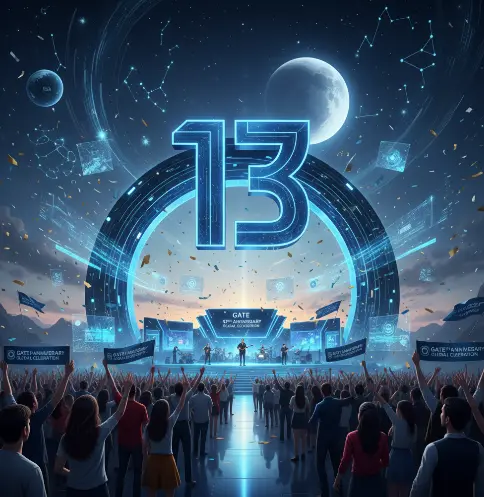
Gate Indices section futures has now launched US2000, TW88, AUS200, VIX and HSCHKD. Trade to earn instant rewards, meet trading targets to share additional prizes, and enjoy exclusive welcome bonuses for new users. Both new and existing users are invited to participate and share a 200,000 USDT reward pool. https://www.gate.com/campaigns/4015?ref=UAAWUFoN&ref_type=132
post-image
  • Reward
  • 33
  • Repost
  • Share
HighAmbitionvip:
2026 GOGOGO 👊
View More
#CryptoMarketPullback
Thank you for sharing, my friend. Wishing you success. 🌸🌸🌸
You can find the details in the information provided below.
View Original
Crypto_Buzz_with_Alexvip
#CryptoMarketPullback
Solana has reached an important support level.
If this level fails and breaks down,
price can drop below $70.
This zone will decide whether we get a bounce or further downside.
#FedLeadershipImpact #BTCKeyLevelBreak #ETHUnderPressure #CapitalRotation
repost-content-media
  • Reward
  • 25
  • Repost
  • Share
MrFlower_vip:
2026 GOGOGO 👊
View More
#加密市场回调
Tom Lee Sees Market Bottom Near: A Deeper Look
The start of 2026 has been anything but smooth for the cryptocurrency market. Bitcoin, the flagship digital asset, has already shed nearly 20% year‑to‑date, weighed down by investor flight into traditional safe havens such as gold and silver. This shift reflects broader macroeconomic uncertainty, with global markets grappling with inflationary pressures, geopolitical tensions, and fluctuating interest rate expectations.
Yet despite the turbulence, Tom Lee, head of research at Fundstrat Global Advisors, remains optimistic. He argues that
BTC-5,9%
Discoveryvip
#加密市场回调
Tom Lee Sees Market Bottom Near: A Deeper Look
The start of 2026 has been anything but smooth for the cryptocurrency market. Bitcoin, the flagship digital asset, has already shed nearly 20% year‑to‑date, weighed down by investor flight into traditional safe havens such as gold and silver. This shift reflects broader macroeconomic uncertainty, with global markets grappling with inflationary pressures, geopolitical tensions, and fluctuating interest rate expectations.
Yet despite the turbulence, Tom Lee, head of research at Fundstrat Global Advisors, remains optimistic. He argues that the current downturn may represent not the beginning of a prolonged bear market, but rather the final stages of a correction—suggesting that crypto prices are at or near their bottom. For Lee, the sell‑off is less a sign of weakness and more a buying opportunity for long‑term investors who believe in the structural growth of digital assets.
Lee’s thesis rests on several pillars:
- Strengthening Fundamentals: Blockchain adoption continues to expand across industries, from finance and supply chains to gaming and digital identity. Institutional interest remains strong, with major asset managers and corporations exploring tokenization, decentralized finance, and blockchain‑based settlement systems.
- Easing Monetary Conditions: While central banks remain cautious, there are signs that monetary tightening may slow in the coming quarters. Lower interest rates historically favor risk assets, including cryptocurrencies, by improving liquidity and investor appetite.
- Resilience of the Ecosystem: Despite price volatility, the crypto industry has shown remarkable resilience. Developers continue to build, venture capital flows into Web3 projects remain significant, and regulatory frameworks are gradually taking shape. This underlying activity suggests that the sector’s long‑term trajectory is intact.
Lee acknowledges that volatility will persist—crypto markets are known for sharp swings, and external shocks can amplify uncertainty. However, he emphasizes that price action often lags behind fundamentals. In his view, the current dislocation between valuation and adoption is temporary. As fundamentals strengthen and investor confidence returns, prices are likely to “catch up,” potentially setting the stage for a robust rebound later in 2026.
For investors, Lee’s perspective offers a reminder that crypto cycles are defined not only by speculation but also by innovation and resilience. While short‑term pain may discourage some, those who focus on the bigger picture may find that today’s lows are tomorrow’s opportunities.
repost-content-media
  • Reward
  • 27
  • Repost
  • Share
MrFlower_vip:
2026 GOGOGO 👊
View More
#加密市场回调
Senate Democrats Hold Closed‑Door Crypto Meeting: A Comprehensive Overview
On February 4, 2026, U.S. Senate Democrats convened a closed‑door caucus meeting to deliberate on the evolving structure of the cryptocurrency market. This gathering came in the wake of the Senate Banking Committee’s decision to postpone a markup session on digital asset legislation, a move that highlighted ongoing divisions within the party over how best to regulate the sector.
The meeting was significant for several reasons. It marked the first member‑level discussion on crypto policy in 2026, underscoring
Discoveryvip
#加密市场回调
Senate Democrats Hold Closed‑Door Crypto Meeting: A Comprehensive Overview
On February 4, 2026, U.S. Senate Democrats convened a closed‑door caucus meeting to deliberate on the evolving structure of the cryptocurrency market. This gathering came in the wake of the Senate Banking Committee’s decision to postpone a markup session on digital asset legislation, a move that highlighted ongoing divisions within the party over how best to regulate the sector.
The meeting was significant for several reasons. It marked the first member‑level discussion on crypto policy in 2026, underscoring the urgency lawmakers feel as digital assets continue to grow in influence across financial markets. With the U.S. elections approaching, the caucus is under pressure to present a coherent stance on crypto regulation—one that balances innovation with investor protection.
Key topics discussed included:
- Stablecoin Yields: Senators debated the risks and opportunities posed by stablecoins offering interest‑bearing products. Concerns centered on consumer protection, systemic risk, and whether such products should fall under banking regulations.
- Market Oversight: The caucus examined the role of agencies such as the Securities and Exchange Commission (SEC) and the Commodity Futures Trading Commission (CFTC) in overseeing crypto markets. Questions remain about jurisdictional boundaries and how to prevent regulatory gaps.
- The CLARITY Act: This proposed legislation seeks to establish clearer definitions for digital assets, distinguishing between securities, commodities, and payment tokens. Supporters argue that clarity will foster innovation, while critics worry about unintended consequences for startups and decentralized projects.
The closed‑door nature of the meeting reflects the sensitivity of the debate. Crypto regulation has become a politically charged issue, with some lawmakers viewing it as essential for consumer safety, while others fear that excessive restrictions could stifle innovation and push talent overseas.
Beyond the immediate legislative concerns, the session also highlighted the growing importance of crypto in Washington’s policy agenda. Digital assets are no longer a niche topic; they are now central to discussions about financial stability, global competitiveness, and technological leadership. The fact that Senate Democrats devoted a full caucus meeting to crypto signals that the industry’s future will be shaped not only by markets but also by political decisions at the highest levels.
As the year progresses, the outcome of these discussions will likely influence the trajectory of U.S. crypto regulation. Whether through the CLARITY Act or other legislative initiatives, the challenge for lawmakers will be to strike a balance: protecting investors and the financial system while allowing innovation to flourish.
repost-content-media
  • Reward
  • 27
  • Repost
  • Share
MrFlower_vip:
2026 GOGOGO 👊
View More
#ChilizLaunchesFanTokens | The Next Phase of Fan Economy
Chiliz is evolving the Fan Token model beyond simple fan engagement, positioning it at the intersection of digital participation, token utility, and long-term ecosystem sustainability.
What are Fan Tokens?
Fan Tokens are club-specific digital assets issued on the Chiliz blockchain by sports clubs and organizations. They create a direct digital bridge between fans and teams within the Socios ecosystem.
What do they offer?
For fans:
• Voting rights in official club polls
• Access to exclusive rewards and experiences
• Limited participation
CHZ-3,8%
xxx40xxxvip
#ChilizLaunchesFanTokens | The Next Phase of Fan Economy
Chiliz is evolving the Fan Token model beyond simple fan engagement, positioning it at the intersection of digital participation, token utility, and long-term ecosystem sustainability.
What are Fan Tokens?
Fan Tokens are club-specific digital assets issued on the Chiliz blockchain by sports clubs and organizations. They create a direct digital bridge between fans and teams within the Socios ecosystem.
What do they offer?
For fans:
• Voting rights in official club polls
• Access to exclusive rewards and experiences
• Limited participation in certain club decisions
For clubs:
• A new, sustainable revenue stream
• Measurable and global fan engagement
Why are recent developments important?
Chiliz has announced US-focused Fan Token launches.
10% of the revenue generated from these tokens will be allocated to CHZ buyback and burn.
This signals not just expansion, but a more disciplined approach to token supply management.
From a strategic perspective:
This move reflects a shift from short-term hype toward a more mature structure where
engagement → revenue → supply control
are connected within a single ecosystem.
Fan Tokens are no longer just about fandom —
they represent a new digital layer where loyalty becomes measurable and programmable.
repost-content-media
  • Reward
  • 27
  • Repost
  • Share
HighAmbitionvip:
Watching Closely 🔍️
View More
#GoldAndSilverRebound | Reaction Bounce or Structural Signal?
The recent rebound in gold and silver followed a sharp sell-off earlier in the week, with clear dip-buying activity returning to the market. While the recovery looks strong on the surface, it reflects a broader mix of policy expectations, liquidity dynamics, and structural fundamentals, not just a technical bounce.
What triggered the move?
Expectations around potential shifts in Fed leadership and policy outlook
CME Group’s increase in margin requirements, which intensified short-term liquidation
The clearing of leveraged positions,
xxx40xxxvip
#GoldAndSilverRebound | Reaction Bounce or Structural Signal?
The recent rebound in gold and silver followed a sharp sell-off earlier in the week, with clear dip-buying activity returning to the market. While the recovery looks strong on the surface, it reflects a broader mix of policy expectations, liquidity dynamics, and structural fundamentals, not just a technical bounce.
What triggered the move?
Expectations around potential shifts in Fed leadership and policy outlook
CME Group’s increase in margin requirements, which intensified short-term liquidation
The clearing of leveraged positions, followed by a rapid return of liquidity
Once forced selling eased, prices quickly moved to test where real demand was waiting.
📊 Price Action & Market Behavior
Silver rebounded by over 10%, clearly outperforming
Gold climbed back toward the $4,940/oz area
Volatility remains elevated, with silver showing much stronger momentum than gold
This divergence highlights the different roles each metal plays in the current cycle.
🔍 Why Is Silver Leading?
Rising geopolitical risks: Ongoing global tensions continue to support safe-haven demand
Fed rate cuts: Lower yields increase the appeal of non-yielding assets
Supply–demand imbalance: According to industry data, silver faces a multi-year structural supply deficit
Industrial demand: Clean energy, electronics, and electrification trends remain strong
ETF inflows: Capital flows into silver-backed products continue to accelerate
These factors make silver more momentum-driven, which amplifies both upside and downside moves.
🧠 Gold’s Position
Gold continues to act as a stability anchor rather than a momentum asset.
While 2025 has been strong for gold, many analysts remain cautious about sustainability into 2026, emphasizing potential consolidation and corrective phases.
Gold is currently not signaling a new trend —
it is re-pricing macro risk and searching for equilibrium.
🧩 Platinum & Palladium Perspective
Platinum and palladium remain closely tied to:
Automotive demand
Industrial production cycles
The transition toward electric vehicles
They may participate in broader precious metals moves, but their price behavior is still primarily driven by sector-specific fundamentals, not pure safe-haven flows.
⚠️ Strategic Takeaway
Silver: high momentum, high volatility
Gold: balance, protection, macro hedge
Precious metals overall: uncertainty is being priced in, but direction is not yet confirmed
Risk-off sentiment hasn’t disappeared — it’s being recalibrated.
📌 This content is for informational purposes only and does not constitute investment advice. Always conduct your own research.
repost-content-media
  • Reward
  • 20
  • Repost
  • Share
HighAmbitionvip:
Watching Closely 🔍️
View More
What is the Digital Asset Market Clarity Act of 2025?
The Clarity Act, officially H.R.3633 – Digital Asset Market Clarity Act of 2025, is a comprehensive crypto market structure law passed by the U.S. House of Representatives in July 2025. Its main purpose is to eliminate the long-standing uncertainty regarding how digital assets (especially cryptocurrencies) should be classified and which institution (SEC or CFTC) has jurisdiction in which area, and to position the U.S. as a global leader in crypto innovation. Main Purpose and Structure
The law aims to resolve the jurisdictional confusion bet
BTC-5,9%
TOKEN-7,74%
DCB-3,12%
ATS-5,61%
User_anyvip
What is the Digital Asset Market Clarity Act of 2025?
The Clarity Act, officially H.R.3633 – Digital Asset Market Clarity Act of 2025, is a comprehensive crypto market structure law passed by the U.S. House of Representatives in July 2025. Its main purpose is to eliminate the long-standing uncertainty regarding how digital assets (especially cryptocurrencies) should be classified and which institution (SEC or CFTC) has jurisdiction in which area, and to position the U.S. as a global leader in crypto innovation. Main Purpose and Structure
The law aims to resolve the jurisdictional confusion between the SEC (Securities and Exchange Commission) and the CFTC (Commodity Futures Commission) by clearly classifying digital assets:
Digital Commodity: Decentralized digital assets whose value is derived from the use and operation of a blockchain network (e.g., network tokens on mature networks, Bitcoin-like assets, memecoins, and some other assets).
Assets containing Investment Contracts: Remain under SEC jurisdiction in the primary market (initial sale). Permitted Payment Stablecoins and other financial instruments (securities, derivatives, etc.) are excluded from this definition.
Key Elements
SEC – CFTC Jurisdiction Separation
Spot (cash) markets of digital commodities linked to mature (decentralized) blockchains → fall under the exclusive jurisdiction of the CFTC.
If there is an investment contract in the primary market (project token sale) → SEC regulation applies, but a new registration exemption is provided.
In secondary markets (secondary trading), the token is no longer considered an investment contract → SEC jurisdiction is largely removed.
Definition of Mature Blockchain
Criteria such as not being controlled by any single person or group,
Value largely derived from network usage,
No single holder holding more than 20% of the tokens are sought. Additional clarifications and restrictions are introduced for immature blockchains.
New Intermediary Types and Registration
New CFTC-registered intermediary institutions such as Digital Commodity Exchange (DCE), Digital Commodity Dealer (DCD), and Digital Commodity Broker (DCB) are defined.
Some SEC-registered intermediaries (broker-dealers, ATS) are allowed to dual-register with the CFTC.
Requirements such as customer asset separation, conflict prevention, and record keeping are introduced.
Token Sale and Capital Raising
A limited SEC registration exemption of up to $75 million is granted for digital commodity projects.
A disclosure regime is introduced.
Resale restrictions are applied to project insiders.
Other Important Provisions
CBDC (Central Bank Digital Currency) restrictions: The Fed is prohibited from providing direct services to individuals, and the use of CBDC as a monetary policy tool is prevented. DeFi and software developers: Protection is provided to developers who do not hold customer funds. Stablecoin yield/interest issue: Although not directly prohibited in the law, it remains one of the biggest points of disagreement between the banking lobby and the crypto sector.
Anti-fraud and manipulation powers are strengthened.
Current Situation (February 2026)
House (House of Representatives) passed (July 2025).
There are two different drafts on the Senate side:
Senate Agriculture Committee (CFTC-focused, “Digital Commodity Intermediaries Act”): Updated and passed the committee in January 2026.
Senate Banking Committee (broader, SEC + banking-focused): Markup delayed, currently being discussed behind closed doors by Democrats.
Not yet passed the Senate General Assembly → House and Senate versions will be reconciled (conference committee) → will go to the President's desk.
The stablecoin interest/yield issue and some DeFi regulations are still the biggest points of disagreement. While the Clarity Act has the potential to bring long-awaited regulatory clarity to the crypto sector, it is expected to be finalized in the first half of 2026 due to the Senate's consensus process and stablecoin debates.
  • Reward
  • 12
  • Repost
  • Share
HighAmbitionvip:
Buy To Earn 💎
View More
Hong Kong vs. Singapore Stablecoin Regulation Comparison (February 2026)
🔥Both Hong Kong (HKMA) and Singapore (MAS) are two of the most advanced centers in Asia in regulating the stablecoin ecosystem. However, their approaches, priorities, and some critical details show significant differences.
🔥Hong Kong's approach is stricter, more protective, and more bank-centric. With 1-business-day redemption, no interest, high capital requirements, and licensing, it aims to protect retail users and minimize systemic risk. Therefore, initially, the number of licenses will be very small, and large play
User_anyvip
Hong Kong vs. Singapore Stablecoin Regulation Comparison (February 2026)
🔥Both Hong Kong (HKMA) and Singapore (MAS) are two of the most advanced centers in Asia in regulating the stablecoin ecosystem. However, their approaches, priorities, and some critical details show significant differences.
🔥Hong Kong's approach is stricter, more protective, and more bank-centric. With 1-business-day redemption, no interest, high capital requirements, and licensing, it aims to protect retail users and minimize systemic risk. Therefore, initially, the number of licenses will be very small, and large players (banks, large fintechs) are expected to dominate. Singapore, on the other hand, adopts a more flexible and label-focused model. The "MAS-regulated stablecoin" title acts like a quality certificate; anyone can issue SCS without a license (but without a label). A 5-business-day redemption period and slightly lower operational pressure give issuers some breathing room.
🔥 Hong Kong → Reliable, institutional, and HKD-bridge focused stablecoins are expected (especially with the potential to bridge to mainland China).
Singapore → Has the advantage of broader use cases (cross-border payments, tokenized deposits, corporate treasury) and earlier ecosystem maturity. While both regimes are aligned on core principles such as 100% reserve, decoupled custody, and independent auditing, Singapore leads in speed, ease of access, and operational flexibility; Hong Kong leads in user protection and system security.
The stablecoin race continues in Asia — Hong Kong stands out with its balance of security and reliability, while Singapore excels with speed and innovation.
#HongKongIssueStablecoinLicenses
repost-content-media
  • Reward
  • 11
  • Repost
  • Share
HighAmbitionvip:
DYOR 🤓
View More
To thank our users for their continued support of Gate ETF products, Gate proudly presents the Gate ETF Peak Trading Competition. During the event, both new and existing users can participate in ETF trading. By completing trades, users can enjoy multiple reward mechanisms, including trading volume sharing rewards and blind box lucky draws. Total prize pool: 100,000 USDT, including trading rewards and golden blind box surprises. The more you trade, the more you earn—join ETF trading now and win generous rewards! https://www.gate.com/campaigns/4008?ref=UAAWUFoN&ref_type=132&utm_cmp=3mKdKNdn
post-image
  • Reward
  • 32
  • Repost
  • Share
HighAmbitionvip:
thnxx for the update
View More
#WhenWillBTCRebound?
Calm Before the Storm: Why Is the Market on Standby?
The selling pressure that persisted throughout January 2026 pulled Bitcoin down to the $78,000 - $82,000 range in the early days of February. However, the real story here isn’t the price drop; it’s "smart money" (institutional capital) waiting for the perfect moment to entry into new positions.
Institutional Outflows and Stabilization: While approximately $1.6 billion in outflows from spot ETFs at the end of January spooked short-term investors, the bounce Bitcoin saw from its strong support at $74,000 is proof that the
BTC-5,9%
Discoveryvip
#WhenWillBTCRebound?
Calm Before the Storm: Why Is the Market on Standby?
​The selling pressure that persisted throughout January 2026 pulled Bitcoin down to the $78,000 - $82,000 range in the early days of February. However, the real story here isn’t the price drop; it’s "smart money" (institutional capital) waiting for the perfect moment to entry into new positions.
​Institutional Outflows and Stabilization: While approximately $1.6 billion in outflows from spot ETFs at the end of January spooked short-term investors, the bounce Bitcoin saw from its strong support at $74,000 is proof that the "bulls" are still very much in the game.
​Macroeconomic Pressure: Global inflation data and a temporary dip in risk appetite have forced Bitcoin into a "wait-and-see" mode. Yet, historical data repeatedly shows that Bitcoin rises with even greater momentum after such sharp corrections.
​ When Does the Recovery Begin?
​The critical levels and signals that analysts are watching for the rebound to start are quite clear:
​The $84,640 Barrier: To confirm that Bitcoin has re-entered a bullish trend, it needs to see sustained closes above this resistance level. If this wall is breached, the psychological target of $100,000 will be back on the radar.
As the price dips, the continued decline of Bitcoin supply on exchanges indicates that major players view this drawdown as a "discount" and are moving assets to cold storage. This supply crunch will cause the price to skyrocket (rebound) the moment demand surges.
​Why Is This Perspective Unique?
​Because we don't just look at the red candles on a chart and fall into despair. We are aware of Bitcoin’s four-year cycle and the unshakable trust provided by blockchain technology. Contrary to the panicking crowds, this piece reminds us that this "cleansing" process—where weak hands are shaken out—is the very foundation of the next massive rally.
​"The stock market is a device for transferring money from the impatient to the patient."
​Final Word: Patience Is Your Greatest Capital
​If you are following the #WhenWillBTCRebound hashtag, remember this: Bitcoin has never moved in a straight line upward. Behind every major surge lies a "painful" consolidation process like the one we are experiencing today. 2026 continues to be the year Bitcoin solidifies its place in the financial system and expands its practical use cases.
​The answer to when Bitcoin will rebound lies technically in breaking the $84,000 level, and philosophically in your faith in this technology.
repost-content-media
  • Reward
  • 25
  • 1
  • Share
SULEMANFARSIvip:
Happy New Year! 🤑
View More
#TraditionalFinanceAcceleratesTokenization
Traditional finance has entered a quiet yet profound revolution.
Tokenization is no longer a “future promise”; as of 2026, it has become a core mechanism reshaping the very infrastructure of TradFi.
The conversion of real-world assets (RWAs)—from real estate, bonds, and U.S. Treasuries to private credit, commodities, equities, and even art—into blockchain-based tokens is redefining how capital is created, moved, and valued.
And here’s the most critical shift:
This transformation is no longer being driven by crypto-native players, but by the heavyweig
ETH-5,5%
DEFI-1,17%
Discoveryvip
#TraditionalFinanceAcceleratesTokenization
Traditional finance has entered a quiet yet profound revolution.
Tokenization is no longer a “future promise”; as of 2026, it has become a core mechanism reshaping the very infrastructure of TradFi.
The conversion of real-world assets (RWAs)—from real estate, bonds, and U.S. Treasuries to private credit, commodities, equities, and even art—into blockchain-based tokens is redefining how capital is created, moved, and valued.
And here’s the most critical shift:
This transformation is no longer being driven by crypto-native players, but by the heavyweights of global finance.
BlackRock, Franklin Templeton, JPMorgan, Goldman Sachs, and their peers have moved well beyond pilot programs.
2026 will be remembered as the year tokenization transitioned from proof of concept to production-scale financial infrastructure.
What Tokenization Actually Delivers
By digitizing ownership and moving it onto blockchain rails, tokenization enables:
Fractional ownership
Assets once accessible only to large institutions can now be owned in small fractions
(e.g., holding 0.01% of a commercial property).
Programmable finance
Smart contracts automate compliance, coupon payments, dividends, and distributions.
Instant settlement (T+0)
Reconciliation cycles that once took days now complete in seconds.
DeFi integration
Tokenized assets can be used as collateral, plugged into liquidity pools, and deployed for yield.
TradFi’s perspective is clear:
Blockchain is not a speculative tool—it is modern financial plumbing.
The Real Market Size in Early 2026
The numbers are no longer storytelling—they’re evidence:
Excluding stablecoins, on-chain tokenized RWAs total approximately $19–36 billion.
Including stablecoins, the broader tokenized asset market exceeds $300–330 billion.
Tokenized U.S. Treasuries dominate the sector at $8–10B+,
with BlackRock’s BUIDL alone reaching $2–3B at peak levels.
Tokenized equities have exploded:
~$963M as of January 2026, representing 2,900%+ YoY growth.
A market that stood at just $5–6B in 2022 stabilizing above $20B within a few years signals one thing clearly:
this growth is institutional—not speculative.
Liquidity, Volume, and On-Chain Activity
In 2026, the key question is no longer how many products exist, but:
Which ones actually trade?
Monthly on-chain volumes across major networks—led by Ethereum—are now in the double-digit billions.
Deepest liquidity is concentrated in:
Tokenized Treasuries
Cash-equivalent yield products
Institutional participation enables 24/7 trading, collateral mobility, and improved price stability.
Still, challenges remain:
Cross-chain fragmentation
1–3% price discrepancies for identical assets
2–5% friction in cross-chain transfers
Liquidity is maturing—but reaching TradFi scale requires standardization.
How Much of Global Finance Is Tokenized?
Surprisingly little—for now:
Tokenized assets represent roughly 0.01% of global equity and bond markets.
In the $27T U.S. Treasury market, tokenization accounts for only 0.015–0.03%.
Real estate and private credit tokenization remain close to zero.
This isn’t a weakness.
It’s a declaration of multi-trillion-dollar upside.
2030 projections:
5–10% of global assets could be tokenized
Some scenarios point to a $10–30 trillion on-chain asset economy
Pricing and Market Dynamics
Tokenization affects pricing through three primary channels:
Improved liquidity reduces illiquidity premiums
Yield-bearing tokenized products act as safe havens in volatile markets
DeFi composability creates persistent demand for high-quality RWAs
Macro shocks will always matter—but data from 2025–2026 shows RWAs to be far more resilient than purely narrative-driven crypto assets.
repost-content-media
  • Reward
  • 27
  • Repost
  • Share
boş_adam1vip:
2026 GOGOGO 👊
View More
#WhiteHouseCryptoSummit
Washington, D C — A Defining Moment for Digital Asset Policy
The White House has been at the center of one of the most watched policy conversations of 2026: how the United States defines the future of digital assets, stablecoins, market structure, and the regulatory framework for cryptocurrencies.
In early February, a high-level summit brought together senior executives from major banks, leading crypto firms, and key federal policymakers in a bid to break a months-long legislative deadlock on digital asset regulation. �
Despite hope for progress, the talks concluded wi
Discoveryvip
#WhiteHouseCryptoSummit
Washington, D C — A Defining Moment for Digital Asset Policy
The White House has been at the center of one of the most watched policy conversations of 2026: how the United States defines the future of digital assets, stablecoins, market structure, and the regulatory framework for cryptocurrencies.
In early February, a high-level summit brought together senior executives from major banks, leading crypto firms, and key federal policymakers in a bid to break a months-long legislative deadlock on digital asset regulation. �
Despite hope for progress, the talks concluded without a breakthrough — especially on how stablecoins should be treated under federal law and whether yield-bearing features can be permitted. The core disputes between traditional financial institutions and digital asset companies remain unresolved for now. �
This summit was orchestrated by the White House’s digital assets council as part of broader efforts to advance the stalled Clarity Act — a proposed federal framework aimed at establishing clear and consistent rules for markets, platforms, and digital asset service providers in the U S
Key figures from the crypto industry, including executives from Coinbase and major banking groups, made it clear that Washington is now the table where industry and regulators must find common ground. �
At the same time, market reactions have been mixed. While volatility remains a factor in digital asset prices amid regulatory uncertainty, some institutional investors are increasing positions in crypto-related equities and infrastructure — signaling confidence in long-term engagement despite short-term noise. �
Why This Matters
What’s unfolding around the White House Crypto Summit is more than a single meeting:
1. Regulatory clarity is now a national priority.
Lawmakers, regulators, and industry leaders are actively shaping how digital assets will fit into mainstream financial markets.
2. Stablecoins are at the heart of the debate.
Whether these digital tokens can offer yield or will be restricted remains a sticking point — and a critical issue for investors and platforms alike.
3. Bipartisan attention is increasing.
Both sides of the aisle see digital assets as strategic economic and technological assets, though they diverge on how to govern them.
The summit underscored that policy in this space isn’t coming from the fringes of finance anymore — it’s being negotiated at the highest levels of government.
What to Watch Next
✔ Continued White House meetings as lawmakers seek a legislative compromise.
✔ Revised proposals on stablecoin oversight, market structure, and custody standards.
✔ Signals from financial regulators on enforcement and industry partnerships.
✔ Market response to regulatory trajectory — both institutional and retail.
In summary: The White House Crypto Summit has become a pivotal touchpoint for U S digital asset policy in 2026. While immediate consensus remains elusive, the very fact that these conversations are happening at the federal level — with real economic and legal implications — signals a new chapter in how digital assets are integrated into the global financial system.
repost-content-media
  • Reward
  • 26
  • 1
  • Share
GateUser-7f5f8a27vip:
Happy New Year! 🤑
View More
Liangshan Yi Autonomous Prefecture, Butuo County, Sichuan Province, issues a notice prohibiting virtual currency "mining" activities and considers them illegal financial activities, facing multiple punitive measures. The notice also emphasizes that legal actions involving virtual currency investments are invalid, calling on governments at all levels to strengthen regulation and encourage the public to report.
  • Reward
  • 30
  • Repost
  • Share
GateUser-7f5f8a27vip:
Happy New Year! 🤑
View More
Ethereum (ETH) faces downside risk, with technical indicators showing it has entered the "inverted cup and handle" breakdown phase, with a target price of approximately $1,665, representing a potential 25% decline. Multiple technical signals and on-chain data point to short-term weakness, and the market's risk appetite for cryptocurrencies has decreased, increasing the likelihood of further decline.
ETH-5,5%
  • Reward
  • 28
  • Repost
  • Share
GateUser-7f5f8a27vip:
Happy New Year! 🤑
View More
Odaily Planet Daily reports that according to an official announcement, BitMart will launch Warden Protocol (WARD) at 21:00 on February 4th (UTC+8). This launch will open the WARD/USDT trading pair.
Warden Protocol is a blockchain infrastructure project aimed at supporting the agent economy. It provides tools and standards for AI (AI) agents and autonomous applications, enabling them to operate securely and interoperably across multiple blockchain networks.
  • Reward
  • 28
  • 2
  • Share
GateUser-7f5f8a27vip:
2026 GOGOGO 👊
View More
Gold has entered a rebound correction phase after a severe pullback, but the fundamentals still do not favor its rise. It may continue to fluctuate or face downside risks in the future. Strong US manufacturing PMI data could put pressure on gold prices, and the market will focus on the upcoming employment and services PMI data.
#GoldAndSilverRebound
  • Reward
  • 29
  • Repost
  • Share
GateUser-7f5f8a27vip:
2026 GOGOGO 👊
View More
#VitalikSellsETH
Vitalik Sells ETH? Context Matters More Than Headlines
Understanding Vitalik’s ETH Movements
Vitalik Buterin holds a substantial amount of ETH, and his wallet activity is closely monitored by on-chain analysts. However, history shows that his transfers are rarely speculative or market-driven. Most of these movements are linked to donations, ecosystem funding, or personal portfolio management.
Notably, many of these ETH transfers have supported philanthropic initiatives such as the Kanro Fund, as well as long-term Ethereum ecosystem development. Compared to Ethereum’s total ci
ETH-5,5%
BTC-5,9%
post-image
  • Reward
  • 25
  • Repost
  • Share
SULEMANFARSIvip:
1000x VIbes 🤑
View More
#BitMineAcquires20,000ETH
BitMine’s Ethereum Accumulation Signals a Strategic Shift
BitMine’s latest Ethereum acquisition is not just another large transaction—it reflects a deliberate, long-term positioning strategy within the Ethereum ecosystem. By adding 20,000 ETH to its balance sheet and expanding its already massive staking footprint, the firm is signaling conviction that goes beyond short-term market cycles.
With total ETH holdings now reaching approximately 4.2 million, BitMine stands apart from other institutional players, not only in scale but also in how it deploys capital within t
ETH-5,5%
post-image
  • Reward
  • 26
  • 2
  • Share
boş_adam1vip:
Happy New Year! 🤑
View More
#ChilizLaunchesFanTokens
Chiliz Repositions CHZ With Revenue-Linked Scarcity
Chiliz is taking a strategic step that goes beyond a simple product expansion. By planning the launch of U.S.-focused fan tokens and tying a portion of generated revenue directly to CHZ buybacks and burns, the project is reshaping how value flows through its ecosystem.
This move signals a shift from narrative-driven tokenomics toward a usage-based model—one where platform success and token scarcity become structurally connected rather than loosely correlated.
Why the U.S. Market Changes the Equation
Entering the U.S.
CHZ-3,8%
post-image
  • Reward
  • 25
  • Repost
  • Share
AbuTurabvip:
Watching Closely 🔍️
View More
  • Pin

Trade Crypto Anywhere Anytime
qrCode
Scan to download Gate App
Community
  • 简体中文
  • English
  • Tiếng Việt
  • 繁體中文
  • Español
  • Русский
  • Français (Afrique)
  • Português (Portugal)
  • Bahasa Indonesia
  • 日本語
  • بالعربية
  • Українська
  • Português (Brasil)