ShizukaKazu

vip
Age 3.3 Yıl
Peak Tier 5
No content yet
#Gate广场四月发帖挑战 Gold, Crude Oil, Market Analysis
In 2026, gold prices surged in the first three months, then shifted to a "sharp correction," reflecting market sensitivity to macro and geopolitical risks. January saw a risk-averse and liquidity-driven bull rush, while March exposed the fragility of profit-taking and the dollar's rebound.
In the long term, structural factors such as de-dollarization, central bank allocations, and debt pressures remain unchanged. Gold still holds allocation value, but investors should be cautious of high volatility environments, enforce strict risk controls, and
View Original
Ryakpandavip
#Gate广场四月发帖挑战 Gold, Crude Oil, Market Analysis
In 2026, gold experienced an epic rise in the first three months, then shifted to a "sharp correction," reflecting market sensitivity to macro and geopolitical risks. January showed a risk-averse and liquidity-driven bull rush, while March revealed vulnerabilities from profit-taking and a rebound in the dollar.
In the long term, structural factors such as de-dollarization worldwide, central bank allocations, and debt pressures remain unchanged. Gold still has allocation value, but investors should be cautious of high volatility environments, enforce strict risk controls, and dynamically adjust positions based on actual interest rates, geopolitical developments, and Federal Reserve policy paths.
Short-term corrections may present opportunities for medium- and long-term positioning. Traders should monitor support and resistance around the $5,000 level.
Gold Market Analysis: As April begins, gold prices have pulled back from March’s highs and are showing high-level consolidation, roughly trading within the $4,300-$4,700 per ounce range, with some periods testing support near $4,400. Geopolitical conflicts should have boosted safe-haven demand, but soaring oil prices have driven up global inflation expectations, reducing the likelihood of Fed rate cuts and pushing real interest rates higher. The strengthening dollar has suppressed non-yielding assets like gold. Central bank gold purchases and long-term de-dollarization demand provide a floor, preventing a collapse in gold prices. However, short-term "safe-haven failure" is evident, with investors favoring dollar cash or high-yield assets. Institutional forecasts suggest gold may stay around $4,500-$4,600 in April. If conflicts escalate or oil prices remain high, a brief rebound could occur; otherwise, peace signals will accelerate profit-taking.
Overall, geopolitical risk premiums are partially offset by macro factors. Gold faces short-term pressure, but the structural bull market in the medium to long term remains intact.
Crude Oil Market Analysis: In April, crude oil prices are strongly driven by geopolitical factors. Brent remains high at $105-$115 per barrel, while WTI fluctuates between $103-$113, rebounding significantly from earlier lows. Tensions in the Strait of Hormuz (about 20% of global oil and gas transportation) constitute a core risk premium; even brief blockades or attack threats are enough to push prices higher. OPEC+ policy flexibility, strategic reserve releases, and expectations of slowing global economic growth act as constraints, but short-term supply disruption fears dominate the market, embedding noticeable geopolitical premiums (some analysts estimate $10-$15 per barrel). Early April saw a correction due to cooling expectations, but ongoing conflict uncertainties keep prices volatile. In the long term, oversupply and weak demand may suppress oil prices in the second half of the year, but geopolitics remains the main variable in April.
repost-content-media
  • Reward
  • 10
  • Repost
  • Share
HighAmbitionvip:
good information 👍👍👍
View More
#Gate广场四月发帖挑战 From 4100 rebound, is gold being manipulated to lure more buyers?
Friday, April 3rd, during the holiday, spot gold prices settled at $4,675 per ounce. Earlier this week, gold touched a low near $4,100 before quickly rebounding, but overall remains pressured by rising oil prices and inflation expectations driven by conflicts in the Middle East. International oil prices stay above $100 per barrel, boosting global energy costs. Market expectations of major central banks tightening monetary policy have increased, partially offsetting gold’s short-term safe-haven appeal due to macro
View Original
post-image
[The user has shared his/her trading data. Go to the App to view more.]

  • Reward
  • 11
  • Repost
  • Share
HighAmbitionvip:
Making money just by talking, that's impressive!
View More
#Gate广场四月发帖挑战 The crypto market has long been no longer about candlestick battles, but a triple squeeze of geopolitical factors + Federal Reserve policies + capital flows! Top influencers and institutions across the web rarely agree: macro direction determines life or death, while specific levels set the tone.
BTC Precise Key Levels
Short-term support: 66,000 (primary defense), 65,500 (secondary defense)
Strong support: 65,000 (core bullish line), 64,500 (final defense)
Short-term resistance: 67,300-67,600 (first choice for rebound shorting), 68,000 (second resistance)
Strong resistance
BTC0,29%
ETH-0,37%
View Original
post-image
post-image
  • Reward
  • 14
  • Repost
  • Share
MasterChuTheOldDemonMasterChuvip:
坚定HODL💎
View More
#三月非农数据来袭 March Non-Farm Payroll Report: Structural Cracks Hidden Behind the "Impressive Numbers"
The U.S. Department of Labor released the March employment report on Friday, surpassing expectations significantly. The market reduced its bets on the Federal Reserve cutting interest rates this year. U.S. Treasury prices fell, pushing yields up by 3 to 5 basis points, with the policy-sensitive two-year Treasury yield leading the gains. The market now prices a 99.5% chance that the Fed will hold rates steady in April, and a 97.5% chance in June (up from 91.7% before the report).
However, a deeper
View Original
Ryakpandavip
#三月非农数据来袭 March Non-Farm Payroll Report: Structural Cracks Hidden Behind the "Impressive Numbers"
The U.S. Department of Labor released the March employment report on Friday, surpassing expectations significantly. The market reduced its bets on the Federal Reserve cutting interest rates this year, U.S. Treasury prices fell, and yields rose by 3 to 5 basis points, with the policy-sensitive two-year Treasury yield leading the gains. The market now prices in a 99.5% chance that the Fed will hold rates steady in April, and a 97.5% chance in June (up from 91.7% before the report).
However, a deeper analysis of this report reveals a highly confusing picture: on the surface, job growth unexpectedly surged, seemingly signaling economic resilience; but beneath the data surface, the quality of the labor market shows hollowed-out fundamentals, supported by one-time factors, and rising hidden unemployment, painting a much weaker structural backdrop.
1. The 178k figure behind the "Technical Recovery"
The March non-farm payroll added 178k jobs, far exceeding the expected 60k and marking the highest increase since December 2024. The unemployment rate unexpectedly dipped slightly from 4.4% to 4.3%. However, a closer look at industry contributions shows that this "strong" figure largely results from technical rebounds triggered by specific events, rather than organic demand expansion.
Among the new jobs this month, the healthcare sector contributed 76k, about 35k of which were driven by workers returning after previous strikes ended. Meanwhile, the construction industry added 26k jobs, mainly reflecting a seasonal rebound after the extreme cold weather in February. These two sectors together accounted for over 50% of the monthly increase. In stark contrast, federal government employment continued to decline, decreasing by 18k, while financial activities and transportation & warehousing sectors also showed sluggish performance.
2. Hidden concerns: Erosion of income and shortened work hours
If total job numbers are the "face," then wages and hours are the "core" that measure workers' purchasing power and business confidence. In March, average hourly earnings growth slowed to 3.5% year-over-year, below the expected 3.7%. More warningingly, weekly average hours quietly fell to 34.2 hours.
The dual weakening of hours and wages indicates that workers' total real income growth is quietly being eroded. Against a backdrop of persistent inflation, this income pressure could signal a softening in future consumer spending.
3. Disappearing job seekers: Diluted unemployment rate
The decline in the unemployment rate (4.3%) superficially reassures the market, but household survey data reveal deeper concerns. The number of discouraged workers surged by 144k to 510k, and marginally attached workers (those willing to work but not actively seeking employment recently) increased by 325k.
Since these workers have stopped actively seeking jobs, they are not included in the numerator of the official unemployment rate, creating a "hidden unemployment pool" that is being diluted. Additionally, the number of long-term unemployed increased by 322k year-over-year, now accounting for 25.4% of the total unemployed population, indicating that labor market fluidity is stagnating.
Wall Street's Cold Analysis: 15k is the Real Bottom Line
Nick Timiraos, the "Fed whisperer," pointed out that, excluding seasonal fluctuations in the first three months of this year, the average monthly increase in employment over the past six months is only about 15k. This is well below the average of 68k since 2026, reflecting a genuine downward trend in the labor market.
Meanwhile, institutions like Goldman Sachs warn that geopolitical conflicts (such as the Iran war) typically have a 4 to 8-week lag in their economic impact. The survey data for March was based on early March, before the supply shocks fully affected hiring sentiment, meaning the real impact is likely to surface in April and May data.

Conclusion: The Fed's "Pseudo-Strong" Trap
This report creates a false impression of a "robust" rate-cut path: the 178k figure is enough to justify the Fed officials' decision to hold steady and even causes markets to price in near-zero probability of a rate cut in April.
However, this false prosperity, based on one-time factors and downward revisions (February data was revised to -133k), cannot hide the underlying weakness. The inflation pressures and employment shocks caused by the war may only become fully apparent in data from April to May. For the new Fed Chair, this means making difficult trade-offs between slowing growth and sticky inflation— even continuing to hold a wait-and-see stance is no longer the best option, and it will be hard to ease market fears of stagflation.
repost-content-media
  • Reward
  • 15
  • Repost
  • Share
HighAmbitionvip:
Making money just by talking, that's impressive!
View More
#Gate广场四月发帖挑战 Why is the strong non-farm payroll report causing Bitcoin to fall? (3 key logical reasons)
1. The Fed's rate cut expectations have completely reversed (most critical)
• Before the data: market bets on a 7.8% chance of a 25bp rate cut in June
• After the data: the probability of a June rate cut plummeted to 2.0%, the likelihood of maintaining high rates rose to 97.5%, reigniting the "higher for longer" pricing
• Impact: Bitcoin is a zero-yield risk asset. In a high interest rate environment, the opportunity cost of holding skyrockets, leading institutional funds to flow back from
BTC0,29%
View Original
post-image
post-image
post-image
  • Reward
  • 19
  • Repost
  • Share
MasterChuTheOldDemonMasterChuvip:
坚定HODL💎
View More
#Gate广场四月发帖挑战 Tether recently launched a fundraising push with a valuation of $500 billion, urging investors to fulfill their funding commitments within the next two weeks. The goal of this fundraising is to strengthen transparency of its reserves and compliance infrastructure, as well as expand its institutional service ecosystem. If investor commitments fall short, the fundraising plan may be delayed.
As the world's largest stablecoin issuer, Tether's USDT market capitalization reaches $180 billion, accounting for approximately 60% of the market share. The company's 2024 profits are estima
USAT0,01%
View Original
post-image
  • Reward
  • 30
  • Repost
  • Share
GateUser-44d2a3ddvip:
Bull Returns Quickly 🐂
View More
#Gate广场四月发帖挑战 Layoffs, selling coins, and developing AI: MARA's transformation is just a typical example of what mining companies are experiencing.
On April 3, 2026, Bitcoin mining company MARA laid off 15% of its staff to advance the company's strategic shift from a pure Bitcoin miner to an energy and digital infrastructure company, with increased focus on AI infrastructure deployment. Previously, the company had entered the AI computing market by acquiring a 64% stake in Exaion, and now, with ongoing massive losses in Bitcoin mining and explosive growth in AI computing demand, these factors
BTC0,29%
View Original
post-image
post-image
  • Reward
  • 25
  • Repost
  • Share
EagleEyevip:
good work
View More
#Gate广场四月发帖挑战 Red envelope frenzy ongoing!🧧
Post to earn—there are red envelopes to claim every day, and newcomers have a 100% chance to win!
🎁 Benefit Highlights:
✅ Newcomer Gift: Post your first message on the plaza—100% guaranteed red envelope!
✅ Posting Rewards: The more you post, the more interactions you get, and the larger the red envelope amount!
✅ Sharing King: Share the event link to the plaza or external platforms—receive a Gate bottle opener + 200U!
✅ Climb the Leaderboard: Prizes for Top 100—collect Gate 13th Anniversary limited gift box, Red Bull jacket, and more!
Act now and p
View Original
post-image
  • Reward
  • 37
  • Repost
  • Share
GateUser-44d2a3ddvip:
坚定HODL💎
View More
When will the US-Israel-Iran war end? A critical turning point may come at the end of April
The Middle East conflict has lasted for 33 days (since February 28, 2026). The military confrontation between the US, Israel, and Iran has drawn global attention. When will this war finally stop? Based on the current battlefield situation, the core demands of both sides, and referencing the historical experience of the Korean War’s “fighting while negotiating, using fighting to promote negotiations,” it is predicted that a large-scale conflict will see a ceasefire by the end of April, followed by a new
View Original
post-image
Ryakpandavip
When will the US-Israel-Iran war end? A critical turning point may come at the end of April
The Middle East conflict has lasted for 33 days (since February 28, 2026). The military confrontation between the US, Israel, and Iran has drawn global attention. When will this war finally end? Based on the current battlefield situation, the core demands of both sides, and referencing the historical experience of the Korean War’s “fighting while negotiating, using fighting to promote negotiations,” it is predicted that a large-scale conflict will see a ceasefire by the end of April, followed by a new normal of “ceasefire without peace,” similar to the long-term stalemate after the Korean War.
As of now, the US and Israel have carried out strikes against over 11,000 Iranian targets. Iran has launched multiple counterattacks, and both sides have sustained losses reaching a certain threshold.
The timing of the war’s end largely depends on whether the core demands of both sides are met. This closely aligns with the deadlock in the Korean War where “neither side could completely defeat the other,” and is also key to judging when a ceasefire might occur: the US and Israel have destroyed Iran’s key nuclear facilities such as Natanz and Bushehr, as well as over 150 Iranian ships (including all “Jamaran” class frigates), essentially achieving the goal of “blocking Iran’s strategic deterrence.” Trump also publicly stated that military operations “are about to end.” Notably, the US’s attempt to rally European allies for joint military action against Iran was unsuccessful, with only symbolic support from the UK and France. Germany, Italy, and other core European countries explicitly refused to send troops, leaving the US to bear most of the operational costs and international pressure, further reducing its willingness to continue fighting.
Iran has launched multiple counterattacks through the “Real Commitment-4” operation, striking at least 17 US military bases in the Middle East, causing significant US losses, while effectively hitting Israeli territory, defending its sovereignty, and demonstrating resistance strength. Just as the Chinese and North Korean armies historically gained negotiation leverage through stubborn resistance, the current situation shows that further fighting is now largely meaningless. The principle that “only those who can fight can negotiate” still applies today.
Domestic pressure is also pushing both sides to end the war quickly and accelerate the ceasefire window at the end of April:
On the US side, a March 31 poll by Reuters and Ipsos shows that 66% of respondents want to end the Iran operation as soon as possible, and 60% oppose military strikes against Iran. Anti-war protests are sweeping across the US. Coupled with the failure to rally European allies, the US faces domestic pressure, election concerns, and economic backlash from high oil prices, leaving the government with little public support or economic foundation to sustain the conflict.
Iran, meanwhile, is suffering from economic collapse caused by war and sanctions, with the rial depreciating over 30 times in two months, and an annual inflation rate reaching 47.5% in February. US and Israeli attacks have resulted in over 1,300 civilian deaths and nearly 10,000 civilian facilities destroyed. The Iranian public’s “patriotic endurance” has reached a breaking point. This situation is quite similar to the US’s experience during the Korean War, when excessive war consumption and rising domestic anti-war sentiment led to seeking a ceasefire. The ongoing toll of war will ultimately push both sides back to the negotiation table.
The outcome at the end of April will not be peace, but a “de-escalation”: large-scale military conflict will end, transitioning into a long-term state of sanctions, proxy conflicts, and diplomatic tug-of-war; the Strait of Hormuz will resume basic navigation, and global energy and economic shocks will gradually ease.
repost-content-media
  • Reward
  • 24
  • 1
  • Share
GateUser-44d2a3ddvip:
DYOR 🤓
View More
#国际油价走高 The impact of war escalation on the crypto market can be summarized in three points:
1. Short-term volatility intensifies: In the initial stages of war outbreak, market panic spreads, and investors tend to sell off high-volatility assets, including cryptocurrencies, leading to rapid declines in major coins like Bitcoin and Ethereum. Leveraged positions are prone to liquidation and cascade effects.
2. Mid-term divergence becomes evident: If the war persists and affects energy supplies and global inflation, the crypto market may show differentiation:
- Bitcoin: May attract attention as
BTC0,29%
ETH-0,37%
BNB0,4%
View Original
post-image
post-image
[The user has shared his/her trading data. Go to the App to view more.]

  • Reward
  • 37
  • Repost
  • Share
GateUser-44d2a3ddvip:
Go all in 🤑
View More
#Gate广场四月发帖挑战 Today's Hot Topics: 1:1 pegged BTC-backed cirBTC arrives, WBTC dominance is about to be challenged!
1 1:1 pegged BTC-backed cirBTC arrives, WBTC dominance is about to be challenged? European Central Bank officials say the digital euro project is "gaining good momentum," with issuance expected in July 2029, and a 12-month pilot to start in the second half of 2027; legislative consensus has been formed, bank participation interest is increasing, and if legislation is enacted before the end of the year, there will be no major obstacles. The move aims to reduce reliance on US payme
BTC0,29%
WBTC0,2%
SOL0,07%
TRX0,98%
View Original
post-image
post-image
  • Reward
  • 33
  • Repost
  • Share
GateUser-44d2a3ddvip:
Buy the dip 😎
View More
#Gate广场四月发帖挑战 The global financial markets are almost entirely driven by the geopolitical situation in the Middle East, especially headlines surrounding the Strait of Hormuz. The market swings sharply between tension, hope, and threats, ultimately leading to a cautious rally in U.S. stocks and a surge in oil prices to multi-year highs.
Market essence: The current market is purely a "headline-driven" environment, reacting strongly to any developments in the Middle East situation. Core dilemma: The White House faces a dilemma—it cannot accept Iran controlling key waterways, nor can it withstand
View Original
post-image
post-image
[The user has shared his/her trading data. Go to the App to view more.]

  • Reward
  • 27
  • Repost
  • Share
GateUser-44d2a3ddvip:
DYOR 🤓
View More
#Gate广场四月发帖挑战 Cryptocurrency Circle Major Events in April, 16 Opportunities for Rapid Wealth Here!
April 2 $ACX
Snapshot Voting for Merge
ACX is the platform token of Across Protocol, a project focused on cross-chain bridges. It is planning to transform into a U.S. company soon. ACX holders can choose to exchange 1:1 for equity, or the project team will buy back at $0.04375 per token. Focus on the $0.04375 level!
April 3 SpaceX (Expected) IPO Filing
SpaceX is expected to submit confidential IPO documents as early as this week, aiming to go public by mid-June, with a valuation possibly exceed
ACX-0,3%
TRUMP-0,62%
BTC0,29%
View Original
post-image
post-image
  • Reward
  • 35
  • Repost
  • Share
GateUser-44d2a3ddvip:
DYOR 🤓
View More
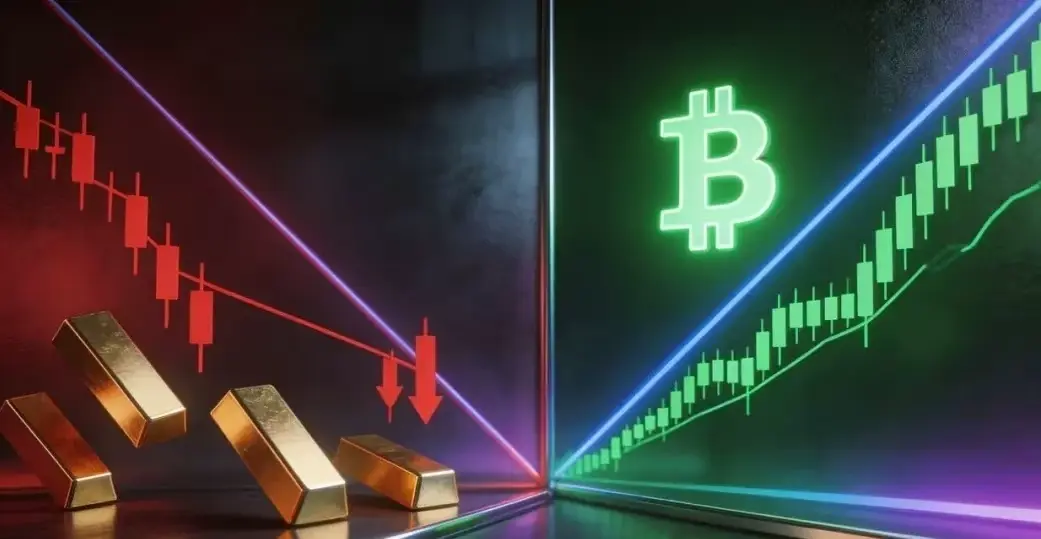
#Gate广场四月发帖挑战 Gold Plunge, Crude Oil Soars: Global Commodities Face a "Wild Battle" Between Bulls and Bears
Trump's speech stirs the global commodities market. On April 2, international gold prices sharply dropped around 9:00 AM, turning from gains to losses, with the lowest touching approximately $4,649 per ounce. Meanwhile, Brent crude oil broke through $106 per barrel strongly, rising over 5% intraday. Prior to this, risk aversion sentiment warmed up, and international gold prices steadily climbed to the $4,800 mark this week.
Institutional analysts say that the logic of geopolitical ri
View Original
post-image
Ryakpandavip
#Gate广场四月发帖挑战 Gold Plunge, Crude Oil Soars: Global Commodities Face a "Wild Battle" Between Bulls and Bears
Trump's speech stirs the global commodities market. On April 2, international gold prices sharply dropped around 9:00 AM, turning from gains to losses, with the lowest touching approximately $4,649 per ounce. Meanwhile, Brent crude oil broke through $106 per barrel strongly, rising over 5% intraday. Prior to this, risk aversion sentiment warmed up, and international gold prices steadily climbed to the $4,800 level this week.
Institutional analysts say that the pricing logic of geopolitical risks is fracturing, and the market has entered a "fast in, fast out" trading mode. Volatility risk is becoming a key variable testing investors' risk management capabilities.
As Trump declared that "the United States will conduct extremely fierce strikes on Iran in the next two to three weeks," this commodities game dominated by geopolitical tensions may continue to exhibit high volatility risks.
Gold as a safe haven is changing, with intense bulls and bears battles. According to Xinhua News Agency, U.S. President Trump delivered a speech on the evening of April 1 (Beijing time, April 2 morning), claiming a "quick, decisive, overwhelming victory" in the Iran conflict. Subsequently, global assets experienced sharp fluctuations, with gold leading the way. As of press time, spot gold was at $4,673 per ounce; COMEX gold futures fell 2.6%, at $4,688 per ounce. Previously, international gold prices had risen for four consecutive days.
"Today's abnormal movement in the gold market is not just a simple technical correction," said a trading professional. He noted that gold prices just recovered the $4,800 mark, only to perform a "big dive" minutes after Trump's speech, reflecting the current market's fragile and speculative capital. Both bullish and bearish funds are showing rapid entry and exit trends, significantly amplifying gold's volatility.
Dongwu Securities analysts pointed out that the current market pricing of geopolitical risks shows a clear "pulsed" characteristic: news triggers sharp rises, while expectations of fulfillment or turning points lead to stampede-like exits.
Shenwan Hongyuan Futures Research Institute believes that although short-term pressure on precious metals has eased, the market has not formed a consensus for a one-sided rally. The fierce battle between profit-taking and safe-haven buying has caused intraday fluctuations to expand sharply.
Huatai Securities forecasts that recent gold price declines are mainly due to liquidity squeezes, as investors tend to hold cash when facing risks. Assets like gold are also facing sell-offs.
A similar macro scenario can be referenced to the 1973-1975 oil crisis, during which gold prices experienced two declines and two rises. The liquidity squeeze caused by risk aversion and economic recession was the main reason for the decline in gold prices.
Regarding the future of gold prices, institutional opinions are notably divided.
Copper Crown Jin Yuan Futures pointed out that, based on recent gold price strength relative to silver, the market's "stagnant rally" logic is gradually approaching. However, it is still too early to conclude that the correction in precious metals has ended, and the gold-silver ratio is expected to further improve.
On the other hand, Goldman Sachs maintains its long-term bullish stance, expecting gold to rise to $5,400 per ounce by the end of 2026. However, Goldman also warns that if the Hormuz Strait remains disrupted, gold could face further short-term selling pressure.
Additionally, institutions have simulated the subsequent trend of the conflict. Even if the geopolitical event ends, it may not necessarily be a purely bearish signal for gold. IG market analyst Tony Sycamore said that if the conflict ends, it could be a double-edged sword for gold. On one hand, a lasting peace agreement could weaken the geopolitical safe-haven demand that supported gold during the war; on the other hand, if oil prices fall and inflation pressures ease, market expectations of Fed rate cuts in 2026 could re-emerge, potentially supporting gold.
Geopolitical premiums lift oil prices, with institutions stating "can't go back below $65"
Compared to the sharp fluctuations in gold, the oil market appears "more directional and energetic." On April 2, Brent crude oil broke through $106 per barrel, surging 4.78% intraday. The geopolitical premium has raised the oil price center. During this rally, WTI crude oil futures climbed from around $65 per barrel, reaching a high of $113 in March, with a monthly increase of 51% and an year-to-date gain of 83%.
Robert Reini, head of commodities research at Westpac Banking Corporation, analyzed: "Trump's speech did not change the fundamental reality— the Strait has been effectively closed for a month, and oil flow remains severely restricted. Disruptions could still occur in the coming weeks or longer." He added that Brent crude oil is expected to trade between $95 and $110 per barrel in the short term.
According to CCTV News, on April 1, U.S. President Trump stated that the U.S. no longer needs the Hormuz Strait, nor does it need it now. For countries that rely on the Strait to access oil, Trump urged them to either "buy oil from the U.S." or directly "grab oil" through the Strait. "Even if there's a ceasefire tomorrow, prices won't go back," is the common consensus among market institutions on oil pricing.
Andy Lipo, president of Lipo Petroleum Consulting, believes that even if the conflict ends tomorrow, oil prices could immediately fall by $10 to $15, but they will not return to the pre-conflict level of around $65. The market has already begun to price in higher geopolitical risk premiums in the Middle East.
Copper Crown Jin Yuan Futures further analyzed that current geopolitical signals are still switching back and forth, with significant divergence in market expectations. Even if the Middle East conflict ends, concerns about prolonged high oil prices disrupting the global economy remain strong, making it difficult for oil prices to return to previous levels.
Moreover, supply chain wounds are unlikely to heal quickly. Shenwan Hongyuan Futures believes that even if the Strait reopens immediately, restoring the entire supply system will take time, including repositioning oil tankers, adjusting routes, restoring capacity, and restarting refineries, all requiring a long recovery cycle. Although geopolitical tensions have shown signs of "cooling," this is likely just verbal easing, with substantial disagreements still unresolved and high uncertainty.
Pay attention to "Trump's rhythm" and beware of tail risks
In the face of current market volatility driven by geopolitics, many institutions believe that the global asset pricing logic is shifting and have proposed new strategies.
Dongwu Securities mentioned in a research report that the current market's rise and fall are heavily influenced by overseas factors, especially the so-called "TACO" rhythm (alternating escalation and de-escalation of conflicts) triggered by Trump's speeches. They advise investors to wait for clearer developments before making further investment decisions.
Shenwan Hongyuan Futures recommends from a risk hedging perspective that if there is no substantive progress in peace talks or if conflicts unexpectedly escalate in the coming weeks, oil prices could spike again. Investors should closely monitor US-Iran diplomatic feedback and the movements of U.S. ground forces. As for gold, given its long-term upward trend, short-term volatility may actually provide opportunities for medium- and long-term allocation. Most statistical agencies warn that within the "next two to three weeks," volatility trading in gold and the restructuring of geopolitical premiums in oil will be two core focuses for global investors, with high tail risks to watch out for.
Huatai Securities emphasizes that managing investment pace during risk events is crucial. The report notes that, according to CFTC positioning data, net long positions of asset management institutions have decreased by 32% from 134,000 contracts on January 13 to 91,000 contracts on March 24, near a one-year low, suggesting marginal selling pressure may be easing. The report further warns that before the Strait reopens and the oil dollar cycle resumes, investors should remain cautious of liquidity squeeze risks similar to those in mid-1974.
Yao Yuan, senior investment strategist at Oriental Horizon Asset Management's Asia Research Institute, advises investors to distinguish between short-term trading and long-term allocation.
In the short term, geopolitical conflict evolution is unpredictable. Over-allocating to risk assets should involve reducing exposure, increasing cash holdings, and hedging through energy, commodities, and derivatives. For long-term allocation, Yao recommends using gold and physical assets to hedge structural geopolitical risks, increasing positions in Europe and emerging markets to counteract U.S. retreat effects, and diversifying into AI and energy transition sectors.
repost-content-media
  • Reward
  • 28
  • Repost
  • Share
GateUser-44d2a3ddvip:
Buy the dip 😎
View More
#Gate广场四月发帖挑战 A prophecy fulfilled! Today, gold was "knocked out" by crude oil.
Today (April 2nd), the market once again perfectly confirmed a saying: When crude oil rises, gold must die. It’s not about safe-haven demand, nor Federal Reserve jawboning. It’s simply that a surge in crude oil prices directly pushed gold down.
Let’s first look at today’s plunge. London Gold futures briefly rose to around $4,800 in the early session, but the intraday low hit $4,599, and by the close in our market, it was about $4,619. A single-day drop of 3.83%. Early buyers chasing the rally lost 3%–5% in one day
View Original
post-image
post-image
  • Reward
  • 25
  • Repost
  • Share
GateUser-d31231cbvip:
Buy the dip 😎
View More
#Gate广场四月发帖挑战 April 2nd Global Markets in Turmoil: Cryptocurrency Liquidations and Trump’s Actions
April 2nd, a day of shock for global markets: a single statement from Trump shattered optimism, causing a 180-degree reversal in global assets!
On April 2nd, the trajectory of the global financial markets was completely rewritten by one person. Trump became the sole keyword driving all trading sessions and capturing the nerves of investors worldwide. The previous day, global capital markets were still celebrating, but overnight, the situation changed dramatically—from widespread optimism and ri
BTC0,29%
ETH-0,37%
XRP-0,3%
BNB0,4%
View Original
post-image
post-image
  • Reward
  • 28
  • Repost
  • Share
MrFlower_XingChenvip:
To The Moon 🌕
View More
#Gate广场四月发帖挑战 Bitcoin Tests the $69,000 Level Again: Where Is the Market Heading?
Recently, Bitcoin once again approached the critical $69,000 level, and discussions about its future trend have been heating up. Is this rally a continuation of a decline or a sign of bottoming out and reversal? Let’s analyze from multiple dimensions.
Overall Market: Clear Bottoming-Out Characteristics
Currently, the market is experiencing high-level oscillation, with investor sentiment relatively subdued, but the structure remains relatively healthy, and it is in the process of bottoming out. Price is highly se
BTC0,29%
View Original
post-image
post-image
  • Reward
  • 24
  • 1
  • Share
MrFlower_XingChenvip:
To The Moon 🌕
View More
The crypto market in April features a combination of macro interest rate decisions, regulatory developments, token unlocks, and industry activities. Key highlights:
📌 The FOMC interest rate decision and Powell’s press conference will take place at the end of the month, marking a critical window for global liquidity.
🏛 The draft of the Clarity Act is expected to be released in early April, bringing an important new focus on the US digital asset regulatory framework.
📊 US March non-farm payrolls and CPI data, March S&P Global Manufacturing PMI final, and Federal Reserve meeting minutes will b
HYPE-0,38%
ZRO-1,03%
SUI-0,98%
BTC0,29%
View Original
post-image
  • Reward
  • 27
  • Repost
  • Share
MrFlower_XingChenvip:
To The Moon 🌕
View More
#Gate广场四月发帖挑战 BTC at $68,000, how to approach this in April
Is $68,000 support or a trap?
Bitcoin is currently fluctuating around $68,000. From last October’s all-time high of $125,900, it has retraced 46%. A year ago, during the tariff shock, it was the first to drop in the crypto space. Now, one year after the tariffs, BTC remains at $68,000. The question isn’t “Can I buy,” but have you seen clearly—is this $68,000 the bottom or just a mid-term stop?
Data perspective: three signals are not very encouraging
📊 In January 2026, BTC closed down 10.1%, February down 14.8%, March barely up 0.19%—
BTC0,29%
View Original
post-image
post-image
[The user has shared his/her trading data. Go to the App to view more.]
  • Reward
  • 17
  • Repost
  • Share
MrFlower_XingChenvip:
To The Moon 🌕
View More
  • Pin