# BrentReturnsTo100

1.81M

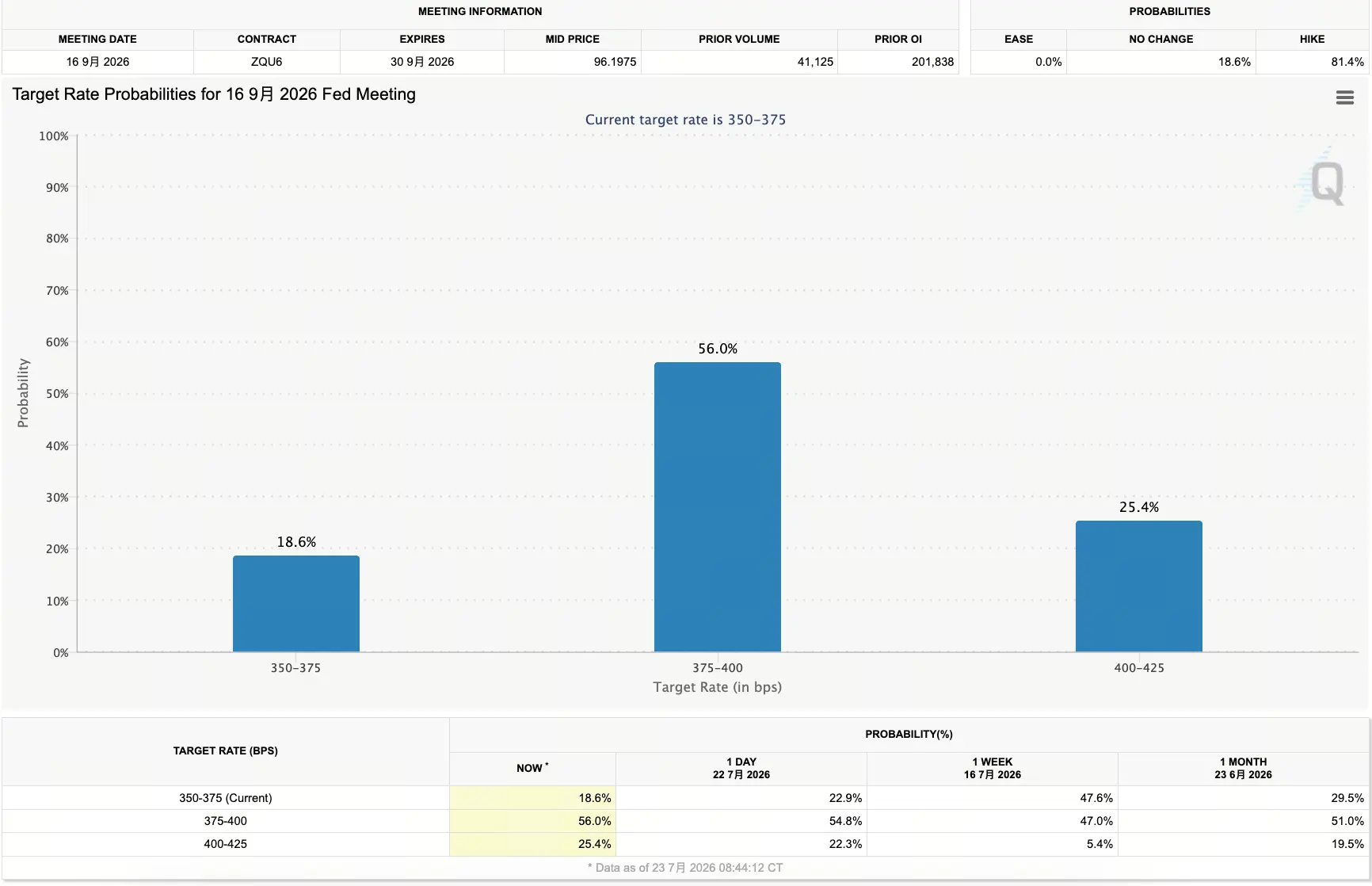
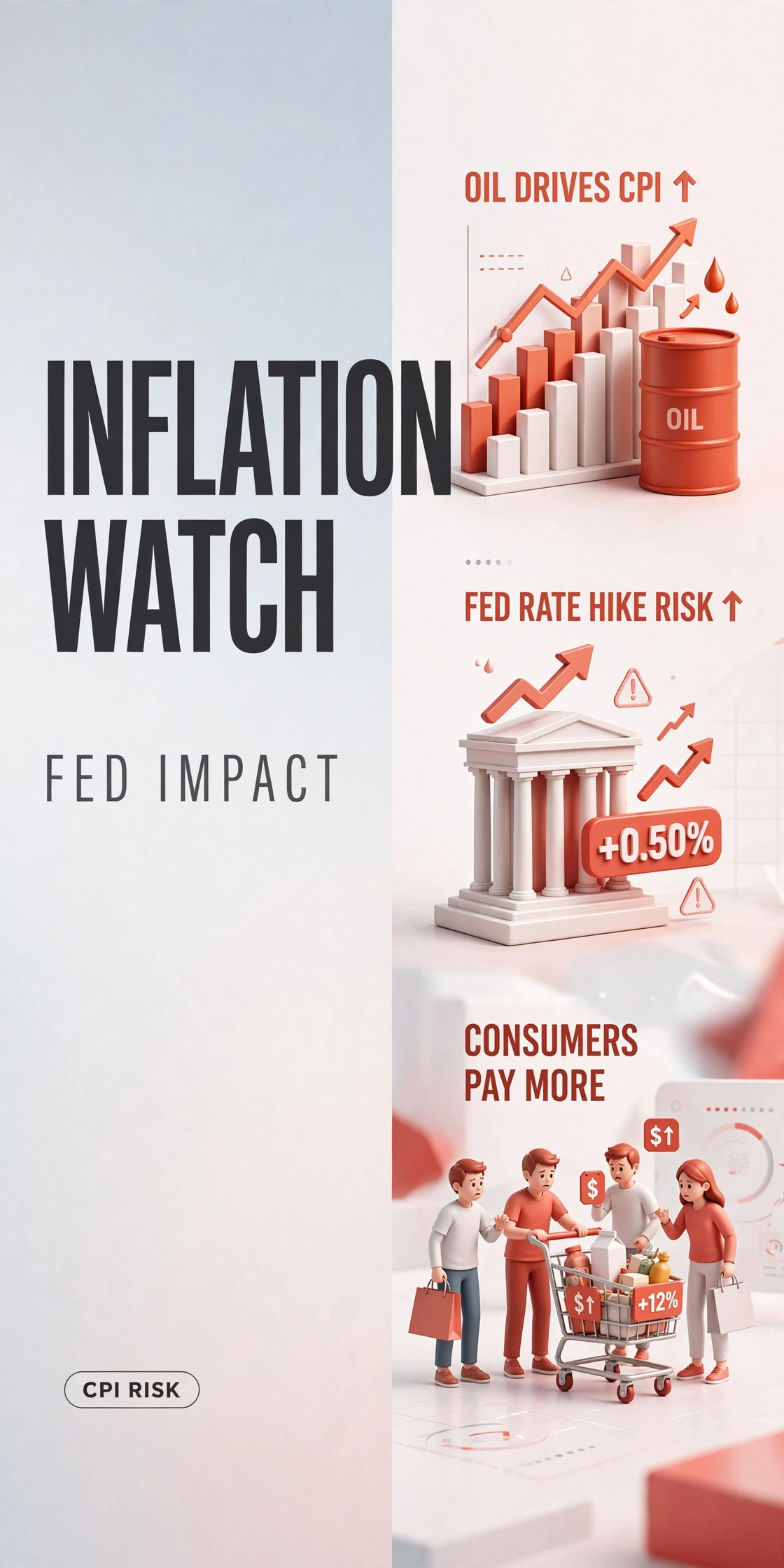
Brent crude futures broke above $100/barrel for the first time in two months, settling at $100.69 on Thursday, up over 7%. WTI surged 6.2% to $92.19. The trigger: Houthi rebels attacked two Saudi oil tankers in the Red Sea, with Saudi Arabia confirming one vessel caught fire. The Strait of Hormuz is nearly paralyzed while the Bab el-Mandeb is also under threat — both key Middle East oil chokepoints are now compromised. Prompt Brent physical crude surpassed $105/barrel. Trump warned of bombing Iranian bridges and power plants, saying Iran will be held responsible if Houthi attacks continue. Goldman Sachs projects Brent could break $120 in Q4 if the Strait disruption extends through 2027. The oil spike reignited inflation fears — 10-year Treasury yields topped 4.7%, and the Nasdaq tumbled 2.3%. Market odds for a Fed rate hike next week have climbed to ~25%.

#Bitcoin #DOGEcoin #BrentOil
Markets Tell Three Different Stories: BTC Pauses, DOGE Runs, Oil Burns
April 30, 2026. Three asset classes, three moods on the same day. Bitcoin pulls back 0.6% and trades at $75,785. Dogecoin jumps 5.7% and moves against the trend. Brent crude pushes to $116.85 per barrel and tests a four-year high. All three live in the same global economy, but each writes a different story.
1. Bitcoin: $75,785 and an Institutional Breathing Space
Bitcoin slipped 1.1% in the last 24 hours, easing from $76,324 to the $75,785 range. The intraday low was $74,937 and the high was $7
BTC-1.00%
DOGE-4.33%
BZ-1.02%
GS-2.18%
GAS-2.13%
Venüs_
#Bitcoin #DOGEcoin #BrentOil
Markets Tell Three Different Stories: BTC Pauses, DOGE Runs, Oil Burns
April 30, 2026. Three asset classes, three moods on the same day. Bitcoin pulls back 0.6% and trades at $75,785. Dogecoin jumps 5.7% and moves against the trend. Brent crude pushes to $116.85 per barrel and tests a four-year high. All three live in the same global economy, but each writes a different story.
1. Bitcoin: $75,785 and an Institutional Breathing Space
Bitcoin slipped 1.1% in the last 24 hours, easing from $76,324 to the $75,785 range. The intraday low was $74,937 and the high was $77,240. This is a modest 0.6% correction.
Why the dip? Because it rallied. BTC climbed from $63,000 earlier in 2026 to $76,500. That recovery was supported by five straight sessions of net inflows into spot Bitcoin ETFs totaling $1.1 billion. Now the market is digesting Strategy’s weekly 3,273 BTC buys and its 818,334 BTC reserve.
The company’s average cost is $75,537. Price sits just above that line. Technically, $75,000 is psychological support. Institutions are defending that level. The 0.6% drop is not “selling.” It is “waiting.” You cannot run a marathon without catching your breath.
2. Dogecoin: A 5.7% Meme Rally and the $0.10 Door
While BTC pulled back, DOGE gained 5.7%. It is up 5.30% in the last week and more than 11% in the last month. Price broke above $0.0970 and is testing $0.0995 resistance.
Why? Technicals. Dogecoin cleared resistance at $0.0980 and $0.0985. It holds above the 50% Fibonacci level at $0.0970. It is also above the 100-hour moving average. On the hourly chart, an ascending trend line supports price at $0.0978.
The key level is $0.0995. That is the 61.8% Fibonacci retracement of the last drop. A strong break opens the door to the psychological $0.10 mark. On-chain data is interesting too: MVRV is 0.686. Market value is 31% below realized value. NUPL sits at -0.459, in the “capitulation” zone. Historically, these levels mark points where buyers return after heavy losses.
Bottom line: As BTC rests, risk appetite shifts to memecoins. DOGE is diverging short term on technicals and community momentum.
3. Brent Oil: $116.85 and the Shadow of the Strait of Hormuz
The real fire is in energy. Brent crude is $116.85. It touched $126 intraday. That is the highest since March 2022. Compared with $70 levels at the start of 2026, it is up 70%.
One reason: U.S.-Iran tensions. The Strait of Hormuz is closed. One-fifth of the world’s oil moves through it. The U.S. maintains a naval blockade of Iranian ports. The Trump administration will not lift the blockade until Tehran returns to a nuclear deal. The message “a blockade is more effective than bombing. They are choking” has rattled markets.
Result: Eight straight sessions of gains. Brent settled up $6.77 at $118.03 per barrel. U.S. crude jumped 7% to $106.88. Inventories are also falling. U.S. crude stocks dropped 6 million barrels last week. The forecast was 200,000. Gasoline and diesel draws were larger than expected. Supply is tightening as the summer driving season begins.
Analysts are raising targets. Goldman Sachs lifted its year-end Brent forecast from $80 to $90. The physical market is in backwardation: June is $113.14, July is $105. Near-term barrels carry a premium. That means stocks are being drawn down. Spot oil is scarce.
4. The One Thing Connecting All Three: A Risk Premium
Why did BTC dip? Because it rallied and traders took profit. Institutions are protecting the $75,537 cost basis.
Why did DOGE pop? Because BTC paused and speculative money chased a short-term story. Technicals plus community equals rally.
Why did oil surge? Because geopolitical risk is real. Hormuz is closed, inventories are down, summer is coming.
All three are pricing the same thing: uncertainty. Bitcoin looks for safe-haven demand as “digital gold” but gets sold short term. Dogecoin is the barometer of “risk-on.” Oil is a direct war premium.
Final Word: The April 30 picture is clear. Money is braking and accelerating at the same time. Brakes on BTC, gas on DOGE, fire in oil. Next week, a headline from Hormuz, a signal from the Fed, a flow from ETFs… any of it can redraw these three charts.
For now the rule is simple: As long as BTC holds above $75,000, bulls stay in control. If DOGE breaks $0.10, momentum takes over. While Brent stays above $110, inflation stays hot. Stay alert.
#GateSquare #CreatorCarnival

repost-content-media
  • Reward
  • 6
  • Repost
  • Share
Krasher:
lfg
View More
#BrentReturnsTo100
Oil Above $100, Treasury Yields Surge: Is the Global Economy Entering a New Phase?
Financial markets often look complicated, but there are moments when a few indicators tell a much larger story.
This week may be one of those moments.
Brent crude has climbed back above $100 per barrel, while the U.S. 10-year Treasury yield has reached its highest level in more than a year. At the same time, long-term government bond yields continue moving higher, reflecting a market that is becoming increasingly cautious about inflation, economic stability, and future monetary policy.
Indivi
BTC-1.00%
post-image
post-image
  • Reward
  • 10
  • Repost
  • Share
Vortex_King:
2026 GOGOGO 👊
View More
#BrentReturnsTo100
Brent crude moving back toward the $100 per barrel mark would be one of the most significant macro developments for global markets. But the real story isn't the price itself—it's why oil is rising.
If Brent reaches $100 due to geopolitical tensions or supply disruptions, markets could face renewed inflation fears, higher transportation and production costs, and increased volatility. However, if the rally is driven by stronger global demand, it may signal a resilient economy rather than a supply crisis.
A sustained move above $100 could:
• Increase inflation expectations and
BTC-1.00%
post-image
  • Reward
  • 3
  • Repost
  • Share
HighAmbition:
Diamond Hands 💎
View More
#BrentReturnsTo100 | Oil at $100 Again? What Rising Crude Prices Could Mean for the Global Economy and Crypto Markets
After months of fluctuating prices and geopolitical uncertainty, Brent crude oil is once again approaching the psychologically important $100 per barrel level. This isn't just another commodity headline—it could become one of the most influential macroeconomic developments of the year.
Oil is the lifeblood of the global economy. From transportation and manufacturing to agriculture and electricity generation, nearly every industry depends on energy. When crude prices climb sharp
BZ-1.02%
BTC-1.00%
post-image
  • Reward
  • 4
  • Repost
  • Share
M0xx:
lalalalalalalalal
View More
#SummerCreationCamp
OIL ABOVE $100. TREASURY YIELDS AT MULTI-YEAR HIGHS. IS THE GLOBAL MACRO RESET JUST BEGINNING?
THE MARKET JUST RECEIVED A WAKE-UP CALL
Brent crude has reclaimed the $100 per barrel level, while the U.S. 10-year Treasury yield climbed to 4.71%, its highest reading since January 2025. At the same time, the 30-year Treasury yield surged above 5.1%, levels not seen since before the Global Financial Crisis.
These are not isolated market moves. Together they represent one of the strongest macro signals of 2026, affecting inflation expectations, monetary policy, equities, commodi
BTC-1.00%
post-image
post-image
Falcon_Official
#BrentReturnsTo100
BRENT CRUDE HAS RETURNED TO $100 AND GLOBAL MARKETS ARE ALREADY FEELING THE PRESSURE
Energy markets have entered another period of heightened volatility. On July 23, 2026, Brent crude oil climbed back above $100 per barrel for the first time since late May after reports that Yemen's Iran-backed Houthis targeted two Saudi oil tankers in the Red Sea. Brent surged more than 6% during the session, briefly breaking the psychological $100 barrier before closing above it.
This is far more than an oil price story. Rising crude prices are rapidly becoming one of the biggest macroeconomic drivers for inflation, monetary policy, global supply chains, equities, commodities, and cryptocurrency markets.
TWO GLOBAL ENERGY CHOKEPOINTS ARE NOW UNDER PRESSURE
The geopolitical backdrop has become increasingly complex.
The Strait of Hormuz, through which nearly 20% of global oil supply traditionally moves, has remained under significant disruption during the ongoing U.S.-Iran conflict.
Now, fresh attacks in the Red Sea have placed another major shipping corridor under pressure, creating additional uncertainty for global energy transportation.
With two strategic maritime routes facing elevated risks, concerns over future oil supplies have intensified, adding a significant geopolitical premium to crude prices.
WHY $100 OIL MATTERS
Only weeks ago, several analysts viewed $100 Brent as an aggressive forecast.
Today, it has become reality.
If oil remains above this level for an extended period, markets could begin pricing in:
• Higher transportation costs
• Rising manufacturing expenses
• Increased consumer inflation
• Greater pressure on corporate profit margins
• Slower global economic growth
Higher energy prices tend to affect nearly every industry, making oil one of the most influential macroeconomic variables in financial markets.
INFLATION EXPECTATIONS ARE RISING AGAIN
The latest surge in crude prices has quickly changed investor sentiment.
Bond yields have moved higher as markets reassess inflation expectations.
Energy costs remain one of the largest contributors to consumer price inflation, and sustained strength in oil could complicate the outlook for central banks already balancing inflation control with economic growth.
If inflation remains elevated, expectations for tighter monetary policy may continue increasing.
HOW MARKETS ARE RESPONDING
The impact is already visible across asset classes.
Higher oil prices have pressured equity markets as investors weigh rising operating costs and slower earnings growth.
Defensive sectors have attracted renewed interest, while growth-focused assets remain sensitive to higher interest-rate expectations.
Currency markets and bond markets have also reacted as traders reassess global macro risks.
WHAT THIS MEANS FOR CRYPTO
Crypto markets are no longer isolated from global macroeconomic developments.
Higher energy costs can increase operating expenses for Bitcoin miners while also influencing overall investor risk appetite.
At the same time, stronger inflation expectations can affect liquidity conditions and monetary policy, two factors that historically play an important role in cryptocurrency price trends.
Because digital assets trade continuously, macro developments are reflected almost instantly instead of waiting for traditional market hours.
KEY FACTORS TO WATCH NEXT
Several developments could determine whether oil remains above $100 or extends even higher:
• Further developments in Middle East geopolitical tensions
• Security conditions around major shipping routes
• OPEC+ production decisions
• Global inventory data
• Central bank policy expectations
Each of these factors has the potential to influence both energy prices and broader financial markets.
Brent crude returning above $100 per barrel represents much more than a milestone for the energy sector.
It highlights how geopolitical uncertainty can rapidly influence inflation expectations, monetary policy, investor sentiment, and risk assets across the global financial system.
As long as supply concerns remain elevated and geopolitical tensions persist, oil is likely to remain one of the most closely watched indicators shaping market direction.
#OilMarket
#SummerCreationCamp
@Gate_Square
repost-content-media
  • Reward
  • 5
  • Repost
  • Share
HighAmbition:
To The Moon 🌕
View More
#BrentReturnsTo100
Brent Crude Returns to $100: What It Means for Global Markets
Brent crude oil climbing back toward the $100 per barrel level is once again putting energy markets at the center of global attention. Whenever oil reaches this psychological milestone, investors, governments, and businesses closely monitor the potential impact on inflation, interest rates, and economic growth.
Higher oil prices increase transportation, manufacturing, and logistics costs across the world. Airlines, shipping companies, and industries that depend heavily on fuel often face rising operating expenses
BTC-1.00%
post-image
  • Reward
  • 2
  • Repost
  • Share
QueenOfTheDay:
LFG 🔥
View More
#BrentReturnsTo100
Brent Returns To 100 On Red Sea Tanker Hit
Brent crude has crossed 100 dollars per barrel again for first time since May after Houthi forces claimed hit on two Saudi oil tankers in Red Sea.
News now: At about 8 pm IST Thursday, Brent traded at 100.79 per barrel up about 7 percent with intraday high at 101.01. WTI rose near 6 percent to 91.83. Front month Sep Brent at 100.69 up 7 percent. This five day rally has added about 20 percent in two weeks. Trigger was Houthi claim that they struck two Saudi tankers in Bab el Mandeb Strait after declaring naval block on Saudi shipmen
CVX0.75%
OXY0.19%
BTC-1.00%
post-image
post-image
  • Reward
  • 11
  • Repost
  • Share
CryptoSpecto:
To The Moon 🌕
View More
Brent crude oil returning to the $100 level would be a major development for global financial markets, because oil prices influence inflation, transportation costs, corporate expenses, consumer spending, and central-bank policy.
A move back toward $100 per barrel would immediately raise questions about what is driving the rally. Is it a temporary supply disruption, geopolitical tension, stronger global demand, or a combination of several factors?
The answer matters because not every oil rally has the same economic impact.
If prices rise because of a sudden supply shock, markets may become conc
BTC-1.00%
post-image
post-image
  • Reward
  • 14
  • Repost
  • Share
GateUser-cc4a2fbd:
To The Moon 🌕
View More
#BrentReturnsTo100 🛢️
Brent crude moving back toward the $100 level is a reminder of how quickly global energy markets can shift. Rising oil prices often influence inflation expectations, transportation costs, and overall market sentiment, making energy one of the key sectors to watch.
For investors, it's important to look beyond the headline and focus on the broader economic picture before making decisions. Smart investing starts with staying informed and managing risk wisely.
#BrentReturnsTo100
  • Reward
  • 1
  • Repost
  • Share
SoominStar:
LFG 🔥
#SummerCreationCamp
U.S. Strategic Petroleum Reserve at a 43-Year Low While Oil Prices Surge More Than 20% — Why the Global Energy Market Has Entered Its Most Fragile Phase in Decades
The global energy market is once again experiencing one of its most volatile periods in recent history. The U.S. Strategic Petroleum Reserve (SPR) has fallen to approximately 316.5 million barrels, its lowest level since 1983, representing a decline of more than 56% from the record 726.6 million barrels reached in 2010.
During the latest reporting period alone, the reserve declined by another 3 million barrels,
GAS-2.12%
BTC-1.00%
HighAmbition
#SummerCreationCamp
U.S. Strategic Petroleum Reserve at a 43-Year Low While Oil Prices Surge More Than 20% — Why the Global Energy Market Has Entered Its Most Fragile Phase in Decades
The global energy market is once again experiencing one of its most volatile periods in recent history. The U.S. Strategic Petroleum Reserve (SPR) has fallen to approximately 316.5 million barrels, its lowest level since 1983, representing a decline of more than 56% from the record 726.6 million barrels reached in 2010.
During the latest reporting period alone, the reserve declined by another 3 million barrels, while one weekly draw exceeded 6.2 million barrels, highlighting the scale of emergency deployments. The SPR was originally designed as America's last line of defense against severe oil supply disruptions, but today's inventory levels leave significantly less protection against future geopolitical or weather-related shocks.
Oil prices have responded dramatically. Brent crude has rallied from around $72.68 in early July to approximately $88–90 per barrel, representing an increase of nearly 24%, while WTI crude has climbed from roughly $69 to above $82 per barrel, gaining almost 19% over the same period. Earlier in the year, Brent briefly approached $128 per barrel, meaning prices are still around 30% below those crisis highs but are rapidly moving higher as geopolitical tensions return. At one point, Brent recorded an extraordinary 10% single-day rally, one of the strongest daily advances seen in years, demonstrating how quickly geopolitical risk can reprice global energy markets.
The Strait of Hormuz remains the world's most important energy chokepoint, carrying roughly 20–20.3 million barrels per day, equivalent to approximately 20% of global petroleum consumption. During the height of the regional conflict, oil flows through the Strait reportedly collapsed from nearly 20 million barrels per day to around 3.8 million barrels per day, an astonishing 81% decline. Even after partial recovery, disruptions continue to remove an estimated 11 million barrels per day from normal global supply chains after accounting for alternative routes and emergency measures. If additional disruptions affect both the Strait of Hormuz and the Bab el-Mandeb corridor simultaneously, analysts believe $100 Brent crude becomes an increasingly realistic scenario.
Inventory conditions remain equally concerning. U.S. commercial crude inventories stand roughly 6% below the five-year seasonal average, while gasoline inventories are approximately 8% below normal levels and remain at their weakest seasonal position since 2012. Diesel inventories also remain well below historical averages, while U.S. crude imports have fallen approximately 12.2% year-over-year, reflecting tighter international supply conditions. Combined U.S. petroleum inventories have declined by more than 123 million barrels, significantly reducing the overall energy buffer available to stabilize markets during future disruptions.
Consumers are already experiencing the consequences. Average U.S. gasoline prices have approached $4 per gallon, an increase of roughly 45% compared with around $2.75 one year earlier. Diesel prices have exceeded $5 per gallon, representing a remarkable 34.4% year-over-year increase. These higher fuel costs flow directly into transportation, aviation, manufacturing, agriculture, logistics, food production, and consumer goods, increasing inflationary pressure across virtually every sector of the economy.
The impact extends far beyond energy markets. Rising oil prices increase business operating expenses, compress corporate profit margins, and place upward pressure on global inflation. Persistent inflation often encourages central banks to maintain higher interest rates for longer periods, reducing liquidity across financial markets. Historically, tighter monetary conditions have created additional volatility for equities and cryptocurrencies, particularly growth-oriented assets that depend on abundant market liquidity.
Meanwhile, safe-haven assets continue attracting investor attention. Gold has climbed to around $4,713 per ounce, posting a daily gain of approximately 3.8%, while silver surged more than 7.4% in a single session. Central banks have doubled their pace of gold accumulation compared with the previous decade, purchasing around 1,000 tonnes annually over recent years as they diversify reserve holdings and reduce dependence on traditional reserve assets. This continued accumulation reflects growing concern over geopolitical fragmentation, inflation risks, and financial uncertainty.
Bitcoin has also experienced significant volatility. After falling below $57,000, the world's largest cryptocurrency rebounded nearly 10%, demonstrating continued resilience despite macroeconomic uncertainty. However, Bitcoin remains heavily influenced by ETF flows, monetary policy expectations, investor sentiment, and overall market liquidity. While many investors continue viewing Bitcoin as digital gold over the long term, short-term price movements remain closely linked to broader macroeconomic conditions rather than geopolitical headlines alone.
Additional uncertainty comes from weather-related risks. Tropical storm activity in the Gulf of Mexico has temporarily disrupted offshore production facilities, adding another supply-side challenge on top of existing geopolitical tensions. When weather disruptions coincide with military conflicts and constrained inventories, oil markets become even more vulnerable to sudden price spikes because multiple supply risks emerge simultaneously.
Looking forward, investors will closely monitor several critical catalysts, including developments surrounding the Strait of Hormuz, Red Sea shipping security, OPEC+ production policy, strategic petroleum reserve replenishment, Chinese crude demand, refinery utilization, inflation reports, and central bank decisions. Even relatively small changes in supply or demand can generate disproportionately large price movements because the market's traditional safety margins have narrowed considerably.
The global energy market has entered an era where inventories are thinner, geopolitical risks are higher, and price reactions are significantly more sensitive than in previous years. A Strategic Petroleum Reserve that has fallen more than 56% from its historical peak, Brent crude advancing roughly 24% in just weeks, WTI gaining nearly 19%, gasoline inventories 8% below normal, crude inventories 6% below average, imports declining 12.2%, diesel prices rising 34.4%, gasoline increasing nearly 45%, and temporary supply disruptions exceeding 80% through one of the world's most critical shipping lanes collectively illustrate how limited the global energy cushion has become. Until geopolitical tensions ease, supply chains normalize, and strategic reserves are rebuilt, every new geopolitical headline will continue influencing oil prices, inflation expectations, financial markets, and cryptocurrency sentiment across the globe.
#OilMarket #BrentCrude #WTI #StrategicPetroleumReserve @Gate_Square
repost-content-media
  • Reward
  • 5
  • Repost
  • Share
BeautifulDay:
To The Moon 🌕
View More
Load More

Join 40 M users in our growing community

⚡️ Join 40 M users in the crypto craze discussion
💬 Engage with your favorite top creators
👍 See what interests you
  • Pinned