Kumar_Sanu

vip
Age 0.1 Year
Peak Tier 0
No content yet
#GateSquareMayTradingShare #GateSquareMayTradingShare
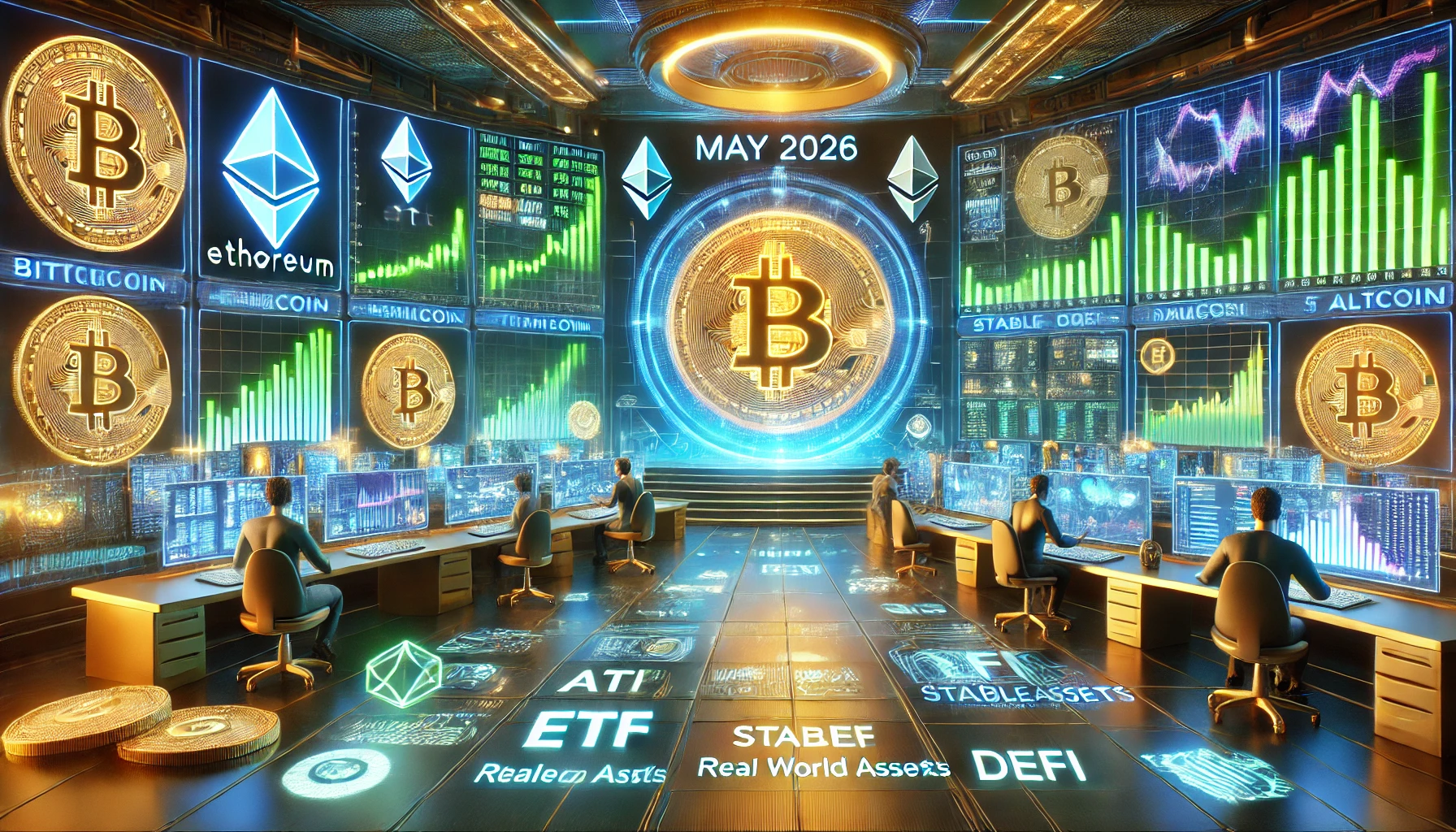
May 2026 crypto market investors bring a new momentum. Steady growth in trading volume, strong Bitcoin dominance, and selective rallies in altcoins have revitalized the market. This month, traders are most focused on the futures market, ETF inflows, and stablecoin liquidity. The overall market structure signals that smart money is gradually building positions in high-conviction assets. That is why the GateSquare May Trading Share campaign is also generating significant discussion within the community.
Bitcoin has recently held important
BTC0.63%
ETH1.37%
ShainingMoon
#GateSquareMayTradingShare #GateSquareMayTradingShare
May 2026 crypto market investors bring a new momentum. Steady growth in trading volume, strong Bitcoin dominance, and selective rallies in altcoins have revitalized the market. This month, traders are most focused on the futures market, ETF inflows, and stablecoin liquidity. The overall market structure signals that smart money is gradually building positions in high-conviction assets. That is why the GateSquare May Trading Share campaign is also generating significant discussion within the community.
Bitcoin has recently held important support zones, which has improved market confidence. Analysts believe that if BTC breaks the resistance range, the next bullish wave could spread to altcoins as well. Ethereum is also gaining investor attention due to strong fundamentals, especially with increased staking ecosystem and Layer-2 activity. Currently, the market is not just focused on hype but also emphasizes the real utility of projects and ecosystem growth.
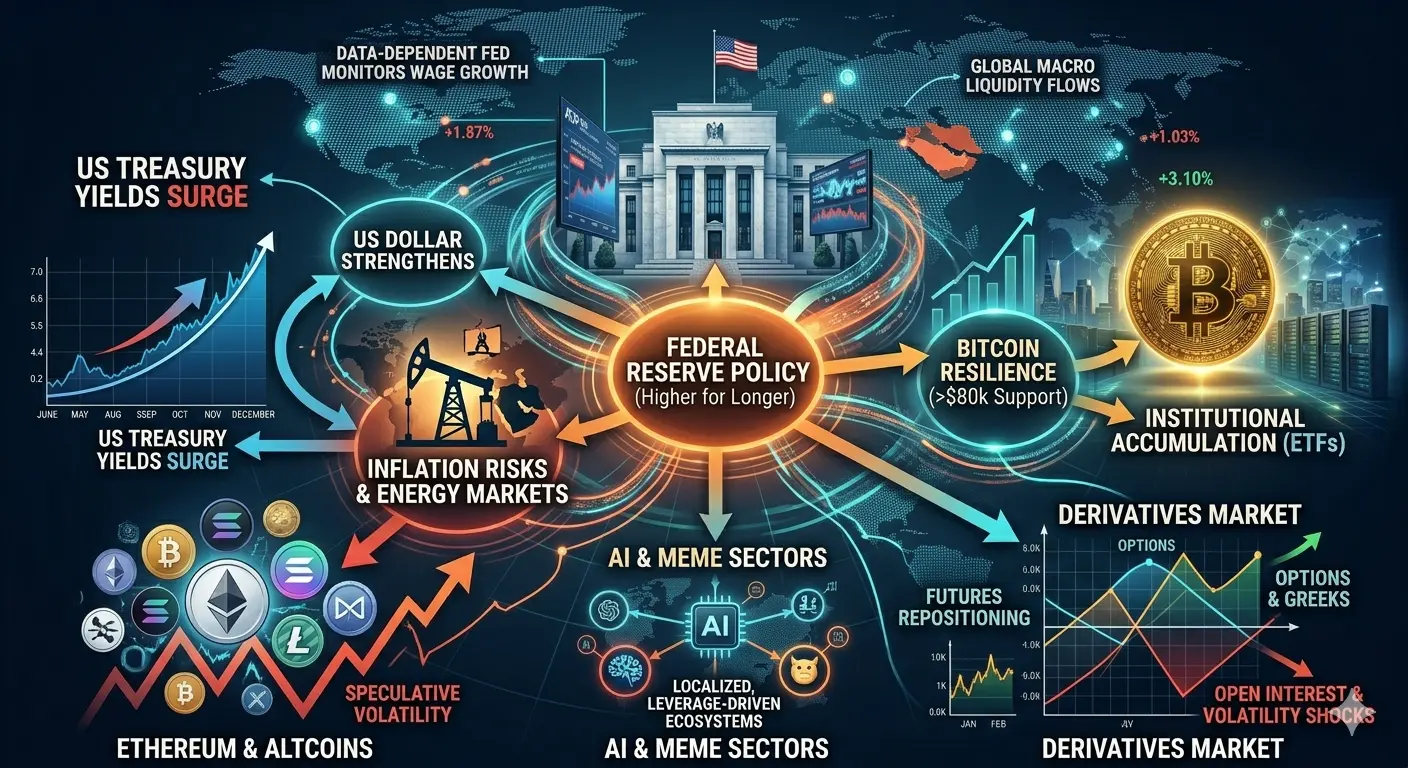
During the May trading phase, volatility may remain high because macroeconomic data, interest rate expectations, and institutional flows are directly influencing market direction. If US inflation data comes in soft, a fresh bullish momentum could be seen in the crypto market. On the other hand, if the Federal Reserve maintains an aggressive stance, a short-term pullback is also possible. That is why experienced traders are prioritizing risk management. Stop-loss strategies and portfolio diversification have become very important in this environment.
GateSquare community activities and trading campaigns mainly aim to provide user engagement and market participation. Such campaigns not only offer rewards but also give traders an opportunity to understand market trends better. Due to social trading discussions and market analysis sessions, new traders are also gaining a better understanding of market sentiment. This trend indicates that the crypto industry is no longer limited to speculation but is moving towards a complete financial ecosystem.
In the altcoin market, sectors like AI, gaming, DeFi, and Real World Assets have gained strong attention. Investors are preferring projects with active development, strong partnerships, and sustainable tokenomics. Meme coins are also still active, but smart investors are now evaluating the risk-reward ratio more carefully. Despite high leverage trading, the trend of disciplined strategies in the market is increasing.
In the coming weeks, market direction will depend on liquidity inflows and Bitcoin price action. If BTC maintains stability above psychologically important levels, the second half of May could prove even more bullish for the crypto market. However, sudden volatility cannot be ignored. Therefore, successful traders will be those who approach the market with patience, research, and proper strategies.
repost-content-media
  • Reward
  • Comment
  • Repost
  • Share
#BTCBackAbove80K
#BTCBackAbove80K
The crypto market has once again shown strong momentum by pushing Bitcoin above the psychologically important $80k level. This move is not just a normal price recovery but is also seen as a powerful signal of market confidence. In recent weeks, investors appeared cautious due to macroeconomic uncertainty and market volatility, but Bitcoin's return above 80K indicates that buying pressure is still strong. Institutional investors, ETF inflows, and long-term holders' accumulation strategies have supported the market structure.
Bitcoin dominance remaining stable
BTC0.63%
ETH1.37%
SOL3.27%
ShainingMoon
#BTCBackAbove80K
#BTCBackAbove80K
The crypto market has once again shown strong momentum by pushing Bitcoin above the psychologically important $80k level. This move is not just a normal price recovery but is also seen as a powerful signal of market confidence. In recent weeks, investors appeared cautious due to macroeconomic uncertainty and market volatility, but Bitcoin's return above 80K indicates that buying pressure is still strong. Institutional investors, ETF inflows, and long-term holders' accumulation strategies have supported the market structure.
Bitcoin dominance remaining stable is also considered a positive factor for the market. When BTC recovers major resistance levels, the entire crypto market usually gains fresh energy. That’s why renewed optimism is also visible among altcoins. Volume increases in Ethereum, Solana, and AI-related projects suggest that investors are not only limited to Bitcoin but are also exploring broader market opportunities.
According to technical analysts, Bitcoin established a strong support zone after the recent correction. Rebounding from that support and reclaiming the 80K level is shifting the market structure toward a bullish direction. If BTC maintains stability above this range, the next targets could be higher resistance zones. However, traders should also remember that the crypto market operates in a high-volatility environment, so sudden pullbacks cannot be completely ignored. Smart traders are now focusing more on leverage control and risk management.
The impact of ETF inflows is also playing a significant role in this rally. Spot Bitcoin ETFs have attracted institutional capital into the market, improving both liquidity and confidence. Market participants believe that if this inflow trend continues, Bitcoin can further strengthen its long-term bullish cycle. Additionally, global economic indicators, interest rate expectations, and Federal Reserve policies are heavily influencing crypto direction.
On-chain data is also showing interesting signals. Long-term holders are not aggressively selling their holdings, indicating that strong conviction still exists in the market. Gradual declines in exchange reserves and whale accumulation activities have also supported the bullish narrative. These indicators are historically considered signs of market strength.
Social sentiment has also improved significantly. When Bitcoin recovers major levels, retail participation naturally increases. That’s why a noticeable growth in trading activity and community discussions is also observed. However, experienced investors advise avoiding emotional trading. Market sustainability is only possible through patience and disciplined strategies.
The upcoming weeks could be very crucial for the crypto market. If Bitcoin maintains consolidation above 80K, broader market bullish momentum could increase further. But macroeconomic surprises or unexpected regulatory developments could also create short-term pressure. Therefore, successful traders will be those who trade with updated market analysis, proper planning, and a balanced risk approach.
repost-content-media
  • Reward
  • Comment
  • Repost
  • Share
#JapanTokenizesGovernmentBonds #JapanTokenizesGovernmentBonds
Japan, in its ongoing financial innovation efforts, has shown strong progress toward tokenizing government bonds. This development is seen not only as a major signal for traditional finance but also for the global blockchain ecosystem. The concept of tokenization essentially involves representing real-world assets in digital form on a blockchain network, and now governments are seriously exploring the potential of this technology.
The Japanese financial sector is increasingly focusing on efficiency, transparency, and faster settleme
RWA1.08%
ETH1.37%
ShainingMoon
#JapanTokenizesGovernmentBonds #JapanTokenizesGovernmentBonds
Japan, in its ongoing financial innovation efforts, has shown strong progress toward tokenizing government bonds. This development is seen not only as a major signal for traditional finance but also for the global blockchain ecosystem. The concept of tokenization essentially involves representing real-world assets in digital form on a blockchain network, and now governments are seriously exploring the potential of this technology.
The Japanese financial sector is increasingly focusing on efficiency, transparency, and faster settlement systems. Traditionally, government bonds are considered low-risk investment instruments, but their integration with blockchain could improve market accessibility and liquidity. Analysts believe that if the adoption of tokenized bonds succeeds, it could also transform the structure of global financial markets.
One major advantage of blockchain-based government bonds is that transactions become more transparent and secure. With the help of smart contracts, the settlement process can be faster, and operational costs can also be reduced. Traditional bond systems involve slow settlement and verification processes, whereas blockchain infrastructure offers instant verification and efficient record management. For this reason, institutional investors are also showing growing interest in tokenized assets.
Japan’s move is also seen as a bullish signal for the Real World Assets sector. Over the past few months, the RWA narrative has rapidly grown in the crypto market, where investors are viewing blockchain not just as a speculative asset but as a practical financial infrastructure. Tokenized treasury products, digital bonds, and blockchain-based securities have now become important discussion points in the market.
Financial experts say that if major economies adopt this model, bond trading could become more accessible and globally integrated in the future. It could also create new opportunities for retail investors to participate in high-value government securities with fractional ownership, even with small investment amounts. This is an important development in building a bridge between traditional finance and decentralized finance.
Japan has historically shown an aggressive approach toward technology adoption and digital financial innovation. Managing crypto regulations within a structured framework, along with the move toward tokenized financial products, indicates that the country views long-term blockchain integration as a serious economic opportunity. The impact of this development will not be limited to the local market; international financial institutions will also closely monitor this trend.
Market sentiment is also viewing this news quite positively. Investor confidence is increasing in blockchain projects focused on Real World Assets, compliance solutions, and institutional finance infrastructure. The Ethereum ecosystem and enterprise blockchain platforms could also benefit indirectly from this trend.
repost-content-media
  • Reward
  • Comment
  • Repost
  • Share
#WCTCTradingKingPK The 2026 crypto trading environment is evolving rapidly, and it is becoming clear that success no longer depends on hype or random speculation. Instead, structured analysis, discipline, and risk-controlled strategies are defining the real winners. #WCTCTradingKingPK represents this new era where trading is treated as a professional skill rather than emotional decision-making.
The global crypto market is currently highly volatile, with Bitcoin, Ethereum, and major altcoins moving in different cycles influenced by liquidity shifts, macroeconomic data, and institutional activit
BTC0.63%
ETH1.37%
ShainingMoon
#WCTCTradingKingPK The 2026 crypto trading environment is evolving rapidly, and it is becoming clear that success no longer depends on hype or random speculation. Instead, structured analysis, discipline, and risk-controlled strategies are defining the real winners. #WCTCTradingKingPK represents this new era where trading is treated as a professional skill rather than emotional decision-making.
The global crypto market is currently highly volatile, with Bitcoin, Ethereum, and major altcoins moving in different cycles influenced by liquidity shifts, macroeconomic data, and institutional activity. Traders who fail to understand these deeper dynamics often struggle, while those who focus on data-driven decisions are gaining consistent advantage.
Institutional involvement has significantly changed market behavior. ETFs, whale accumulation, and global financial policies are now major factors influencing price movements. This means retail traders can no longer rely only on basic chart patterns; they must also understand market structure and fundamental triggers.
Leverage and futures trading have increased both opportunity and risk. Without proper strategy, capital can be wiped out quickly. Successful traders are now focusing on capital preservation, strict stop-loss rules, and portfolio diversification to survive in unpredictable conditions.
#WCTCTradingKingPK also highlights the importance of trading psychology. Emotional control, patience, and timing are becoming more valuable than aggressive trading. Markets reward discipline, not impulsive actions. The ability to wait for high-quality setups is now considered a core strength of professional traders.
Technology is also reshaping trading. AI-based tools, on-chain analytics, and real-time sentiment tracking are becoming essential for decision-making. Traders who adapt early to these advanced tools are positioning themselves ahead of the curve in this competitive environment.
In conclusion, crypto trading in 2026 is no longer a game of chance. It is a skill-based financial discipline where knowledge, strategy, and consistency define success. #WCTCTradingKingPK stands as a symbol of this transformation, where only disciplined and informed traders can truly dominate the market.
repost-content-media
  • Reward
  • Comment
  • Repost
  • Share
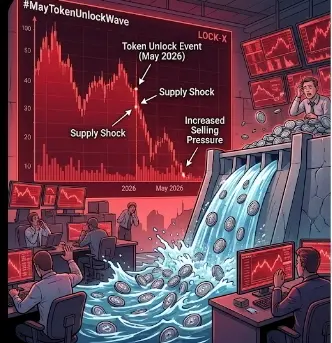
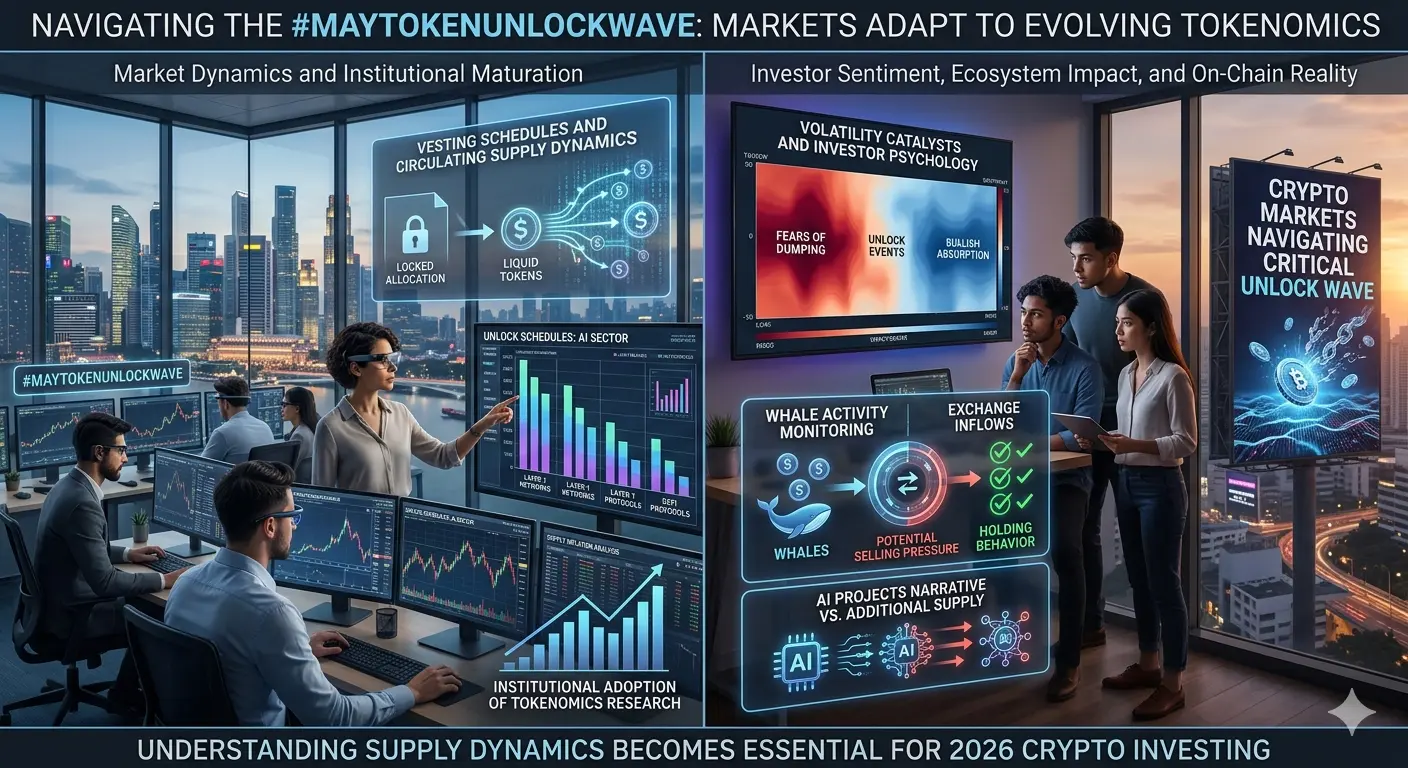
#MayTokenUnlockWave May 2026 is emerging as a critical phase in the crypto market as a major Token Unlock Wave is taking place across multiple projects. Token unlocks refer to the scheduled release of previously locked tokens that were reserved for teams, early investors, advisors, or ecosystem incentives. Once these tokens enter circulation, they directly impact supply dynamics, liquidity, and market sentiment.
During this May wave, several large-scale vesting schedules are being executed simultaneously, creating noticeable shifts in circulating supply. When supply increases rapidly, markets
ShainingMoon
#MayTokenUnlockWave May 2026 is emerging as a critical phase in the crypto market as a major Token Unlock Wave is taking place across multiple projects. Token unlocks refer to the scheduled release of previously locked tokens that were reserved for teams, early investors, advisors, or ecosystem incentives. Once these tokens enter circulation, they directly impact supply dynamics, liquidity, and market sentiment.
During this May wave, several large-scale vesting schedules are being executed simultaneously, creating noticeable shifts in circulating supply. When supply increases rapidly, markets often experience short-term volatility, especially in tokens where demand is not strong enough to absorb the new supply. This can lead to price pressure, sharp corrections, or sideways consolidation depending on market conditions.
However, token unlocks are not always negative events. In many strong projects, these unlocks are part of a structured long-term roadmap. The released tokens are often used for ecosystem development, staking rewards, liquidity expansion, and strategic growth initiatives. This means that while short-term price fluctuations may occur, the long-term impact can still be positive if the project fundamentals are solid.
The #MayTokenUnlockWave also highlights an important evolution in the crypto market: a shift toward transparent token economics and disciplined vesting models. Investors are no longer focused only on hype or short-term gains. Instead, they carefully analyze unlock schedules, token utility, on-chain activity, and developer commitment before making decisions.
For traders and investors, this period requires a more strategic approach:
Monitor token unlock calendars closely
Identify high-percentage unlock events that may increase volatility
Track liquidity depth and trading volume trends
Apply strict risk management during supply shocks
Avoid emotional trading during sudden price movements
Institutional participants are also paying close attention to this wave, as large unlock events can temporarily distort market sentiment while also creating opportunities for long-term accumulation at discounted levels.
Overall, #MayTokenUnlockWave is not just about token supply entering the market. It represents a deeper transition in crypto markets toward maturity, where tokenomics, vesting discipline, and real utility play a central role in shaping price action and investor confidence.
repost-content-media
  • Reward
  • Comment
  • Repost
  • Share
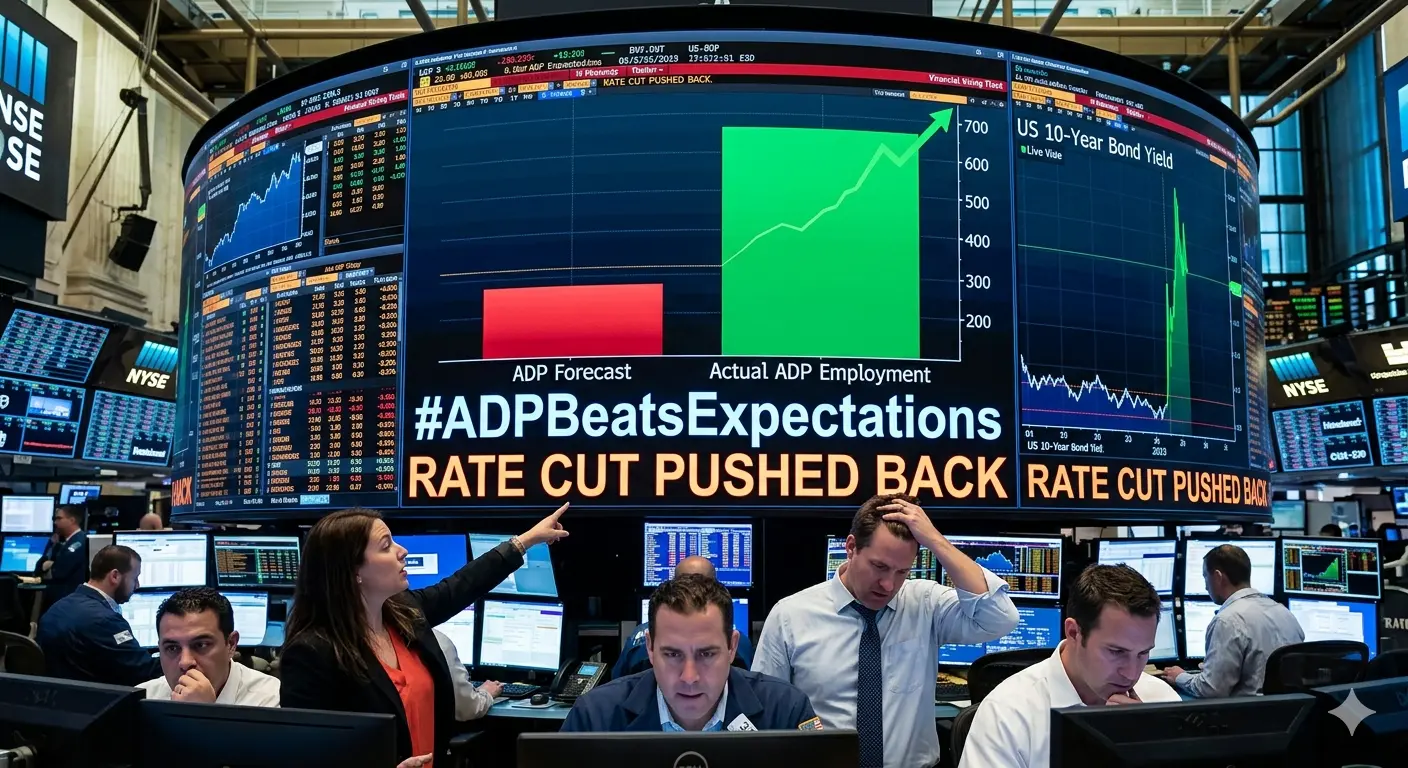
#ADPBeatsExpectationsRateCutPushedBack has delivered a strong signal to global markets, reshaping near-term expectations around monetary policy and labor strength. The ADP employment data, which tracks private sector job creation, has come in significantly above forecasts, indicating that the labor market remains resilient despite ongoing economic tightening conditions.
This stronger-than-expected employment growth suggests that businesses are still actively hiring, reflecting underlying economic stability. In a typical scenario, weakening labor data would increase pressure on central banks to
ShainingMoon
#ADPBeatsExpectationsRateCutPushedBack has delivered a strong signal to global markets, reshaping near-term expectations around monetary policy and labor strength. The ADP employment data, which tracks private sector job creation, has come in significantly above forecasts, indicating that the labor market remains resilient despite ongoing economic tightening conditions.
This stronger-than-expected employment growth suggests that businesses are still actively hiring, reflecting underlying economic stability. In a typical scenario, weakening labor data would increase pressure on central banks to consider early interest rate cuts. However, this latest report has delayed those expectations, as policymakers now have less urgency to ease monetary conditions.
Financial markets reacted immediately to the data. Equity indices showed mixed sentiment as investors recalibrated their expectations for liquidity conditions. Bond yields moved higher, reflecting the belief that interest rates may remain elevated for longer than previously anticipated. This shift has direct implications for risk assets, including cryptocurrencies, where liquidity conditions play a critical role in price direction.
The “rate cut pushback” narrative is particularly important because it affects global capital flow. When interest rates remain high, investors tend to favor safer yield-bearing instruments over high-risk assets. This can lead to temporary pressure on speculative markets. However, strong employment data also signals economic health, which can support long-term confidence in growth-oriented assets.
For traders and analysts, this development highlights a key contradiction in macroeconomic signals. On one hand, strong labor data reduces recession fears. On the other hand, it delays monetary easing, which could restrict liquidity expansion. This balance between growth strength and monetary policy restraint will continue to define market volatility in the coming months.
From a strategic perspective, market participants are now closely monitoring upcoming inflation reports, central bank statements, and wage growth trends. These indicators will determine whether the current “higher for longer” interest rate environment persists or begins to shift toward gradual easing later in the year.
Overall, #ADPBeatsExpectationsRateCutPushedBack represents a clear reminder that macroeconomic conditions remain fluid. Strong employment data strengthens economic outlook but simultaneously delays rate cut expectations, creating a complex environment for investors across all asset classes.
In the coming weeks, market direction will depend on whether inflation continues to cool or re-accelerates under strong labor market conditions. Until then, volatility and cautious positioning are expected to dominate global financial markets.
repost-content-media
  • Reward
  • Comment
  • Repost
  • Share
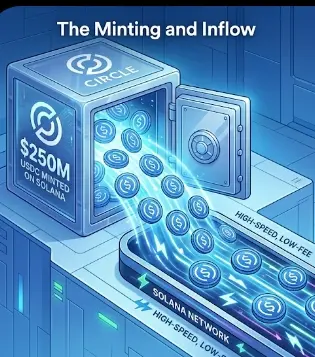
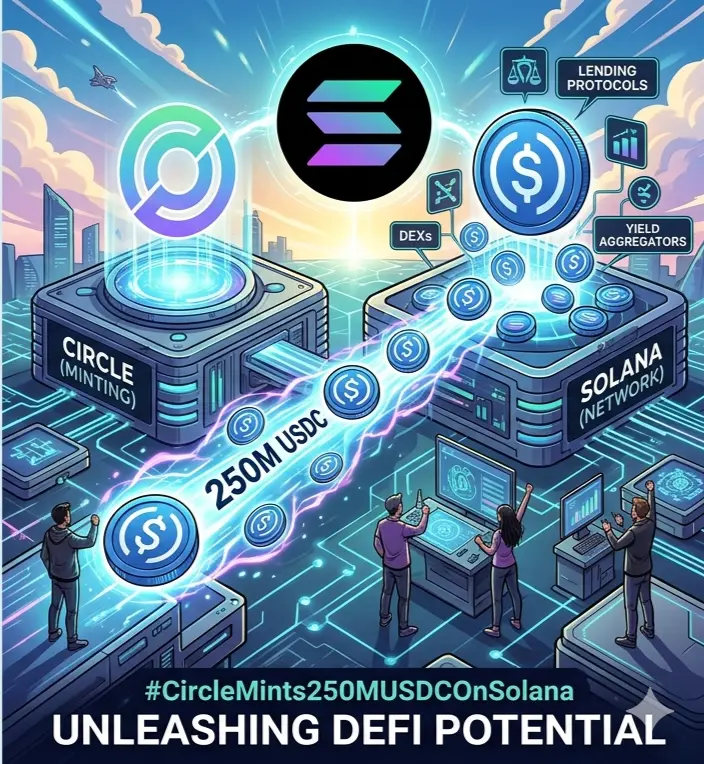
#CircleMints250MUSDCOnSolana Circle has once again made a major move by minting $250 million USDC on the Solana network, signaling strong expansion in stablecoin liquidity and blockchain-based financial infrastructure. This is not just a routine issuance, but a clear reflection of rising demand for on-chain liquidity and the growing role of high-performance blockchains in global crypto markets.
Solana stands out due to its high-speed transaction processing, extremely low fees, and scalable architecture, making it one of the most efficient ecosystems for DeFi activity. The minting of such a lar
SOL3.27%
ShainingMoon
#CircleMints250MUSDCOnSolana Circle has once again made a major move by minting $250 million USDC on the Solana network, signaling strong expansion in stablecoin liquidity and blockchain-based financial infrastructure. This is not just a routine issuance, but a clear reflection of rising demand for on-chain liquidity and the growing role of high-performance blockchains in global crypto markets.
Solana stands out due to its high-speed transaction processing, extremely low fees, and scalable architecture, making it one of the most efficient ecosystems for DeFi activity. The minting of such a large volume of USDC on Solana indicates that liquidity is actively shifting toward networks that can handle high throughput without congestion or high costs.
This $250M injection of USDC significantly strengthens the Solana DeFi ecosystem. It directly enhances liquidity pools across decentralized exchanges, lending protocols, and yield platforms. Higher liquidity means better trading efficiency, reduced slippage, and improved capital flow, which are essential for both retail and institutional participants.
From Circle’s perspective, consistent USDC minting reflects real market demand rather than speculation. Stablecoin supply expansion usually correlates with increased on-chain activity, trading volume, and capital deployment across DeFi ecosystems. This makes USDC a key indicator of overall crypto market participation.
For Solana, this development acts as both a confidence booster and structural upgrade. More stablecoin liquidity attracts deeper institutional engagement, improves market stability, and supports larger transaction volumes without performance degradation.
On a broader scale, this move highlights the ongoing shift toward multi-chain stablecoin distribution, where USDC is no longer concentrated on a single network but is expanding across multiple high-performance ecosystems like Solana.
In conclusion, the minting of $250M USDC on Solana represents more than just liquidity expansion—it reflects the continuous evolution of decentralized finance, where speed, scalability, and liquidity are becoming the core pillars of the next-generation financial system.
repost-content-media
  • Reward
  • Comment
  • Repost
  • Share
#Web3SecurityGuide Web3 security is one of the most critical foundations of the decentralized digital economy. As blockchain adoption grows across DeFi, NFTs, crypto trading, and decentralized applications, security risks are also increasing. Understanding how to protect digital assets, wallets, and identities is essential for every user, investor, and developer.
The first and most important layer of security is wallet protection. A Web3 wallet is your gateway to blockchain networks, and losing access means losing control of your assets. Always secure your private keys and seed phrases offline
ShainingMoon
#Web3SecurityGuide Web3 security is one of the most critical foundations of the decentralized digital economy. As blockchain adoption grows across DeFi, NFTs, crypto trading, and decentralized applications, security risks are also increasing. Understanding how to protect digital assets, wallets, and identities is essential for every user, investor, and developer.
The first and most important layer of security is wallet protection. A Web3 wallet is your gateway to blockchain networks, and losing access means losing control of your assets. Always secure your private keys and seed phrases offline. Never store them in screenshots, cloud storage, or messaging apps. Hardware wallets are considered the safest option for long-term storage because they keep private keys isolated from internet exposure.
The second key area is phishing protection. Attackers often create fake websites, wallet pop-ups, or social media links that look identical to real platforms. Always verify URLs carefully and avoid clicking unknown links. Bookmark official sites and double-check smart contract approvals before signing any transaction.
Another major factor is smart contract risk. In Web3, you interact directly with smart contracts when using DeFi protocols or NFT platforms. Not all contracts are audited or safe. Always research the project’s audit history, developer credibility, and community trust before interacting with it. Avoid approving unlimited token permissions unless absolutely necessary.
Exchange security also plays a role. While centralized exchanges offer convenience, they are still vulnerable to hacking incidents. It is recommended to keep only trading funds on exchanges and move long-term holdings to personal wallets.
Two-factor authentication (2FA) and strong password management are essential across all platforms. Use unique passwords for every account and consider using password managers for added safety.
Another important concept is network awareness. Always ensure you are connected to secure and trusted networks. Public Wi-Fi can expose sensitive wallet interactions to attackers.
Finally, staying updated is a key defense mechanism. Web3 evolves rapidly, and new threats appear regularly. Following security updates, community alerts, and trusted blockchain news sources helps you stay protected.
Web3 security is not just a technical requirement; it is a continuous responsibility. Users who prioritize safety, verification, and awareness can significantly reduce risks and participate confidently in the decentralized future.
repost-content-media
  • Reward
  • Comment
  • Repost
  • Share
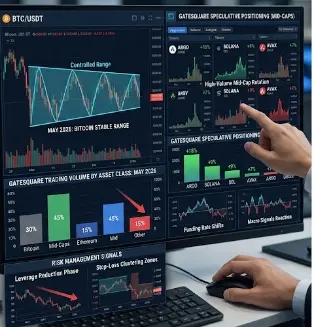
#GateSquareMayTradingShare May 2026 crypto market is showing a strong shift in momentum, and GateSquare trading activity is becoming one of the key observation points for traders analyzing short-term volatility and mid-term positioning. The overall market structure is driven by liquidity rotation, derivatives positioning, and selective accumulation in high-volume assets.
Bitcoin remains the core market driver, maintaining dominance while oscillating within a controlled range. This stability is allowing altcoins to experience rotational movements instead of broad market-wide rallies. Ethereum e
BTC0.63%
ETH1.37%
ShainingMoon
#GateSquareMayTradingShare May 2026 crypto market is showing a strong shift in momentum, and GateSquare trading activity is becoming one of the key observation points for traders analyzing short-term volatility and mid-term positioning. The overall market structure is driven by liquidity rotation, derivatives positioning, and selective accumulation in high-volume assets.
Bitcoin remains the core market driver, maintaining dominance while oscillating within a controlled range. This stability is allowing altcoins to experience rotational movements instead of broad market-wide rallies. Ethereum ecosystem activity is also increasing, supported by DeFi inflows and renewed staking participation, which is gradually strengthening network confidence.
On GateSquare, trading volume trends indicate a rise in speculative positioning, especially in mid-cap tokens. Traders are actively reacting to macro signals such as interest rate expectations, ETF inflow sentiment, and global liquidity conditions. This has created a market environment where rapid price movements are driven more by sentiment shifts than long-term fundamentals.
Another key factor is stablecoin liquidity flow. Increased USDT and USDC circulation is providing fresh capital entry points, suggesting that sidelined capital is slowly re-entering the market. This liquidity is often first reflected in exchange trading activity before spreading into broader spot markets.
Risk management behavior among traders is also evolving. Stop-loss clustering, leverage reduction during high volatility phases, and quicker profit-taking cycles are becoming dominant strategies. This indicates a more mature trading environment compared to previous speculative cycles.
Altcoin performance on GateSquare shows strong divergence. Only projects with real utility, active development, and strong community engagement are attracting consistent volume. Low-quality speculative tokens are facing rapid liquidity exits, highlighting a more selective market approach.
Overall, GateSquare May Trading Share reflects a transition phase where the market is not purely bullish or bearish but structurally adaptive. Traders are focusing on timing, liquidity zones, and macro alignment rather than emotional entry points.
The coming weeks are likely to be defined by volatility expansion, liquidity redistribution, and trend confirmation across major assets. Market participants are closely watching breakout levels and funding rate shifts for directional confirmation.
repost-content-media
  • Reward
  • Comment
  • Repost
  • Share
#GateSquareMayTradingShare #GateSquareMayTradingShare
The crypto market is showing strong momentum during May, and GateSquare trading activity continues to attract major attention from global investors and blockchain communities. Traders are closely monitoring important price zones, market volume, and investor sentiment as digital assets experience rapid movement across multiple sectors. Market participants believe this period could become highly important for short-term trading opportunities as well as long-term investment strategies.
Bitcoin remains the primary market indicator and is curren
BTC0.63%
ETH1.37%
ShainingMoon
#GateSquareMayTradingShare #GateSquareMayTradingShare
The crypto market is showing strong momentum during May, and GateSquare trading activity continues to attract major attention from global investors and blockchain communities. Traders are closely monitoring important price zones, market volume, and investor sentiment as digital assets experience rapid movement across multiple sectors. Market participants believe this period could become highly important for short-term trading opportunities as well as long-term investment strategies.
Bitcoin remains the primary market indicator and is currently trading near the important $78,000–$82,000 range. Analysts believe that maintaining support above $80,000 could strengthen bullish momentum, while resistance near $85,000 remains a critical breakout level for traders. Daily trading volume has also increased significantly, showing growing market participation and investor confidence.
Ethereum is holding strong around the $3,700–$4,100 range as Layer-2 adoption, DeFi expansion, and staking activity continue increasing. Many investors are closely watching Ethereum because network upgrades and institutional interest may influence future price movement. Meanwhile, major altcoins are also gaining attention as traders search for higher-growth opportunities.
The overall crypto market capitalization is fluctuating between $2.7 trillion and $3 trillion, reflecting both volatility and strong liquidity across exchanges. Stablecoin reserves, especially Tether and USD Coin, remain highly important because they indicate buying power entering the market. Analysts are carefully tracking stablecoin inflows as a signal of future trading momentum.
GateSquare discussions this month are strongly focused on AI projects, DeFi ecosystems, Web3 gaming, and Real World Asset tokenization. Several traders believe these sectors may become key growth narratives during the next market cycle. However, experienced investors continue advising proper risk management, stop-loss planning, and portfolio diversification to reduce exposure during volatile market conditions.
Crypto adoption is also expanding globally as institutions, developers, and retail users continue entering the blockchain ecosystem. Many communities are emphasizing education, security awareness, and responsible trading practices. Experts remind investors that emotional trading and excessive leverage can create unnecessary risks in highly volatile markets.
If current momentum continues, analysts expect stronger liquidity, increased user participation, and higher trading activity during the coming months. Still, market conditions can change rapidly, making research and disciplined decision-making essential for every trader.
repost-content-media
  • Reward
  • Comment
  • Repost
  • Share
#WCTCAI梗图挑战
🔥 WCTC S8 Meme Challenge
The WCTC S8 Meme Challenge is a community engagement campaign designed to encourage users to create, share, and promote original meme content. It combines creativity, social interaction, and reward-based incentives to increase platform activity and user participation. Instead of focusing only on trading or market activity, this event shifts attention toward community-driven content creation.
At its core, this is not just a competition, but a structured viral engagement system where users compete through humor, creativity, and social reach.
---
📌 1. Core
Vortex_King
#WCTCAI梗图挑战
🔥 WCTC S8 Meme Challenge
The WCTC S8 Meme Challenge is a community engagement campaign designed to encourage users to create, share, and promote original meme content. It combines creativity, social interaction, and reward-based incentives to increase platform activity and user participation. Instead of focusing only on trading or market activity, this event shifts attention toward community-driven content creation.
At its core, this is not just a competition, but a structured viral engagement system where users compete through humor, creativity, and social reach.
---
📌 1. Core Concept of the Event
The central idea of this campaign is simple: users are invited to create original meme images and share them within the community. These memes can be based on crypto markets, trading behavior, community jokes, or any relatable digital culture topic.
The goal is to stimulate creativity while simultaneously increasing platform visibility. By encouraging users to generate content, the platform benefits from organic marketing through user-generated memes.
This type of strategy is widely used in digital ecosystems because it transforms users into active promoters rather than passive participants.
---
🎯 2. How Participation Works (Step-by-Step Breakdown)
Participation in the WCTC S8 Meme Challenge follows a structured process.
Step 1: Create Original Meme Content
Users must design or generate their own meme images. Originality is important because copied or reused content is generally not accepted. The meme can be humorous, sarcastic, or related to crypto trading experiences.
The most successful memes are usually those that reflect real market emotions such as fear, greed, sudden price changes, or community reactions.
---
Step 2: Publish the Meme with Required Hashtag
Once the meme is created, users must post it publicly along with the campaign hashtag: #WCTCAI梗图挑战
This hashtag ensures that the post is tracked and included in the official event ranking system.
---
Step 3: Increase Engagement (Likes, Shares, Views)
After posting, users are encouraged to increase engagement by sharing their memes with friends, communities, and social networks.
Engagement plays a critical role because rankings are based not only on creativity but also on how much attention the meme receives. Higher interaction increases the chance of winning rewards.
This creates a viral loop where users actively promote their own content.
---
🏆 3. Reward Structure Explained
The campaign offers multiple reward categories, making it both competitive and inclusive.
---
🥇 Most Popular Category
The top two memes with the highest total engagement (likes, comments, interactions) will receive exclusive limited-edition WCTC T-shirts.
This category rewards pure popularity and strong community response.
---
🚀 Traffic Dark Horse Category
The top 10 memes ranked by total views will share a reward pool of 100 USDT.
This category focuses more on visibility rather than direct interaction, meaning content that spreads widely even without high engagement can still win.
---
🌞 Sunshine Random Rewards
In addition to performance-based rewards, 50 users will be randomly selected to receive a $20 position experience voucher.
This introduces a luck-based reward system, ensuring that even smaller creators have a chance to benefit.
---
📊 4. Strategy for Winning the Challenge
Winning this type of competition requires more than just creating a meme. It requires understanding virality and audience behavior.
✔️ 1. Relevance to Trends
Memes that relate to current crypto market conditions, price movements, or emotional trading experiences tend to perform better because they are relatable.
---
✔️ 2. Simplicity and Clarity
A meme should be easy to understand within seconds. Overly complex jokes or unclear visuals usually fail to gain traction.
---
✔️ 3. Emotional Connection
The strongest memes often trigger emotions such as humor, frustration, excitement, or surprise. Emotional content spreads faster than neutral content.
---
✔️ 4. Early Engagement Boost
Initial likes and shares play a major role in algorithmic visibility. Early traction can significantly increase final ranking.
---
✔️ 5. Social Distribution
Sharing the meme across multiple communities, groups, and platforms increases visibility and improves chances of ranking higher.
---
⚠️ 5. Important Considerations
While the event offers attractive rewards, participants should understand how such campaigns typically work.
🔸 No Guaranteed Winning
Participation does not guarantee rewards. Rankings depend on engagement, views, and sometimes random selection.
🔸 Mixed Reward System
The system includes both performance-based rewards and random selection rewards. This means both skill and luck are involved.
🔸 Originality Requirement
Only original content is eligible. Duplicate or copied memes may be disqualified.
🔸 Engagement-Driven Model
The campaign is designed to increase platform activity, meaning success depends heavily on how well content performs socially.
---
🧠 6. Strategic Insight Behind the Campaign
This type of event is more than just a meme competition. It is a user growth and engagement mechanism.
By encouraging users to create memes:
The platform receives free viral marketing
Community interaction increases
Users spend more time on the platform
Social sharing expands brand visibility
In return, users receive rewards, recognition, and potential financial incentives.
This creates a win-win ecosystem where creativity becomes a form of participation in platform growth.
---
📈 7. Why Meme-Based Campaigns Work
Meme culture is one of the strongest forces in online communities, especially in crypto ecosystems. It works because:
Memes are easy to understand and share
Humor spreads faster than technical content
Communities enjoy inside jokes and shared experiences
Emotional content drives higher engagement
This is why many platforms use meme contests as part of their marketing strategy.
---
🧾 Final Summary
The WCTC S8 Meme Challenge is a structured community event that combines creativity, competition, and engagement-based rewards. Users are encouraged to create original memes, share them with a specific hashtag, and maximize engagement through social interaction.
Rewards are distributed across multiple categories including popularity-based winners, high-traffic contributors, and random lucky participants.
Ultimately, success in this challenge depends on creativity, timing, emotional appeal, and social reach.
repost-content-media
  • Reward
  • Comment
  • Repost
  • Share
#BitcoinAbove80K
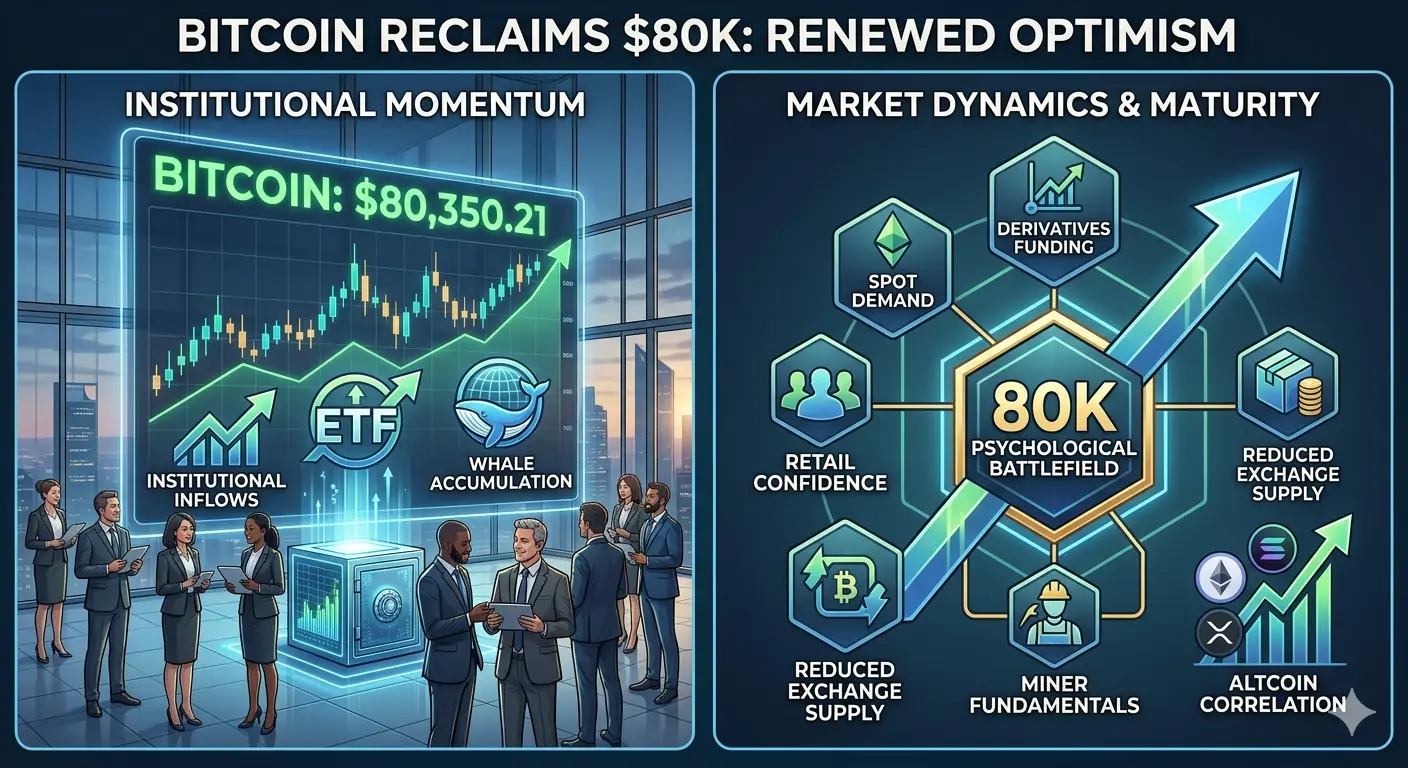
Bitcoin has once again reclaimed the important $80,000 price zone, and the entire cryptocurrency market is reacting with renewed optimism. This level is not just another number on the chart. For traders, investors, institutions, and long-term holders, the $80K region represents a major psychological battlefield that could shape the direction of the next large market cycle. After weeks of volatility, uncertainty, leveraged liquidations, and macroeconomic pressure, Bitcoin showing strength above this area is rebuilding confidence across both spot and futures markets.
The signifi
Vortex_King
#BitcoinAbove80K
Bitcoin has once again reclaimed the important $80,000 price zone, and the entire cryptocurrency market is reacting with renewed optimism. This level is not just another number on the chart. For traders, investors, institutions, and long-term holders, the $80K region represents a major psychological battlefield that could shape the direction of the next large market cycle. After weeks of volatility, uncertainty, leveraged liquidations, and macroeconomic pressure, Bitcoin showing strength above this area is rebuilding confidence across both spot and futures markets.
The significance of Bitcoin trading above $80,000 goes far beyond short-term price action. In previous market cycles, Bitcoin often needed several attempts before converting major resistance zones into long-term support. The current structure suggests that buyers are becoming increasingly comfortable accumulating at higher price levels instead of waiting for deep corrections. This behavior usually reflects improving market maturity and stronger conviction among larger investors.
One of the biggest drivers behind the current momentum is the continued attention surrounding Bitcoin ETF activity. Institutional products have fundamentally changed the way traditional investors gain exposure to crypto markets. Instead of dealing with self-custody complexity or exchange-related concerns, institutions can now access Bitcoin through regulated investment vehicles. This shift has expanded market participation and introduced a more stable source of long-term demand.
ETF inflows remain one of the most closely monitored indicators because they reflect real capital entering the ecosystem. Even during periods of short-term volatility, consistent inflow activity often signals that institutional investors are still building exposure quietly in the background. Large capital allocators usually focus on long-term positioning rather than reacting emotionally to intraday fluctuations. This is why many traders carefully analyze ETF data when evaluating the sustainability of bullish momentum.
Another important factor supporting Bitcoin above $80K is whale accumulation. On-chain analysts continue monitoring large wallet activity because whales often influence overall market structure. When large holders accumulate during uncertainty instead of distributing into rallies, it usually indicates confidence in higher future valuations. Current accumulation patterns suggest that many large participants are preparing for a longer-term expansion phase rather than expecting immediate downside collapse.
Whale behavior also affects market liquidity dynamics. When large quantities of Bitcoin move into cold storage or long-term holding wallets, the available circulating supply on exchanges becomes tighter. Reduced exchange supply can increase price sensitivity during periods of rising demand. If buying pressure accelerates while liquid supply decreases, the market can experience aggressive upward price movement due to simple supply-demand imbalance.
The derivatives market is also playing a major role in current sentiment. Open interest across futures platforms has increased significantly as traders position themselves around this critical level. However, experienced traders understand that leverage creates both opportunity and danger. While rising open interest can amplify bullish momentum, excessive leverage can also trigger sharp volatility if positions become overcrowded.
Funding rates currently provide important insight into trader psychology. When funding remains relatively balanced during a rally, it suggests healthier market participation rather than unsustainable speculative euphoria. Extremely overheated funding conditions often precede violent corrections because too many traders become positioned on one side of the market. A more controlled funding environment allows bullish trends to develop gradually and sustainably.
Macro conditions continue to influence Bitcoin’s trajectory as well. Global markets remain highly sensitive to inflation expectations, central bank policy, treasury yields, and liquidity conditions. Bitcoin increasingly behaves as a macro-sensitive asset, meaning institutional investors now evaluate it alongside traditional financial instruments rather than treating it as an isolated speculative product. Any signs of easing monetary pressure or improving liquidity conditions could strengthen bullish continuation scenarios.
At the same time, Bitcoin’s resilience during uncertain macro conditions is attracting additional attention. In earlier years, sharp economic uncertainty often caused extreme crypto weakness. Today, Bitcoin appears to be demonstrating greater structural stability even during periods of global financial stress. This evolving behavior is helping strengthen the narrative that Bitcoin is gradually maturing into a globally recognized alternative asset class.
Retail participation is also beginning to recover. During previous corrections, many smaller investors became cautious due to volatility and uncertainty. However, Bitcoin reclaiming major levels often restores confidence among retail traders who prefer momentum confirmation before re-entering the market. Increased social engagement, rising trading activity, and growing search interest all suggest that broader public attention is slowly returning.
Technical analysts are closely watching whether Bitcoin can establish sustained daily and weekly closes above the $80K region. Holding above resistance is often more important than briefly breaking through it. If Bitcoin successfully transforms this level into support, market structure could favor continuation toward higher resistance zones in the coming weeks. Strong consolidation above major levels frequently acts as a launchpad for larger impulsive moves later.
Volume analysis is equally important in evaluating the strength of the breakout. Healthy rallies are typically supported by rising spot demand rather than purely leveraged speculation. Spot-driven buying tends to produce more sustainable market structures because actual asset accumulation is occurring. Traders are therefore paying close attention to whether buying activity continues strengthening across major exchanges.
Altcoin markets are also reacting positively to Bitcoin’s strength. Historically, Bitcoin stability above major resistance zones often creates a more favorable environment for broader crypto market expansion. When Bitcoin dominance stabilizes, capital sometimes rotates into large-cap altcoins, creating opportunities across multiple sectors including AI tokens, Layer 1 ecosystems, gaming projects, and decentralized finance protocols.
Risk management nevertheless remains essential. Even in bullish conditions, cryptocurrency markets remain highly volatile and sensitive to unexpected news developments. Sudden macroeconomic shifts, regulatory headlines, exchange-related events, or liquidity disruptions can quickly alter sentiment. Professional traders therefore continue emphasizing disciplined position sizing, stop-loss management, and emotional control rather than blindly chasing momentum.
Another major reason why the $80K level matters psychologically is because it reinforces long-term confidence in Bitcoin’s broader adoption trend. Every cycle in Bitcoin’s history has introduced new debates about sustainability, valuation, and future relevance. Yet over time, the network has continued attracting developers, institutions, corporations, miners, and global investors. Surviving multiple macro cycles while continuing to establish higher long-term ranges strengthens confidence in the asset’s resilience.
Mining fundamentals are also contributing to long-term optimism. Despite periodic profitability pressure, miners continue adapting through operational efficiency improvements and infrastructure expansion. A healthy mining ecosystem is critical because it supports network security and decentralization. Strong miner confidence often reflects broader belief in future network growth and valuation expansion.
Looking ahead, traders are now focusing on whether Bitcoin can maintain stability above the $80,000 region while gradually building momentum for another expansion phase. If institutional demand remains steady, ETF participation continues growing, and macro conditions stabilize, many analysts believe Bitcoin could attempt another major breakout cycle. Momentum alone does not guarantee upside continuation, but strong structural support combined with growing institutional acceptance creates a constructive long-term environment.
For now, Bitcoin reclaiming $80K represents more than just a price milestone. It reflects improving confidence, stronger institutional participation, increasing market maturity, and the continued evolution of digital assets within the global financial system. The coming weeks will likely determine whether this move becomes a temporary rally or the beginning of another powerful chapter in Bitcoin’s long-term growth story.
repost-content-media
  • Reward
  • Comment
  • Repost
  • Share
#GateSquareMayTradingShare
The cryptocurrency market in May 2026 is entering one of the most important transition phases of the current cycle. After months of volatility, heavy liquidations, ETF uncertainty, macroeconomic pressure, and global risk-off sentiment, digital assets are once again showing signs of structural recovery. Bitcoin reclaiming the $80,000 zone has changed overall market psychology, while Ethereum, Solana, XRP, and AI-related tokens are beginning to attract stronger capital rotation from both retail traders and institutional participants. Current market behavior suggests t
BTC0.63%
ETH1.37%
SOL3.27%
XRP4.28%
Vortex_King
#GateSquareMayTradingShare
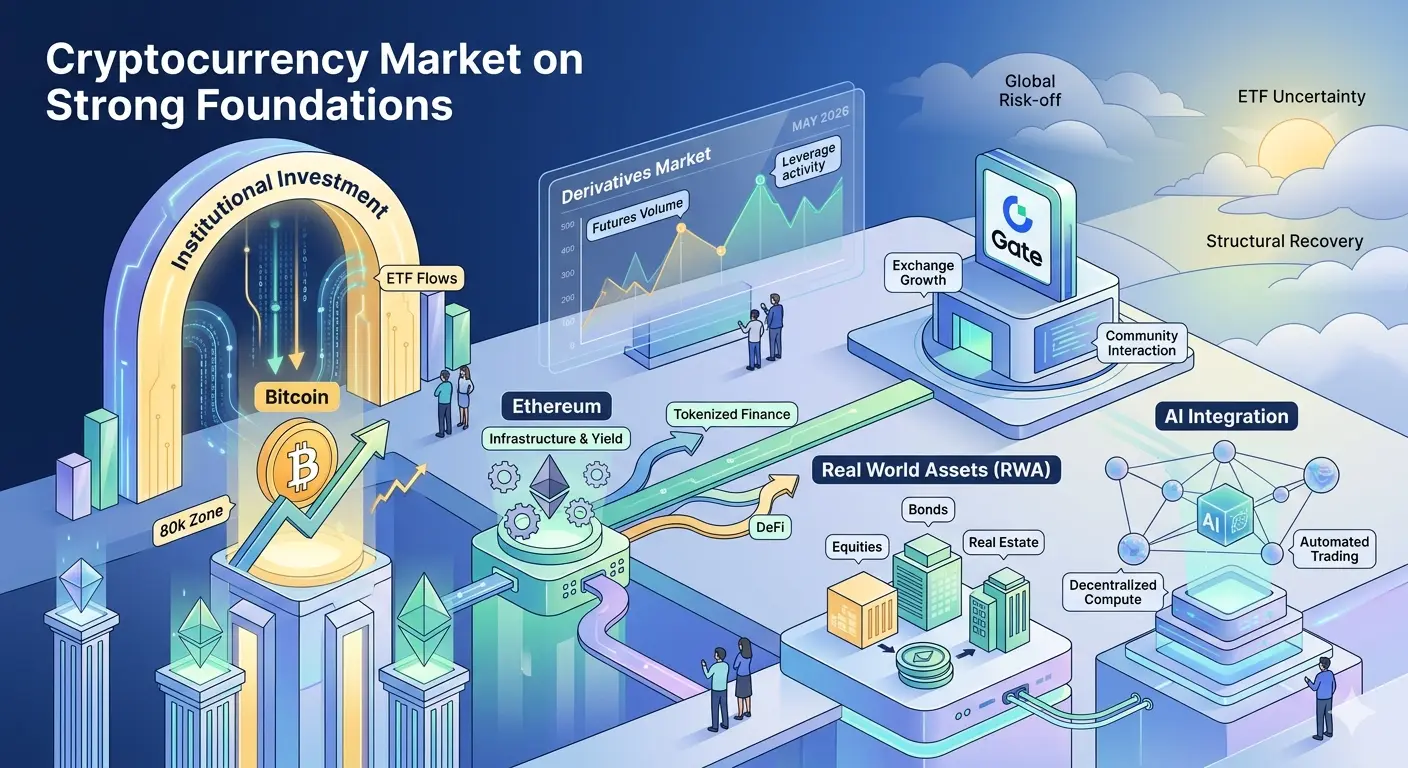
The cryptocurrency market in May 2026 is entering one of the most important transition phases of the current cycle. After months of volatility, heavy liquidations, ETF uncertainty, macroeconomic pressure, and global risk-off sentiment, digital assets are once again showing signs of structural recovery. Bitcoin reclaiming the $80,000 zone has changed overall market psychology, while Ethereum, Solana, XRP, and AI-related tokens are beginning to attract stronger capital rotation from both retail traders and institutional participants. Current market behavior suggests that investors are no longer trading purely on hype narratives. Instead, liquidity flow, ETF demand, real-world utility, on-chain activity, derivatives positioning, and macroeconomic expectations are now driving market direction.
One of the biggest developments shaping May trading activity is the continued institutional involvement in Bitcoin markets. Spot ETF flows remain one of the strongest drivers behind price stability near the $80K psychological zone. Despite periods of ETF outflows and profit-taking pressure, Bitcoin has remained structurally strong because long-term holders and institutional entities continue absorbing supply from exchanges. The reduction of liquid circulating supply is creating stronger support zones compared to previous cycles. Market analysts are watching whether BTC can maintain momentum above the major resistance zone because sustained consolidation above this level may trigger another large expansion phase later in Q2 2026.
Ethereum is also becoming increasingly important during this market phase. Unlike previous cycles where Ethereum traded mainly as a speculative Layer-1 asset, ETH is now being treated more like a yield-generating infrastructure layer for institutional portfolios. The market is closely monitoring staking demand, ETF inflows, network upgrades, and ecosystem expansion. Capital rotation into Ethereum-related products suggests that investors expect ETH to play a larger role in tokenized finance, stablecoin infrastructure, decentralized settlement systems, and institutional DeFi adoption. The growing importance of Ethereum’s ecosystem is creating stronger confidence in long-term accumulation behavior among larger investors.
Another major trend dominating GateSquare discussions is the rapid expansion of Real World Asset tokenization narratives. RWA sectors are attracting attention because traditional finance institutions are increasingly exploring blockchain-based treasury products, tokenized bonds, tokenized equities, and regulated on-chain financial infrastructure. This shift represents one of the biggest structural changes in crypto markets because blockchain technology is gradually moving from speculative trading toward financial integration. Tokens connected to RWA ecosystems are experiencing stronger visibility as traders speculate on long-term institutional adoption.
AI-related crypto projects are also becoming a dominant narrative in 2026. AI agents, automated trading systems, decentralized computation networks, and AI-integrated blockchain applications are receiving increased investor attention. Many traders believe the next growth cycle may be heavily connected to the convergence between artificial intelligence and decentralized infrastructure. Projects focusing on AI execution systems, decentralized machine learning, automated market operations, and AI payment protocols are seeing rising trading volumes across exchanges. The market is currently rewarding projects that combine utility, scalability, and technological innovation rather than purely speculative meme momentum.
The derivatives market is another critical area influencing current trading behavior. Perpetual futures volumes continue expanding rapidly across centralized and decentralized exchanges. High leverage activity, open interest growth, and cross-asset derivatives are increasing market volatility but also improving liquidity depth. Traders are paying close attention to funding rates, liquidation clusters, and whale positioning because these indicators are heavily influencing short-term price movements. The expansion of perpetual futures into commodities, tokenized assets, and multi-asset trading systems shows how crypto exchanges are evolving into broader financial infrastructure platforms.
Gate’s ecosystem growth itself has become a strong discussion point among traders this quarter. The platform reported expansion in trading volume, ETF products, institutional services, copy trading activity, and on-chain infrastructure. The rise in institutional contract volume and growth in managed assets suggest increasing participation from professional market participants. At the same time, Gate Square’s content and trading integration systems are helping improve community participation, allowing creators and traders to interact more actively with market narratives. The rapid growth of trading products and on-chain activity reflects broader market demand for diversified crypto financial services.
Meme coins remain active but market behavior around them has evolved significantly. In earlier cycles, meme assets often moved purely through viral speculation. In 2026, however, traders are becoming more selective. Liquidity strength, exchange support, community retention, ecosystem utility, and trading infrastructure are now playing larger roles in determining sustainability. While speculative momentum still drives short-term explosive moves, many traders are focusing more on risk management and timing rather than blind hype participation. This shift suggests the crypto market is gradually maturing compared to previous retail-dominated cycles.
Macroeconomic conditions continue influencing crypto direction as well. Interest rate expectations, Treasury yield fluctuations, global geopolitical tensions, and liquidity conditions remain major catalysts for volatility. Bitcoin’s recent resilience during periods of macro uncertainty has strengthened the narrative that digital assets are increasingly viewed as alternative financial instruments rather than purely speculative technology experiments. However, correlations between crypto and traditional equities still remain important, meaning broader financial market sentiment continues impacting short-term price action.
Looking forward, May 2026 may become one of the defining transition periods for the crypto market cycle. Institutional participation, ETF expansion, AI integration, RWA tokenization, derivatives growth, and infrastructure development are all creating stronger foundations for long-term ecosystem maturity. While volatility remains extremely high and rapid price swings are expected to continue, overall market structure appears significantly stronger compared to previous years. Traders are now focusing less on short-term hype and more on liquidity flow, infrastructure growth, adoption metrics, and ecosystem sustainability. If macro conditions remain stable and institutional demand continues expanding, the market could enter another major expansion phase during the second half of 2026.
repost-content-media
  • Reward
  • Comment
  • Repost
  • Share
#BTCBackAbove80K
#BTCBackAbove80K
Bitcoin moving back above the $80,000 level has become one of the most important developments in the cryptocurrency market during May 2026. This price recovery is not simply another short-term bounce driven by retail excitement. Instead, the market structure behind the current move appears significantly stronger and more mature compared to previous cycles. Multiple factors including institutional demand, ETF accumulation, reduced exchange supply, derivatives positioning, macroeconomic stabilization, and improving investor sentiment are all contributing to Bit
Vortex_King
#BTCBackAbove80K
#BTCBackAbove80K
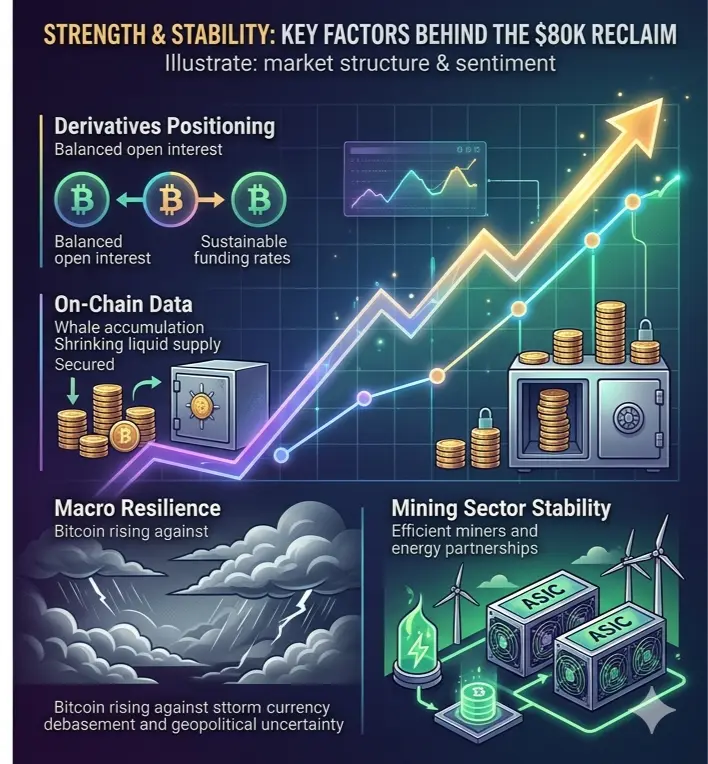
Bitcoin moving back above the $80,000 level has become one of the most important developments in the cryptocurrency market during May 2026. This price recovery is not simply another short-term bounce driven by retail excitement. Instead, the market structure behind the current move appears significantly stronger and more mature compared to previous cycles. Multiple factors including institutional demand, ETF accumulation, reduced exchange supply, derivatives positioning, macroeconomic stabilization, and improving investor sentiment are all contributing to Bitcoin’s renewed bullish momentum. The return above $80K is psychologically important because this zone had previously acted as a major resistance barrier during recent correction phases. Holding above it changes overall market confidence and creates stronger expectations for continuation toward higher price ranges.
One of the most important reasons behind Bitcoin’s recovery is the continued influence of institutional capital entering the digital asset market. Spot Bitcoin ETFs remain one of the strongest liquidity drivers in the ecosystem. Even during periods where ETFs experienced temporary outflows, Bitcoin price action remained relatively stable compared to earlier market cycles. This behavior suggests that long-term institutional holders are accumulating rather than panic selling during volatility events. Large financial entities are increasingly viewing Bitcoin as a strategic portfolio asset rather than a purely speculative trade. This shift is helping stabilize market structure because institutional positioning tends to operate on longer investment horizons instead of emotional short-term reactions.
Another major factor supporting the move above $80K is the reduction in exchange-held Bitcoin supply. On-chain data continues showing that significant amounts of BTC are being transferred from exchanges into cold storage and long-term custody solutions. When exchange balances decline, liquid supply available for immediate selling pressure becomes smaller. This creates stronger conditions for upward price expansion whenever demand increases. Historically, major bull phases often begin when supply tightening combines with increasing institutional accumulation. Current market conditions are beginning to resemble those early structural stages again, which is why many traders are carefully watching whether Bitcoin can maintain stability above current levels.
The derivatives market is also playing a major role in current Bitcoin momentum. Open interest across futures markets has increased substantially as traders position themselves for larger directional moves. Funding rates remain closely monitored because they help determine whether bullish momentum is sustainable or overheated. During previous cycles, excessively positive funding rates often signaled short-term market exhaustion. However, the current market environment appears more balanced because leverage expansion is being supported by stronger spot demand rather than purely speculative perpetual futures activity. This difference is important because spot-driven rallies are usually more sustainable than leverage-driven price spikes.
Macroeconomic conditions are also influencing Bitcoin’s current strength. Global financial markets have experienced elevated volatility due to uncertainty surrounding interest rates, Treasury yields, geopolitical tensions, and slowing economic growth across multiple regions. Despite these pressures, Bitcoin has demonstrated relative resilience compared to earlier risk-off periods. Many investors now view Bitcoin as an alternative macro asset that may benefit from long-term currency debasement concerns, sovereign debt expansion, and weakening confidence in traditional monetary systems. While Bitcoin still remains correlated with broader risk assets during high-volatility periods, its growing resilience during macro uncertainty is strengthening long-term adoption narratives.
Another critical development supporting Bitcoin is the growing maturity of the overall crypto ecosystem. Earlier market cycles were heavily dominated by speculative retail hype and meme-driven momentum. In contrast, the 2026 market environment is increasingly shaped by infrastructure growth, institutional products, regulated investment vehicles, custody solutions, tokenization systems, and cross-market financial integration. This structural evolution creates stronger foundations for long-term capital inflows because larger financial entities require more mature infrastructure before allocating significant resources into digital assets.
Ethereum and the broader altcoin market are also indirectly supporting Bitcoin dominance. During uncertain market phases, institutional investors often prefer allocating toward Bitcoin first because it is viewed as the most established and liquid cryptocurrency asset. As confidence improves, capital gradually rotates into Ethereum, Solana, AI-related projects, and other higher-risk ecosystems. Bitcoin reclaiming major resistance levels therefore often acts as a confidence catalyst for the broader digital asset market. Current market behavior suggests that Bitcoin is once again functioning as the primary liquidity anchor for crypto sentiment.
Whale accumulation behavior has become another closely watched factor. Large wallet addresses continue showing signs of strategic accumulation during correction periods rather than aggressive distribution. Historically, whale accumulation phases often occur when broader retail sentiment remains uncertain. This pattern tends to create stronger long-term support zones because supply becomes concentrated among investors with lower probability of panic selling. Current blockchain activity suggests that many larger entities remain confident in Bitcoin’s long-term trajectory despite ongoing short-term volatility risks.
Market psychology around the $80K level is extremely important as well. Psychological resistance zones often influence trader behavior more strongly than purely technical indicators because they represent major emotional thresholds. Reclaiming this level changes narrative momentum across social media, trading communities, institutional commentary, and broader financial discussions. Positive sentiment itself can become a self-reinforcing catalyst because improving confidence attracts additional liquidity into the market. However, traders are still watching closely for confirmation through sustained consolidation and higher support formation above the breakout zone.
The mining sector is also contributing to current market stability. Following previous post-halving adjustments, many mining companies have improved operational efficiency and strengthened treasury management strategies. Reduced forced selling pressure from miners helps improve supply dynamics during recovery phases. Institutional investment into mining infrastructure and energy partnerships is further stabilizing the long-term operational side of the Bitcoin ecosystem. Stronger mining economics often correlate with healthier overall network confidence.
Looking forward, Bitcoin remaining above $80,000 could become one of the defining signals for the next stage of the market cycle. If ETF inflows continue expanding, exchange supply keeps declining, and macroeconomic conditions stabilize, Bitcoin may establish a stronger foundation for future price discovery phases. However, volatility is still expected to remain extremely high because global markets continue facing uncertainty around monetary policy, liquidity conditions, and geopolitical developments. Traders are therefore focusing heavily on risk management, support confirmation, and institutional flow data rather than emotional momentum trading.
The broader significance of Bitcoin reclaiming $80K extends beyond short-term price action alone. It represents increasing institutional integration, stronger infrastructure maturity, evolving investor perception, and continued growth of digital assets within the global financial system. While corrections and volatility remain inevitable parts of crypto markets, the current recovery structure appears fundamentally stronger than many previous speculative rallies. This is why the return above $80,000 is being viewed by many market participants not merely as a temporary bounce, but potentially as the beginning of another major expansion phase for the cryptocurrency ecosystem.
repost-content-media
  • Reward
  • Comment
  • Repost
  • Share
#JapanTokenizesGovernmentBonds
Japan’s growing focus on tokenizing government bonds is becoming one of the most important developments in the global digital finance sector during 2026. The movement is attracting major attention across cryptocurrency markets, traditional finance institutions, blockchain infrastructure companies, and global regulators because it signals how governments and financial systems are gradually integrating blockchain technology into real-world financial operations. Unlike earlier crypto cycles that focused heavily on speculative digital assets, the tokenization of gov
Vortex_King
#JapanTokenizesGovernmentBonds
Japan’s growing focus on tokenizing government bonds is becoming one of the most important developments in the global digital finance sector during 2026. The movement is attracting major attention across cryptocurrency markets, traditional finance institutions, blockchain infrastructure companies, and global regulators because it signals how governments and financial systems are gradually integrating blockchain technology into real-world financial operations. Unlike earlier crypto cycles that focused heavily on speculative digital assets, the tokenization of government bonds represents a structural transformation of financial infrastructure itself. This trend is important because it shows how blockchain is moving beyond speculation and increasingly entering the core architecture of traditional capital markets.
Government bonds are among the most important financial instruments in the global economy. They are used for sovereign financing, liquidity management, institutional portfolios, banking reserves, pension allocations, and monetary operations. Japan’s exploration of tokenized government bonds therefore carries massive significance because the Japanese bond market is one of the largest sovereign debt markets in the world. Bringing these assets onto blockchain-based infrastructure could fundamentally reshape settlement systems, trading efficiency, transparency mechanisms, and liquidity management processes across global finance.
The concept of tokenized government bonds works by representing traditional sovereign debt instruments as blockchain-based digital tokens. Instead of relying entirely on legacy settlement systems, tokenized bonds can be issued, transferred, traded, and settled using distributed ledger technology. This process creates several potential advantages including faster settlement times, reduced operational friction, improved transparency, programmable compliance systems, enhanced accessibility, and more efficient liquidity distribution. Traditional bond settlement often requires multiple intermediaries and delayed clearing systems, while blockchain infrastructure can potentially reduce settlement periods dramatically.
Japan’s interest in this area reflects a broader global movement toward Real World Asset tokenization, often referred to as the RWA sector within crypto markets. RWAs have become one of the strongest narratives of 2026 because financial institutions increasingly recognize that blockchain technology can improve efficiency across traditional markets. Tokenization is no longer being viewed only as a crypto-native experiment. Instead, it is gradually becoming part of institutional financial modernization strategies. Governments, banks, investment firms, and technology providers are now exploring how blockchain systems can integrate with existing financial structures rather than replace them entirely.
One of the key reasons Japan’s bond tokenization initiative is receiving attention is because Japan has historically maintained a cautious but innovation-friendly approach toward digital assets and blockchain infrastructure. Japanese regulators have often focused on balancing technological innovation with financial stability and consumer protection. This balanced approach has helped create a relatively mature environment for institutional blockchain experimentation compared to some regions that remain highly restrictive or uncertain regarding digital asset frameworks.
The implications for crypto markets are extremely important. Tokenized government bonds strengthen the broader narrative that blockchain infrastructure is evolving into a legitimate financial settlement layer for institutional markets. This development supports long-term bullish sentiment for blockchain ecosystems connected to tokenization infrastructure, decentralized settlement networks, digital identity systems, institutional custody, and regulated financial protocols. Investors are increasingly paying attention to projects that can support institutional-grade tokenization because these sectors may become major growth areas during the next phase of blockchain adoption.
Stablecoins are also deeply connected to the rise of tokenized government bonds. Many stablecoin issuers already hold significant amounts of short-duration government securities as reserve assets. As sovereign bonds become tokenized, integration between stablecoin ecosystems and tokenized treasury markets could accelerate significantly. This could improve settlement efficiency, collateral mobility, and liquidity operations across decentralized finance and institutional trading systems. The relationship between tokenized bonds and stablecoin infrastructure may eventually become one of the foundational pillars of digital financial markets.
Another important aspect is the impact on global settlement systems. Traditional cross-border financial infrastructure often remains slow, expensive, and operationally fragmented. Blockchain-based tokenized bonds may help improve interoperability between markets by enabling faster transfers, automated compliance systems, and programmable asset management functions. If Japan successfully expands tokenized bond infrastructure, it could encourage other governments and central financial institutions to accelerate their own blockchain integration strategies.
The banking sector is carefully monitoring these developments as well. Large financial institutions understand that tokenization may eventually transform how securities are issued, traded, collateralized, and settled. Banks are increasingly investing in blockchain infrastructure partnerships because they recognize that digital settlement systems could become highly competitive over the next decade. Rather than ignoring blockchain technology, many institutions are now attempting to integrate themselves into its evolution. Japan’s participation therefore adds credibility to the broader institutional adoption narrative.
The rise of tokenized bonds also has implications for decentralized finance. DeFi platforms have traditionally relied heavily on crypto-native collateral such as Bitcoin, Ethereum, and stablecoins. However, tokenized sovereign debt introduces the possibility of integrating low-risk real-world yield-bearing assets into decentralized ecosystems. This could help create more stable lending markets, diversified collateral systems, institutional-grade liquidity pools, and lower-risk yield opportunities within blockchain finance. Many analysts believe the future of DeFi will increasingly depend on integrating real-world financial assets into decentralized infrastructure.
Technology providers supporting tokenization infrastructure are likely to benefit significantly from these developments. Blockchain networks focusing on security, scalability, regulatory compliance, interoperability, and institutional-grade transaction systems are becoming increasingly attractive to financial institutions. Competition is growing among Layer-1 ecosystems, enterprise blockchain providers, and tokenization platforms seeking to position themselves as foundational infrastructure for the next generation of digital finance.
Market sentiment surrounding tokenization has strengthened considerably because investors increasingly view it as one of the few blockchain sectors with massive real-world economic potential. Unlike purely speculative narratives, tokenized government bonds connect directly to trillion-dollar sovereign debt markets. This scale creates enormous long-term opportunity if adoption continues expanding. While the transition toward tokenized finance will likely occur gradually over many years, early institutional involvement is already reshaping investor expectations regarding blockchain’s long-term role in global markets.
Regulatory clarity remains a major factor influencing adoption speed. Governments and financial regulators must establish legal frameworks addressing digital securities issuance, custody standards, settlement protocols, investor protections, and cross-border compliance mechanisms. Japan’s cautious but progressive approach may help provide a model for how regulated tokenized finance can evolve without destabilizing traditional financial systems.
Looking ahead, Japan’s tokenization efforts may represent an early stage of a much larger global transformation in financial infrastructure. If sovereign bonds, treasury products, equities, commodities, and other financial instruments continue migrating onto blockchain-based systems, the distinction between traditional finance and digital finance may gradually disappear. Blockchain would then function not simply as a speculative technology sector, but as core infrastructure supporting global capital markets.
The significance of #JapanTokenizesGovernmentBonds therefore extends far beyond crypto headlines alone. It represents a growing convergence between traditional financial institutions, sovereign markets, blockchain technology, and digital asset infrastructure. This convergence is shaping the next phase of financial evolution where efficiency, transparency, programmability, and institutional integration become increasingly important. As adoption accelerates, tokenization may become one of the defining financial transformations of the coming decade.
repost-content-media
  • Reward
  • Comment
  • Repost
  • Share
#DailyPolymarketHotspot
Prediction markets are rapidly becoming one of the most closely watched sectors inside the cryptocurrency industry, and the rise of platforms like Polymarket is transforming how traders interact with news, macroeconomic events, politics, sports, financial markets, and global narratives. In 2026, prediction markets are no longer viewed as a small experimental corner of crypto. Instead, they are increasingly becoming real-time information engines where crowd sentiment, probability pricing, speculative positioning, and event forecasting merge into
Vortex_King
#DailyPolymarketHotspot
Prediction markets are rapidly becoming one of the most closely watched sectors inside the cryptocurrency industry, and the rise of platforms like Polymarket is transforming how traders interact with news, macroeconomic events, politics, sports, financial markets, and global narratives. In 2026, prediction markets are no longer viewed as a small experimental corner of crypto. Instead, they are increasingly becoming real-time information engines where crowd sentiment, probability pricing, speculative positioning, and event forecasting merge into a new type of financial ecosystem. The current Daily Polymarket hotspot discussions are attracting heavy attention because traders believe these markets now reflect global sentiment faster than many traditional media or polling systems.
One of the biggest reasons prediction markets are gaining popularity is because they combine financial incentives with information discovery. Traditional social media discussions are often driven by opinions without accountability, but prediction markets force participants to put capital behind their expectations. This changes behavior significantly because traders become more focused on probabilities, data analysis, macro conditions, and risk management rather than emotional narratives alone. When thousands of market participants collectively trade around an outcome, the resulting price often becomes a dynamic reflection of perceived probability. This mechanism is why many investors are increasingly monitoring prediction markets alongside traditional financial indicators.
The current hotspot activity inside prediction markets covers a wide range of sectors including U.S. elections, central bank policy decisions, Bitcoin price targets, ETF approvals, geopolitical tensions, commodity movements, AI adoption trends, sports events, and regulatory developments. The diversity of these markets is important because it demonstrates how blockchain-based systems are evolving beyond simple token speculation into broader information infrastructure. Traders are no longer participating only for entertainment purposes. Many now use prediction markets as tools for sentiment analysis, macro forecasting, hedging strategies, and volatility positioning.
Cryptocurrency traders in particular are heavily engaged with prediction markets because crypto itself operates in a highly narrative-driven environment. Market sentiment can shift rapidly based on ETF developments, interest rate expectations, government regulation, exchange activity, whale accumulation, geopolitical conflicts, or macroeconomic shocks. Prediction markets provide a unique way to quantify those shifting expectations in real time. For example, changes in probabilities surrounding Federal Reserve rate cuts, Bitcoin ETF expansion, or stablecoin legislation often influence broader digital asset volatility almost immediately.
The integration between decentralized finance and prediction markets is also becoming increasingly significant. Blockchain infrastructure allows these markets to operate globally with transparent settlement systems, programmable payouts, and permissionless participation models. Smart contracts automate execution and reduce reliance on centralized intermediaries. This creates efficiency advantages compared to traditional betting or forecasting systems while also introducing new forms of liquidity generation and speculative activity. The combination of DeFi infrastructure and event-based trading mechanisms is creating an entirely new financial category within crypto markets.
Another major reason Daily Polymarket hotspot discussions attract attention is because prediction markets often react faster than traditional news systems. Traders constantly process breaking developments, rumors, macroeconomic signals, and political shifts in real time. As a result, probability movements on major events sometimes become leading indicators for broader market sentiment. Financial institutions, hedge funds, researchers, and retail investors increasingly monitor these markets to understand how collective expectations are evolving before official outcomes occur.
The rise of AI and algorithmic analysis is also influencing prediction market behavior. Quantitative traders and AI-driven systems now monitor sentiment data, social trends, macro indicators, and blockchain flows to identify inefficiencies in prediction pricing. This creates a more sophisticated environment compared to earlier stages of the sector. Instead of purely emotional crowd speculation, many markets are now influenced by advanced statistical modeling, sentiment tracking systems, and automated trading strategies. The increasing professionalization of prediction market participation is improving liquidity depth and market efficiency over time.
Regulation remains one of the most important long-term challenges facing the sector. Governments and regulators continue debating how prediction markets should be classified and supervised. Questions surrounding gambling laws, financial derivatives frameworks, political event trading, and consumer protections remain active areas of legal discussion. However, growing institutional attention suggests that prediction markets may eventually become more integrated into regulated financial systems rather than remaining entirely outside traditional frameworks.
Another key development is the growing connection between prediction markets and media ecosystems. Many traders now use prediction markets to filter noise from sensational headlines. Instead of focusing only on opinions or narratives, they observe where actual capital is flowing. This creates a different type of information environment where probabilities become measurable and continuously updated. Some analysts believe prediction markets may eventually become one of the most accurate collective forecasting tools available because participants are financially incentivized to process information efficiently.
From a crypto adoption perspective, prediction markets are helping demonstrate one of blockchain’s strongest real-world use cases. They showcase how decentralized systems can coordinate information, distribute liquidity, automate settlement, and create global participation networks without relying entirely on traditional institutional structures. This strengthens the broader argument that blockchain technology is evolving into infrastructure capable of supporting entirely new forms of financial interaction.
The Daily Polymarket hotspot trend is also important because it reflects broader changes in how younger investors and digital-native communities interact with financial systems. Many users are increasingly drawn toward interactive, real-time, event-driven financial products rather than static traditional investment models. Prediction markets combine aspects of trading, data analysis, social participation, and macro speculation into a single ecosystem. This hybrid structure is one reason why engagement levels continue expanding rapidly.
Volatility management remains critical for traders participating in these markets. Event probabilities can shift dramatically within minutes following breaking news, official statements, geopolitical developments, or unexpected economic data. Liquidity conditions and sentiment swings therefore play major roles in determining risk exposure. Experienced traders often combine prediction market activity with broader macro analysis, technical indicators, and portfolio hedging strategies rather than treating these markets purely as speculative entertainment.
Looking ahead, many analysts believe prediction markets may become deeply integrated with AI systems, decentralized identity frameworks, tokenized financial infrastructure, and real-time data networks. As blockchain scalability improves and regulatory clarity evolves, prediction markets could expand far beyond politics or crypto narratives into mainstream financial forecasting, corporate event analysis, insurance systems, and decentralized governance coordination.
The significance of #DailyPolymarketHotspot therefore extends far beyond daily trading trends alone. It represents a growing transformation in how information, probability, finance, and crowd intelligence interact inside digital economies. Prediction markets are increasingly functioning as decentralized sentiment engines capable of reflecting collective expectations across global events in real time. As adoption grows, they may become one of the defining pillars of the next generation digital financial ecosystem.
repost-content-media
  • Reward
  • Comment
  • Repost
  • Share
#WCTCTradingKingPK
The global cryptocurrency trading environment in 2026 has evolved into one of the most competitive and psychologically demanding financial ecosystems ever created. The rise of high-frequency trading systems, institutional capital flows, AI-driven market analysis, derivatives expansion, and 24/7 global liquidity has transformed crypto trading into a highly strategic battlefield where discipline, risk management, adaptability, and market understanding now matter more than simple speculation. Within this environment, trading competitions and trader communities such as #WCTCTra
Vortex_King
#WCTCTradingKingPK
The global cryptocurrency trading environment in 2026 has evolved into one of the most competitive and psychologically demanding financial ecosystems ever created. The rise of high-frequency trading systems, institutional capital flows, AI-driven market analysis, derivatives expansion, and 24/7 global liquidity has transformed crypto trading into a highly strategic battlefield where discipline, risk management, adaptability, and market understanding now matter more than simple speculation. Within this environment, trading competitions and trader communities such as #WCTCTradingKingPK are gaining major attention because they represent not only competitive trading performance but also the broader evolution of trading culture inside digital asset markets.
Modern crypto trading is no longer driven only by hype cycles or emotional momentum. Today’s market structure is shaped by multiple interconnected forces including ETF flows, macroeconomic conditions, stablecoin liquidity, whale positioning, options markets, perpetual futures activity, AI algorithmic execution systems, tokenized asset integration, and global geopolitical developments. Traders participating in highly competitive environments must therefore understand far more than price charts alone. Success increasingly depends on combining technical analysis, macroeconomic awareness, psychological stability, liquidity analysis, and strategic execution discipline.
One of the most important characteristics of successful traders in 2026 is risk management. During earlier crypto cycles, many market participants focused primarily on maximizing leverage and chasing rapid gains. However, repeated liquidation events, extreme volatility phases, and macro-driven corrections have taught traders that long-term survival matters more than short-term emotional trading. Professional traders now prioritize capital preservation, controlled exposure, stop-loss discipline, and position sizing strategies. This shift is especially visible in competitive trading communities where consistent performance often matters more than isolated high-risk wins.
Bitcoin remains the central liquidity engine of the crypto market, meaning its price structure continues influencing nearly every sector across digital assets. Traders involved in current market competitions are closely monitoring Bitcoin’s behavior above the $80,000 psychological zone because this area represents a major sentiment threshold. Strong BTC stability often encourages broader altcoin participation, while sudden Bitcoin volatility can rapidly impact leveraged positions across the entire market. Understanding Bitcoin dominance trends therefore remains essential for both short-term and long-term trading strategies.
Ethereum has also become increasingly important for active traders because of its role in decentralized finance, staking ecosystems, tokenization infrastructure, and institutional adoption narratives. ETH volatility frequently creates trading opportunities across Layer-2 ecosystems, DeFi tokens, AI-related assets, and infrastructure projects. Traders now monitor Ethereum not only as a cryptocurrency but as a foundational blockchain economy influencing multiple sectors simultaneously. This broader understanding helps experienced market participants identify rotational capital flows before they fully develop.
Another major trend shaping trading strategies in 2026 is the rise of AI-integrated market analysis. Artificial intelligence systems are now being used for sentiment tracking, volatility forecasting, liquidity mapping, order flow analysis, and algorithmic execution. Retail traders increasingly compete against sophisticated institutional systems capable of processing massive amounts of data within seconds. As a result, successful traders are focusing more heavily on discipline, adaptability, and strategic timing rather than relying purely on emotional reaction-based trading.
Derivatives markets have become one of the most influential forces inside crypto trading competitions. Perpetual futures, options contracts, leveraged tokens, and cross-margin systems allow traders to amplify exposure significantly. However, leverage itself remains a double-edged mechanism. While it increases potential profitability, it also dramatically increases liquidation risk during periods of volatility. Many experienced traders participating in high-level competitions now emphasize controlled leverage strategies rather than maximum exposure approaches. Sustainable trading performance often depends more on consistency and emotional control than aggressive position sizing.
The psychology of trading has become another defining factor separating successful traders from struggling participants. Emotional reactions including fear, greed, revenge trading, overconfidence, and panic selling remain among the biggest reasons traders lose capital. Competitive trading environments intensify these pressures because public rankings, rapid market movements, and social media narratives create additional emotional stress. Experienced traders therefore focus heavily on maintaining structured routines, disciplined execution plans, and emotional neutrality during volatile conditions.
Macroeconomic conditions are also playing a larger role in crypto trading outcomes than ever before. Treasury yields, interest rate expectations, inflation trends, central bank policies, geopolitical tensions, energy markets, and equity market performance now heavily influence digital asset volatility. Traders can no longer isolate crypto markets from broader global financial systems. Instead, successful trading increasingly requires understanding how macroeconomic developments affect liquidity conditions, institutional positioning, and investor risk appetite across multiple asset classes.
The rise of tokenized finance and Real World Asset integration is creating new trading opportunities as well. Blockchain ecosystems connected to institutional infrastructure, tokenized treasury markets, stablecoin expansion, and regulated settlement systems are attracting growing investor attention. Traders are increasingly positioning around long-term structural narratives rather than focusing exclusively on short-term hype cycles. This evolution reflects the broader maturation of the digital asset market.
Community participation remains one of the strongest aspects of competitive trading ecosystems like #WCTCTradingKingPK. Trading communities help participants exchange strategies, discuss macro conditions, analyze technical structures, and share risk management insights. However, experienced traders understand the importance of independent decision-making. Blindly following crowd sentiment without personal analysis often leads to poor execution during high-volatility periods. Strong traders use community information as one input among many rather than as a substitute for disciplined analysis.
Volatility remains the defining characteristic of cryptocurrency markets. Rapid price swings create opportunities for profits but also expose traders to significant risks. Successful participants therefore focus on probability management rather than certainty. No strategy guarantees consistent wins because markets constantly evolve based on liquidity shifts, news events, institutional flows, and changing narratives. Professional traders understand that long-term consistency comes from managing probabilities effectively rather than attempting to predict every short-term movement perfectly.
Another critical development is the increasing institutionalization of crypto trading infrastructure. Large financial firms, hedge funds, proprietary trading desks, and quantitative firms are now deeply integrated into digital asset markets. This institutional presence has improved liquidity depth and market efficiency but has also increased competition significantly. Retail traders must therefore adapt by improving analytical methods, execution discipline, and strategic patience.
The educational side of trading is becoming increasingly important as well. Many newer traders enter markets attracted by volatility and profit potential without fully understanding leverage mechanics, liquidation risks, or market structure dynamics. Experienced communities now place greater emphasis on education, portfolio management, and sustainable trading behavior because long-term participation requires far more than temporary momentum-driven success.
Looking ahead, crypto trading competitions and trader ecosystems are likely to continue evolving alongside broader market maturation. AI integration, tokenized financial infrastructure, institutional participation, advanced derivatives systems, and global blockchain adoption will continue reshaping how traders interact with markets. Adaptability will remain one of the most valuable skills because financial ecosystems are evolving at unprecedented speed.
The significance of #WCTCTradingKingPK therefore extends beyond simple competition rankings alone. It represents the growing sophistication of crypto trading culture, the increasing importance of disciplined strategy development, and the broader transformation of digital asset markets into globally integrated financial ecosystems. In this rapidly evolving environment, traders who combine risk management, market understanding, emotional discipline, and adaptability are most likely to sustain long-term success through future market cycles.
repost-content-media
  • Reward
  • Comment
  • Repost
  • Share
#MayTokenUnlockWave
#MayTokenUnlockWave
The cryptocurrency market is entering another critical phase as the May 2026 token unlock wave begins influencing liquidity conditions, investor psychology, and short-term price volatility across multiple blockchain ecosystems. Token unlock events have become one of the most closely monitored areas in digital asset markets because they directly affect circulating supply dynamics, investor behavior, venture capital positioning, and market sentiment. In previous cycles, many traders underestimated the impact of unlock schedules, focusing mainly on technic
Vortex_King
#MayTokenUnlockWave
#MayTokenUnlockWave
The cryptocurrency market is entering another critical phase as the May 2026 token unlock wave begins influencing liquidity conditions, investor psychology, and short-term price volatility across multiple blockchain ecosystems. Token unlock events have become one of the most closely monitored areas in digital asset markets because they directly affect circulating supply dynamics, investor behavior, venture capital positioning, and market sentiment. In previous cycles, many traders underestimated the impact of unlock schedules, focusing mainly on technical charts and hype narratives. However, the current market environment is far more mature, and tokenomics analysis has now become one of the most important components of professional crypto trading and long-term investment research.
A token unlock occurs when previously locked cryptocurrency allocations become available for circulation. These allocations are often connected to early investors, venture capital firms, project teams, ecosystem incentives, staking rewards, foundation reserves, or community distribution programs. During early project development stages, large portions of token supply are commonly locked through vesting schedules to prevent immediate market dumping and maintain long-term ecosystem stability. As those lock periods expire, the newly released tokens enter the broader market environment, creating potential changes in liquidity and selling pressure.
The May token unlock wave is attracting strong attention because several major projects across AI ecosystems, Layer-1 networks, gaming platforms, infrastructure protocols, and decentralized finance sectors are scheduled to release substantial amounts of supply into circulation. Traders and analysts are carefully evaluating whether these unlocks will create aggressive sell-side pressure or whether market demand will successfully absorb the additional liquidity. This balance between new supply and market demand is one of the most important forces determining short-term price behavior during unlock periods.
One of the primary reasons token unlocks create volatility is psychological market behavior. Traders understand that early investors and venture capital firms often hold tokens acquired at significantly lower valuations compared to current market prices. When unlocks occur, fears emerge that these holders may begin taking profits, especially if broader market conditions remain uncertain. Even before actual selling begins, the anticipation of increased supply can create bearish sentiment and speculative short positions across derivatives markets. In many cases, perception alone becomes a major volatility catalyst.
However, token unlocks are not automatically bearish in every situation. Market impact depends heavily on overall ecosystem strength, liquidity conditions, investor confidence, project fundamentals, and broader crypto sentiment. In strong bull market environments with high liquidity inflows, unlock-related selling pressure can often be absorbed efficiently. Projects with strong utility, growing adoption, active ecosystems, and institutional support may experience limited long-term damage even during large unlock phases. This is why experienced traders analyze unlock events within broader macro and ecosystem contexts rather than treating every unlock as a guaranteed negative event.
The structure of modern crypto markets has made tokenomics increasingly important because institutional investors now pay closer attention to supply distribution models, inflation rates, vesting schedules, and treasury management practices. Earlier cycles were heavily driven by speculative retail hype, but today’s market participants increasingly demand sustainable economic structures. Projects with poor tokenomics often struggle to maintain long-term investor confidence because continuous dilution can weaken market performance over time. As a result, unlock schedules are now treated as major fundamental indicators alongside user growth, revenue generation, and ecosystem activity.
Artificial intelligence-related crypto projects are particularly affected during the current unlock cycle because AI narratives remain among the hottest sectors of 2026. Many AI tokens experienced rapid appreciation earlier in the year as investors speculated on the convergence between blockchain infrastructure and artificial intelligence systems. However, strong price appreciation also increases the incentive for early investors to realize profits during unlock periods. Traders are therefore monitoring AI ecosystems carefully to determine whether narrative momentum can offset additional supply entering circulation.
Layer-1 blockchain ecosystems are also facing significant attention during this unlock wave. Infrastructure networks often allocate substantial portions of supply toward validator incentives, ecosystem development, foundation reserves, and venture capital funding rounds. When these allocations unlock, market participants evaluate whether the newly circulating supply will be reinvested into ecosystem growth or sold into open markets. Strong developer activity, institutional partnerships, and user adoption can help reduce negative sentiment surrounding these events.
Decentralized finance protocols represent another major category impacted by token unlocks. Many DeFi projects rely on token incentives to attract liquidity providers, governance participants, and ecosystem contributors. While these incentive systems support growth, they can also contribute to inflationary pressure if token emissions remain too aggressive relative to actual protocol demand. Sustainable DeFi projects therefore attempt to balance ecosystem incentives with long-term token value preservation.
The derivatives market plays a massive role during token unlock periods as well. Futures traders often position themselves aggressively around unlock events because expected volatility creates short-term trading opportunities. Open interest expansion, funding rate shifts, and options market positioning can amplify price swings significantly. In some cases, markets may experience “sell the rumor, buy the news” behavior where prices decline before the unlock event but stabilize afterward if actual selling pressure proves smaller than expected.
Whale activity is another major focus during unlock cycles. Blockchain analysts monitor large wallet movements to determine whether unlocked tokens are being transferred toward exchanges or retained in custody. Exchange inflows often increase fears of imminent selling, while continued holding behavior may reduce bearish pressure. On-chain transparency gives crypto markets unique visibility into capital flows compared to traditional financial systems, making token unlock monitoring an important part of market analysis.
Macroeconomic conditions also influence how markets react to unlock events. During periods of strong liquidity, risk-on sentiment, and institutional inflows, markets are often better positioned to absorb additional token supply. Conversely, during uncertain macro environments with weak liquidity conditions, unlock events may trigger sharper volatility because investors become more defensive. Current market sentiment surrounding Bitcoin above $80K is helping improve broader confidence, but traders remain cautious because global financial uncertainty still exists.
The growing institutionalization of crypto markets is encouraging projects to adopt more transparent and sustainable tokenomics structures. Investors increasingly demand clearer vesting schedules, responsible treasury management, reduced inflation models, and stronger alignment between project growth and token value accrual. Projects failing to meet these expectations often face stronger criticism from both retail and institutional participants.
Another important development is the rise of token unlock analytics platforms. Traders now use specialized dashboards to monitor upcoming unlock schedules, circulating supply changes, investor allocations, and ecosystem emission rates. This level of transparency has transformed unlock analysis into a sophisticated sector of crypto research. Markets now react to unlock data far earlier than in previous cycles because information spreads rapidly across trading communities and institutional desks.
Looking ahead, the May token unlock wave may serve as a major test of overall market strength. If the market absorbs additional supply without major structural weakness, it could reinforce bullish confidence for the broader crypto cycle. Strong absorption would suggest that institutional demand, ecosystem growth, and investor participation remain robust enough to support continued expansion. However, aggressive sell-side pressure across major ecosystems could temporarily weaken momentum and increase short-term volatility.
The broader significance of #MayTokenUnlockWave extends beyond individual projects alone. It reflects the increasing maturity of digital asset markets where tokenomics, liquidity management, supply distribution, and economic sustainability now play central roles in valuation analysis. As the crypto industry evolves, understanding token unlock dynamics is becoming essential for traders, investors, and institutions attempting to navigate increasingly sophisticated blockchain economies.
repost-content-media
  • Reward
  • Comment
  • Repost
  • Share
#ADPBeatsExpectationsRateCutPushedBack
The latest ADP employment data has become one of the most important macroeconomic developments influencing global financial markets during May 2026. The stronger-than-expected private payroll numbers are reinforcing the idea that the U.S. labor market remains more resilient than many investors previously expected. This development is critical because labor market strength directly affects Federal Reserve policy expectations, Treasury yields, inflation outlooks, risk asset performance, and overall liquidity conditions across global markets. As a result, t
Vortex_King
#ADPBeatsExpectationsRateCutPushedBack
The latest ADP employment data has become one of the most important macroeconomic developments influencing global financial markets during May 2026. The stronger-than-expected private payroll numbers are reinforcing the idea that the U.S. labor market remains more resilient than many investors previously expected. This development is critical because labor market strength directly affects Federal Reserve policy expectations, Treasury yields, inflation outlooks, risk asset performance, and overall liquidity conditions across global markets. As a result, the latest ADP report is not only impacting traditional finance but also creating major implications for Bitcoin, altcoins, commodities, equities, and broader speculative markets.
According to the latest data, U.S. private payroll growth accelerated significantly, with ADP reporting approximately 109,000 new jobs added during April, exceeding market expectations and marking the strongest private employment growth in roughly 15 months. The report showed particularly strong hiring activity in sectors such as healthcare, education, and construction, while layoffs across broader labor markets remained relatively limited. This stronger employment environment is important because it suggests the U.S. economy is still maintaining stability despite ongoing geopolitical tensions, inflation concerns, and elevated interest rates.
The direct consequence of stronger labor data is that expectations for Federal Reserve interest rate cuts are being pushed further into the future. Financial markets had previously anticipated that weakening economic conditions might force the Fed toward a more accommodative monetary stance during 2026. However, resilient employment data complicates that scenario because strong labor markets can sustain consumer spending, wage growth, and inflationary pressures for longer periods. As long as inflation risks remain elevated, the Federal Reserve has less incentive to rapidly reduce interest rates.
This situation creates a challenging macro environment for risk assets. Lower interest rates generally support liquidity expansion and speculative investment because borrowing becomes cheaper and capital seeks higher-return opportunities. Conversely, prolonged higher interest rates increase the attractiveness of fixed-income assets such as Treasury bonds while reducing liquidity available for speculative markets like crypto. The latest ADP report therefore strengthens the narrative that monetary policy may remain restrictive longer than bullish traders initially expected.
Treasury yields are reacting strongly to this shift in expectations. When investors believe the Federal Reserve will keep rates elevated, bond yields tend to rise because markets price in tighter financial conditions. Higher yields increase pressure on growth assets, technology equities, and cryptocurrency markets because future cash flows and speculative valuations become less attractive relative to safer yield-generating investments. Rising yields also strengthen the U.S. dollar, which can create additional headwinds for Bitcoin and broader crypto liquidity flows.
However, the current market environment remains more complex than a simple “strong jobs equals bearish crypto” narrative. Bitcoin has recently shown unusual resilience despite rising yields and delayed rate-cut expectations. BTC remaining above the $80,000 zone suggests that institutional demand, ETF participation, and long-term accumulation trends are still providing strong structural support. Earlier market cycles often saw crypto collapse rapidly whenever rate-cut expectations weakened, but the current environment appears more balanced because institutional adoption and reduced exchange supply are stabilizing the ecosystem.
Another critical factor influencing Fed expectations is inflation linked to geopolitical tensions and energy markets. Oil prices remain highly sensitive due to ongoing Middle East instability, shipping disruptions, and broader geopolitical uncertainty. Elevated energy prices can sustain inflationary pressure even if some areas of economic growth begin slowing. This creates a difficult balancing situation for the Federal Reserve because policymakers must manage both inflation risks and economic stability simultaneously. Several analysts now believe the Fed may prioritize inflation control longer than markets previously expected.
The labor market itself is currently described by economists as “low-hire, low-fire,” meaning companies are not aggressively expanding hiring but are also avoiding large-scale layoffs. This environment creates relative stability rather than rapid economic deterioration. For financial markets, stable employment reduces the urgency for emergency monetary easing. The Fed therefore gains additional flexibility to maintain a cautious stance while monitoring inflation developments and geopolitical risks.
Crypto traders are paying especially close attention to these developments because macroeconomic conditions have become deeply interconnected with digital asset performance. Earlier crypto cycles were often dominated primarily by retail speculation and sector-specific narratives. In contrast, the 2026 market environment is heavily influenced by macro liquidity conditions, institutional portfolio allocation, bond market movements, and central bank expectations. Bitcoin is increasingly behaving like a global macro asset rather than an isolated speculative technology play.
Ethereum and altcoin markets are also sensitive to these macro shifts. Higher interest rates tend to reduce speculative appetite across higher-risk assets, especially smaller-cap cryptocurrencies and leverage-driven ecosystems. Projects connected to AI narratives, meme sectors, gaming ecosystems, and emerging DeFi infrastructure may experience sharper volatility if liquidity conditions tighten further. Traders are therefore becoming increasingly selective and focusing more on fundamentals, ecosystem growth, and institutional integration rather than purely momentum-driven speculation.
The derivatives market is amplifying reactions to macroeconomic data as well. Futures traders aggressively reposition around employment reports, inflation releases, and Federal Reserve commentary because these events directly impact expectations for liquidity and market volatility. Open interest, funding rates, and options positioning can create rapid price swings across both traditional and digital assets following major macroeconomic announcements. This is why ADP reports and labor market data have become central catalysts for crypto volatility in the current cycle.
Another interesting aspect of the current environment is the growing divergence between traditional macro logic and Bitcoin behavior. Historically, delayed rate cuts and rising yields would create stronger downward pressure on crypto. Yet Bitcoin’s continued resilience above major psychological levels suggests structural demand from ETFs, institutional accumulation, and sovereign interest may now be partially offsetting macro headwinds. This shift is one reason many analysts believe Bitcoin is gradually evolving into a more mature global financial asset class.
The Federal Reserve’s future path will likely depend on upcoming inflation reports, official government employment data, wage growth metrics, and energy market developments. If inflation remains elevated while employment stays resilient, policymakers may continue delaying aggressive easing measures. However, any signs of weakening labor conditions or slowing economic momentum could quickly revive rate-cut expectations later in the year. Markets therefore remain highly data-dependent and sensitive to every major macroeconomic release.
Looking forward, the significance of #ADPBeatsExpectationsRateCutPushedBack extends beyond one employment report alone. It reflects the broader transformation of financial markets into a highly interconnected macro-driven environment where labor data, inflation trends, central bank policy, energy markets, and institutional liquidity flows collectively shape asset performance. For crypto traders, understanding these macro relationships is becoming increasingly essential because Bitcoin and digital assets are now deeply integrated into the global financial system.
The current market environment remains highly volatile but also structurally fascinating. Strong employment data may delay rate cuts, but Bitcoin’s resilience suggests digital assets are entering a new phase where institutional demand, supply dynamics, and macro positioning interact in far more sophisticated ways than previous cycles.
repost-content-media
  • Reward
  • Comment
  • Repost
  • Share
#CircleMints250MUSDCOnSolana
The latest minting of 250 million USDC on the Solana network by Circle Internet Financial has become one of the most closely discussed developments in the cryptocurrency market during May 2026. Large-scale stablecoin minting events are often viewed as critical indicators of liquidity expansion, institutional preparation, trading demand growth, and broader ecosystem activity. In the current market environment, where Bitcoin is holding above the $80,000 zone and altcoin ecosystems are regaining momentum, the injection of significant USDC liquidity into Solana is str
Vortex_King
#CircleMints250MUSDCOnSolana
The latest minting of 250 million USDC on the Solana network by Circle Internet Financial has become one of the most closely discussed developments in the cryptocurrency market during May 2026. Large-scale stablecoin minting events are often viewed as critical indicators of liquidity expansion, institutional preparation, trading demand growth, and broader ecosystem activity. In the current market environment, where Bitcoin is holding above the $80,000 zone and altcoin ecosystems are regaining momentum, the injection of significant USDC liquidity into Solana is strengthening bullish sentiment surrounding both the Solana ecosystem and the broader digital asset market.
Stablecoins have evolved into one of the most important foundational components of modern crypto infrastructure. Unlike earlier cycles where cryptocurrencies operated primarily through speculative token trading, today’s blockchain ecosystems rely heavily on stablecoins for liquidity management, decentralized finance operations, institutional settlements, derivatives trading, cross-border transfers, and on-chain payments. USDC in particular has become one of the most trusted regulated dollar-backed digital assets because of its transparency focus, institutional integration, and expanding role within both centralized and decentralized financial systems.
Whenever Circle mints a large amount of new USDC, traders immediately analyze the broader implications for market liquidity and risk appetite. Stablecoin minting does not automatically mean immediate bullish price movement, but it often signals preparation for increased market activity. Freshly minted stablecoins can eventually enter exchanges, decentralized finance protocols, trading desks, liquidity pools, institutional settlement systems, or over-the-counter markets. As a result, large minting events are closely monitored because they may precede periods of elevated trading activity and stronger capital rotation into crypto assets.
The fact that this mint occurred specifically on Solana is especially important. Solana has emerged as one of the most actively discussed blockchain ecosystems of 2026 due to its high-speed infrastructure, expanding decentralized finance sector, strong meme coin activity, growing institutional experimentation, and increasing adoption across payments and tokenization initiatives. Solana’s low transaction costs and scalability advantages continue attracting developers, traders, and liquidity providers seeking efficient on-chain execution environments. The expansion of USDC liquidity on Solana therefore reinforces confidence in the network’s growing economic activity.
One of the biggest drivers behind Solana’s recent strength is the rapid growth of decentralized finance applications operating within its ecosystem. DeFi platforms require large amounts of stablecoin liquidity to support lending markets, liquidity pools, perpetual futures trading, yield farming systems, automated market makers, and payment infrastructure. The addition of 250 million USDC significantly increases available on-chain liquidity, potentially supporting higher transaction volume and broader financial activity across Solana-based protocols.
The relationship between stablecoins and crypto market cycles has become increasingly important over recent years. Stablecoins effectively act as the liquidity backbone of the digital asset economy. During bullish phases, stablecoin supply often expands as more capital enters the market through institutional allocations, exchange deposits, and trading activity. Conversely, during bearish conditions, stablecoin growth may slow or contract as capital exits risk assets. Analysts therefore monitor stablecoin supply changes closely because they provide insight into broader market liquidity trends.
Another major factor influencing the significance of this mint is the growing institutional presence within Solana’s ecosystem. Earlier crypto cycles often viewed Solana primarily as a retail-driven high-speed blockchain competing with Ethereum. However, the current market environment is increasingly different. Institutions are now exploring Solana for payment systems, tokenized assets, stablecoin settlements, gaming infrastructure, and real-world financial applications. Circle expanding USDC liquidity on Solana suggests rising confidence in the network’s operational reliability and long-term scalability.
Meme coin ecosystems on Solana are also contributing to heightened trading activity. Solana has become one of the primary hubs for speculative meme token trading due to its fast execution and low fees. High trading activity within meme sectors often increases stablecoin demand because traders continuously rotate liquidity between volatile assets and dollar-backed tokens. The newly minted USDC may therefore support both speculative trading activity and broader ecosystem liquidity simultaneously.
The derivatives market is another critical area affected by stablecoin expansion. Perpetual futures exchanges, leveraged trading platforms, and decentralized derivatives protocols rely heavily on stablecoin collateral systems. Additional USDC liquidity can improve margin availability, trading depth, and settlement efficiency across both centralized and decentralized trading venues. Increased stablecoin supply often supports higher market participation because traders gain more flexibility for hedging, leverage management, and liquidity deployment.
From a macro perspective, the rise of regulated stablecoins like USDC reflects the ongoing convergence between traditional finance and blockchain infrastructure. Stablecoins are increasingly functioning as digital representations of fiat liquidity inside crypto ecosystems. Their role now extends far beyond simple trading pairs. Institutions use stablecoins for treasury operations, cross-border settlement, collateral management, and tokenized financial infrastructure. As blockchain adoption grows, stablecoins may eventually become one of the most widely integrated forms of digital financial infrastructure globally.
Circle itself has become a major player in the regulated digital finance sector. The company continues expanding partnerships with banks, payment systems, fintech platforms, and blockchain networks. Its strategy focuses heavily on institutional adoption, regulatory compliance, and integrating stablecoins into broader financial infrastructure. Large minting events therefore often attract attention because they may reflect increasing institutional demand behind the scenes rather than purely speculative retail activity.
Another important aspect is the growing competition among blockchain ecosystems for stablecoin liquidity dominance. Ethereum remains the largest stablecoin network overall, but Solana, Tron, Base, Avalanche, and other ecosystems are competing aggressively to attract stablecoin flows due to the economic activity they generate. Stablecoin liquidity often acts as a foundational driver of ecosystem growth because DeFi participation, trading volume, lending activity, and payment adoption all depend heavily on available liquidity depth.
Regulatory developments also remain highly relevant to stablecoin expansion. Governments and financial regulators worldwide continue working on frameworks addressing stablecoin reserves, issuer transparency, compliance standards, and systemic risk management. USDC’s reputation as a relatively transparent and regulated stablecoin has helped strengthen institutional trust compared to some alternative stablecoin models. This regulatory positioning may become increasingly important as global digital finance systems evolve.
On-chain analysts are now closely monitoring where the newly minted USDC moves next. If large portions enter exchanges or DeFi protocols rapidly, it could indicate growing risk appetite and potential capital deployment into crypto assets. However, some minted stablecoins may remain reserved for institutional settlement or treasury operations rather than immediate market speculation. This uncertainty is why stablecoin flow tracking has become a specialized area of crypto market analysis.
Looking ahead, the significance of #CircleMints250MUSDCOnSolana extends beyond a single minting event. It reflects broader trends including stablecoin expansion, Solana ecosystem growth, institutional blockchain adoption, decentralized finance evolution, and increasing integration between traditional finance and crypto infrastructure. As digital asset markets mature, stablecoins are becoming central pillars of global blockchain-based liquidity systems.
The combination of strong Bitcoin momentum, expanding stablecoin liquidity, institutional participation, and rising on-chain activity suggests the crypto market may be entering another important growth phase. While volatility remains inevitable, the continued expansion of stablecoin infrastructure across major ecosystems like Solana strengthens the long-term foundation of the broader digital asset economy.
repost-content-media
  • Reward
  • Comment
  • Repost
  • Share
  • Pin