GateUser-96e9cb0a

vip
Age 1.6 Year
Peak Tier 0
No content yet
The more aggressively Nvidia and AMD fight, the more TSMC may earn.
We don’t yet know who will win in AI chips, but before the outcome is decided, everyone has to pay the same company first.
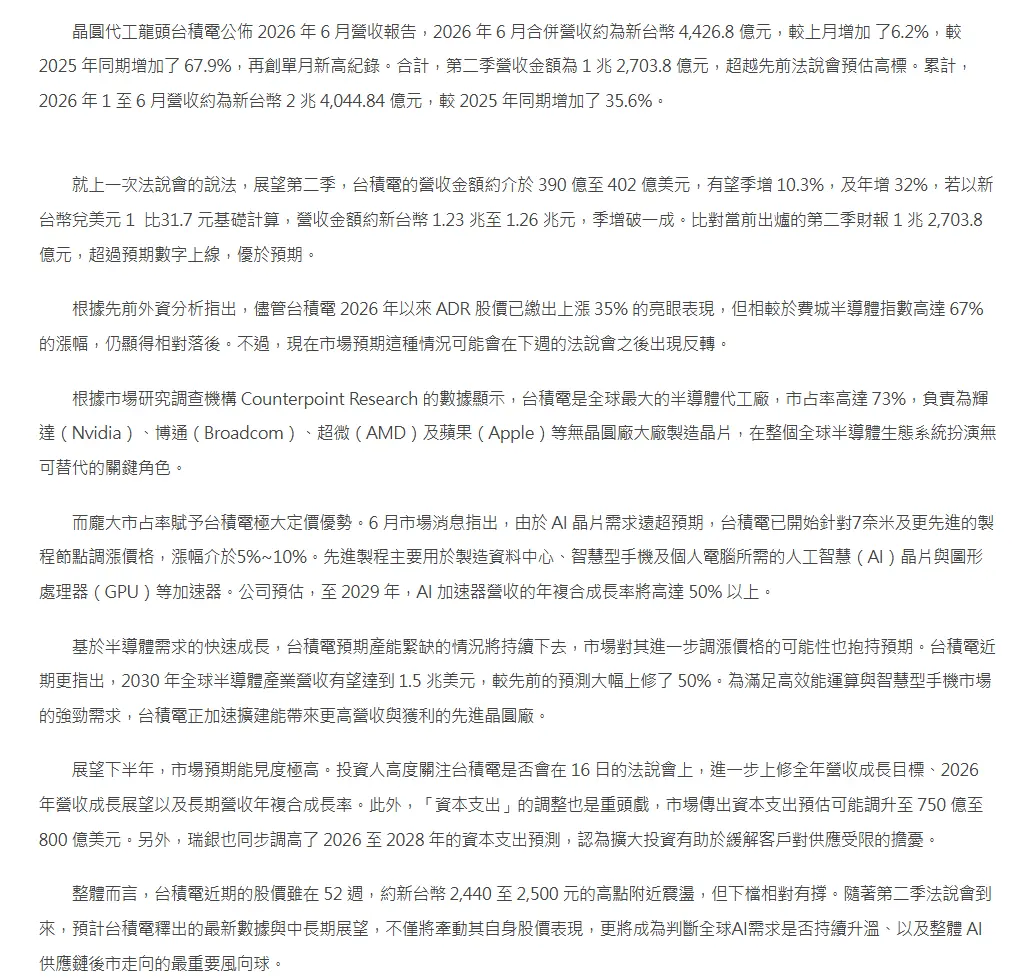
TSMC’s June revenue was about $13.8 billion, up 67.9% year over year;
second-quarter revenue was about $39.6 billion, up 36%, again setting a record high.
These numbers are more than just evidence of strong AI demand.
Nvidia continues to expand its GPUs, AMD speeds up its pursuit, Broadcom takes on more custom chips, and cloud companies are also developing their own ASICs.
The more routes there are and the
NVDA-2.30%
AMD-2.57%
TSM-1.21%
AVGO-2.54%
View Original
post-image
  • Reward
  • Comment
  • Repost
  • Share
Storage is shifting from “picking up money” to “making money.”
One character difference, but the difficulty is ten times higher.
Last year’s market was an explosion from “zero to one.”
HBM has gone from a niche product to the heart of AI infrastructure—demand slope is nearly vertical, supply wasn’t prepared at all, and the three leading manufacturers sold out their planned HBM capacity for 2026 early.
Buy it and it goes up—pullbacks are shallow. As long as you hold still, you can earn several times.
This easy-money phase is getting narrower.
Samsung plans to expand HBM capacity by 50% in 2026.
View Original
  • Reward
  • Comment
  • Repost
  • Share
Last week he was shorting NVIDIA, Micron, Applied Materials and the entire semiconductor ETF, publicly saying AI chips could drop 30%.
This week he suddenly went all-in long, buying two companies abandoned by the market.
In 2008 he bet early on the subprime collapse, became a legend, and was later turned into the movie *The Big Short*.
Michael Burry's investing style boils down to one word: contrarian.
Yesterday he disclosed another all-in long position: 60% Flutter Entertainment, 40% DraftKings.
These are the two largest online sports betting operators in the U.S., beaten down badly over the
NVDA-2.30%
AMAT-3.54%
DKNG2.36%
KALSHI-1.48%
View Original
  • Reward
  • Comment
  • Repost
  • Share
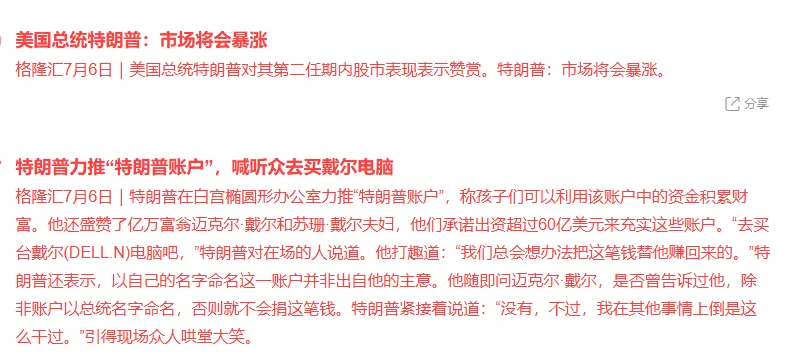
Today, Trump isn’t holding a press conference—he’s more like live-streaming trade signals in a chatroom 🤣
First, he urges everyone to go buy Dell computers, and then praises Micron along the way.
Next, he says ordinary families should start investing in U.S. stocks earlier.
Finally, he praises the S&P and the Nasdaq together.
Now, the U.S. stock market is increasingly like “the president personally giving trade signals + the country’s sentiment propping up the market.”
The U.S. stock market isn’t afraid of running out of funds—it’s afraid Trump will suddenly turn on the microphone.
SPX-1.40%
NAS100-1.23%
View Original
post-image
  • Reward
  • Comment
  • Repost
  • Share
The increase rate dropped from 90% to 20%, and most people's first reaction is that memory is about to peak.
This judgment might cause you to miss the upcoming market trend.
Samsung's latest price increase of 20% is the smallest among the three quarters this year: 90% in Q1, 50% to 60% in Q2, and 20% in Q3, steadily narrowing.
But what really matters isn’t the increase itself—it’s who depends on whom, and whether the demand structure behind the price hike has changed.
Let’s start with the demand structure. AI and servers accounted for 46% of total industry DRAM consumption in 2024, ris
DRAM-9.18%
View Original
  • Reward
  • Comment
  • Repost
  • Share
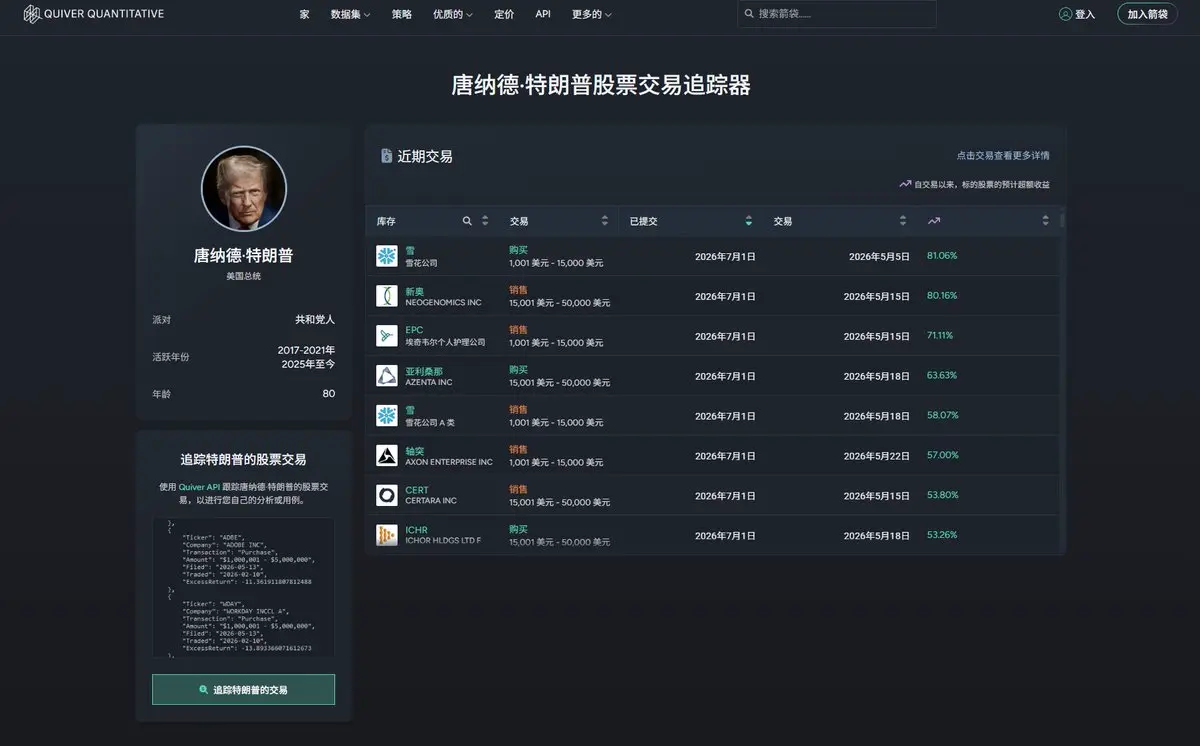
The president has been trading stocks, with picks more accurate than most fund managers.
All these trades come from mandatory government disclosures. This website specifically compiles every stock trade by the president into a searchable list, allowing you to directly check what was bought, when it was bought, and how much was gained.
View Original
post-image
  • Reward
  • Comment
  • Repost
  • Share
A new ETF for memory chips has emerged: DISK and KMEM. How to choose?
The U.S. stock market has launched two ETFs specifically betting on memory chips: DISK and KMEM, both listed around June 30, and their strategies are completely different.
Why are two more memory ETFs suddenly appearing?
The answer is just one word: shortage.
The larger AI models get, no matter how powerful the GPU, it’s useless without fast enough memory to feed data. HBM, DRAM, and NAND flash have all become the tightest links in AI infrastructure. Industry forecasts predict this market will grow from $216 billion in 2025
SNDK-10.87%
SKHYNIX-15.80%
CBOE1.42%
View Original
  • Reward
  • Comment
  • Repost
  • Share
Mag7 has had a terrible month, with nearly $3 trillion in market cap wiped out and a 10% monthly decline—the worst in over a year.
Most of the money has flowed into chipmakers that are actually making money from AI.
Behind this is a pattern that has been proven time and again: during the internet bubble, the companies that really made money were not internet service providers, but those selling network equipment, CPUs, and fiber optics—like Cisco, Intel, and Corning.
Infrastructure makes money first; the application layer makes money later.
Now AI is replaying the same logic. For now, money is
CSCO-0.93%
INTC-5.33%
GLW-1.92%
MSFT1.40%
META-1.44%
View Original
post-image
  • Reward
  • Comment
  • Repost
  • Share
Xiaomi has slashed its shipment target for this year from 170 million to 95 million units, a decline of nearly 45%.
OPPO and vivo are also seeing downturns, with drops of 15% to 30%. Honor has stated that it will be difficult to maintain growth this year.
The reason given is a memory shortage; memory costs have eaten up 10% to 20% of the bill of materials for low- to mid-end models, making cheap phones unprofitable.
The losers are volume-driven manufacturers like Xiaomi, OPPO, and vivo—their low-margin, high-volume model can't withstand this wave of price hikes.
There seems to be no wi
AAPL0.76%
View Original
  • Reward
  • Comment
  • Repost
  • Share
Someone told me that buying the Nasdaq and S&P is too risky.
Turns out his mortgage still has 27 years left.
Both are long-term bets spanning three or four decades—one scares people to death, the other they buy willingly. This gap in perception will ultimately show up in their accounts.
Let's start with liquidity. Once you buy a house, your money is basically locked in; you can't sell it when you need cash, and you definitely can't sell it in an emergency.
In many parts of China, properties have been listed for half a year or a year with no inquiries. With the Nasdaq or S&P, even if th
NAS100-1.23%
SPX-1.40%
SPYX-0.38%
View Original
  • Reward
  • Comment
  • Repost
  • Share
Most people holding Micron stock can't clearly explain how it makes money.
Last quarter, Micron, as the primary HBM chip manufacturer based in the United States, had a single-quarter revenue of $41.5 billion, higher than the annual revenue of many semiconductor companies.
One year ago, in the same quarter, Micron's quarterly revenue was $9.3 billion. After four quarters, it became $41.5 billion, an increase of 346%.
Where does the money come from? Let's break it down into three layers.
Layer 1: DRAM, $31.3 billion, accounting for 76% of total revenue.
DRAM is memory that clears when power is l
NVDA-2.30%
AMZN1.05%
MSFT1.40%
META-1.44%
View Original
  • Reward
  • Comment
  • Repost
  • Share
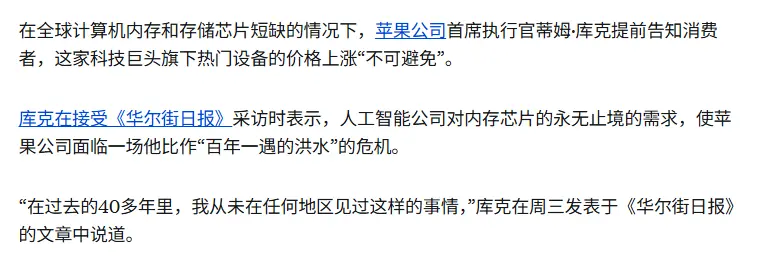
AI has taken your memory, and Apple has put the bill on you today.
Apple today raised prices across the board for the entire line of Mac, iPad, HomePod, and Vision Pro, with increases ranging from $100 to $200.
Cook described this memory shortage as a “once-in-a-century flood,” saying that in 40 years in the tech industry, he has never seen anything like this.
Apple’s stock fell 6% on the same day.
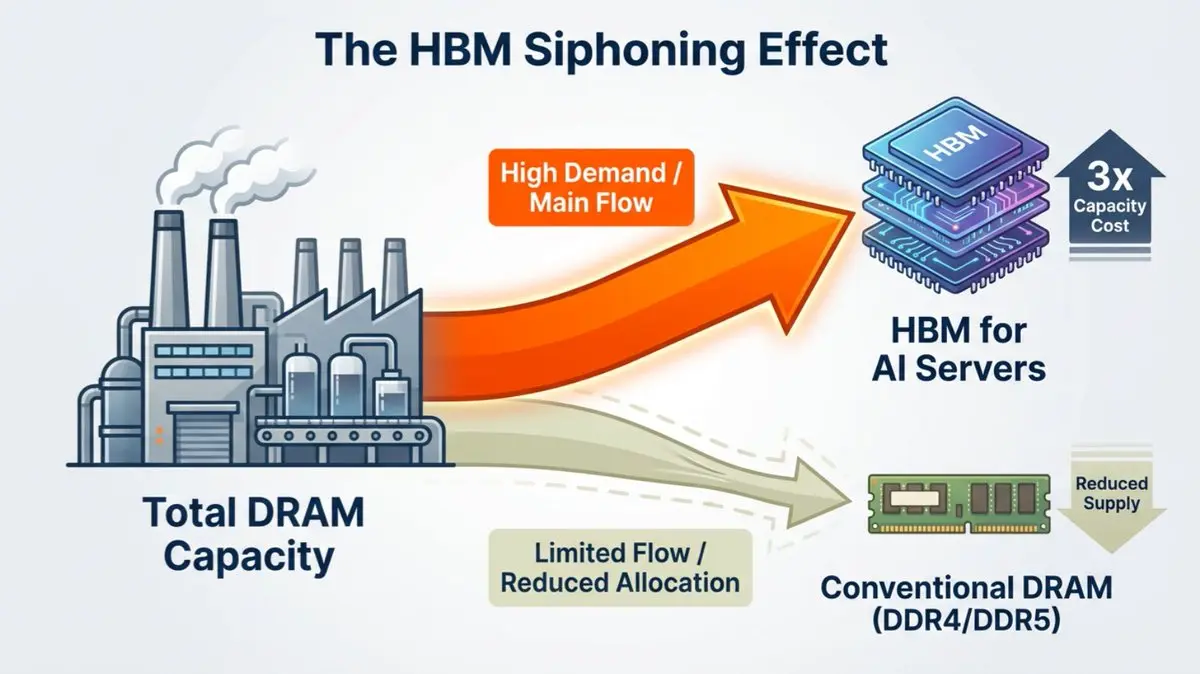
The underlying reason is this: AI data centers are competing with consumer electronics for memory.
Samsung, SK Hynix, and Micron have shifted a large amount of production capacity to high-
AAPL0.76%
DRAM-9.18%
MSFT1.40%
View Original
post-image
  • Reward
  • Comment
  • Repost
  • Share
If you are bullish on a stock for the next few years, you should not change your decision due to a few days of volatility.
Conversely, if you are only bullish on a stock for the next few days, don't be brainwashed by the long-term narrative.
View Original
  • Reward
  • Comment
  • Repost
  • Share
Micron's earnings report is coming out tonight, and I'm seeing plenty of bearish views and articles fearing a drop.
Still stick to the saying:
Treat every pullback as an opportunity.
You shouldn't fear a decline; you should fear not buying cheap enough positions.
View Original
  • Reward
  • Comment
  • Repost
  • Share
In the past, the storage cycle was every two or three years.
Now, buyers are signing five-year contracts.
The storage cycle logic is: when demand comes, manufacturers expand production, leading to oversupply and price crashes, then cut capacity for the next round; the mechanism itself has not disappeared.
However, there is now a variable that disrupts the rhythm.
Samsung, SK Hynix, and Micron have shifted 93% of their capacity to AI data centers, leaving only a small amount for consumer-side capacity.
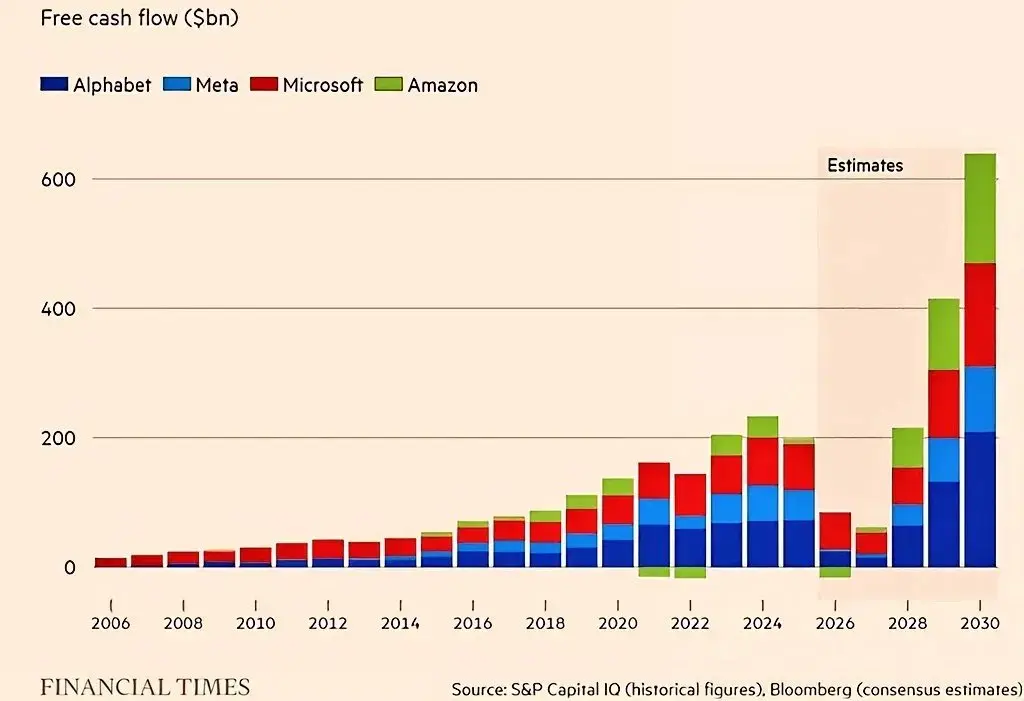
Google, Microsoft, Amazon, and Meta's capital expenditures this year total $725 bil
MSFT1.40%
AMZN1.05%
META-1.44%
View Original
post-image
  • Reward
  • Comment
  • Repost
  • Share
Many people bought storage during this wave, but sold too early.
Regretting not using it, blaming yourself is also useless.
First, clarify one thing: did you sell because "it rose too much and you're afraid of a pullback," or because "you never really thought about when to sell"?
The former is normal; you need to review and learn to sell in parts, not go all-in at once.
The latter is the most fatal; you didn't think it through on the day of entry, and selling prematurely is just the result, not the cause.
Holding a stock, the core logic is only one thing: whether the reason to buy it
View Original
  • Reward
  • Comment
  • Repost
  • Share
The U.S. government invested $8.9 billion in Intel, with the book value rising to $60 billion in nine months.
In August last year, Trump converted the original $8.9 billion CHIPS Act subsidy intended for Intel directly into a 9.9% stake in Intel, purchasing shares at $20.47 each.
This was almost unprecedented in U.S. history; the government did not rescue the market with bailout-style investments but used industrial policy to exchange for equity, actively becoming the largest single shareholder of a tech company.
After acquiring the stake, the government began to facilitate cooperation u
INTC-5.33%
NVDA-2.30%
AAPL0.76%
View Original
  • Reward
  • Comment
  • Repost
  • Share
Everyone talks about compound interest, but why do only a few people actually achieve high returns from it?
The answer is actually simple: compound interest is not hard to understand; what's difficult is that it completely goes against human nature.
First: Principal
The premise of compound interest is that you have money to invest.
Nowadays, many people are broke, as consumerism spends all their income, leaving no principal available.
If your investment ratio is less than 30% of your income, compound interest is basically meaningless for you.
It's not a market problem; it's a savin
SPYX-0.38%
View Original
  • Reward
  • Comment
  • Repost
  • Share
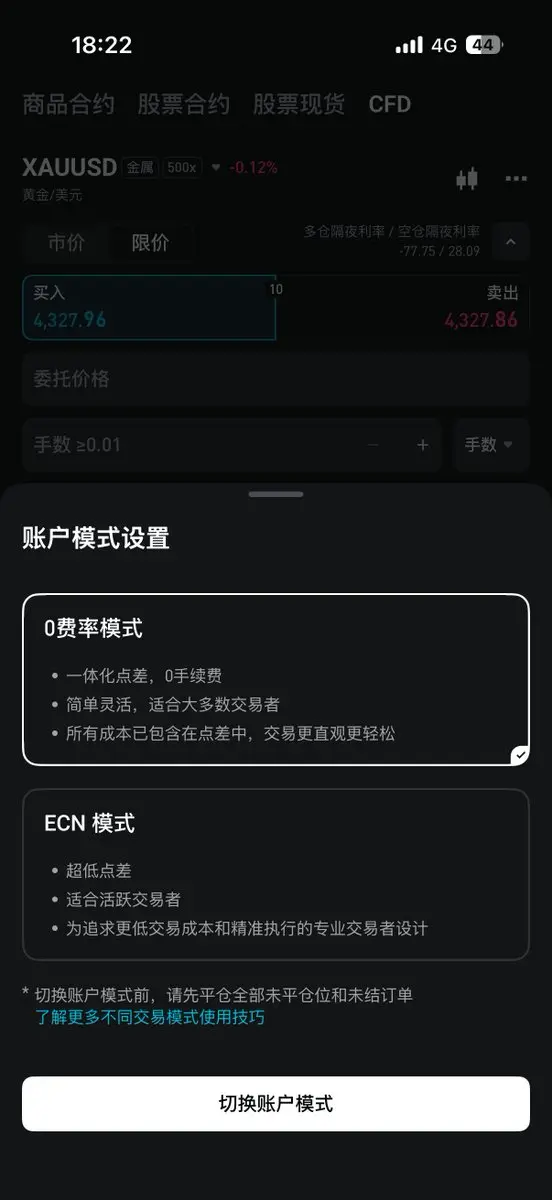
I have always been very particular about trading costs.
So when I see this zero-fee rate, I want to say a few more words.
The core is the seamless switch between the zero-fee mode and the ECN mode.
In zero-fee mode, the commission is zero, and all costs are embedded in the spread, with one entry and one exit, and only one line of numbers on the bill.
In the ECN mode, there is a raw spread, charged by volume, suitable for those who open dozens of trades a day, pushing the spread to the limit, with fees spread out by volume.
The two modes can be switched with one click, with no loss of
View Original
post-image
  • Reward
  • Comment
  • Repost
  • Share
  • Pinned